

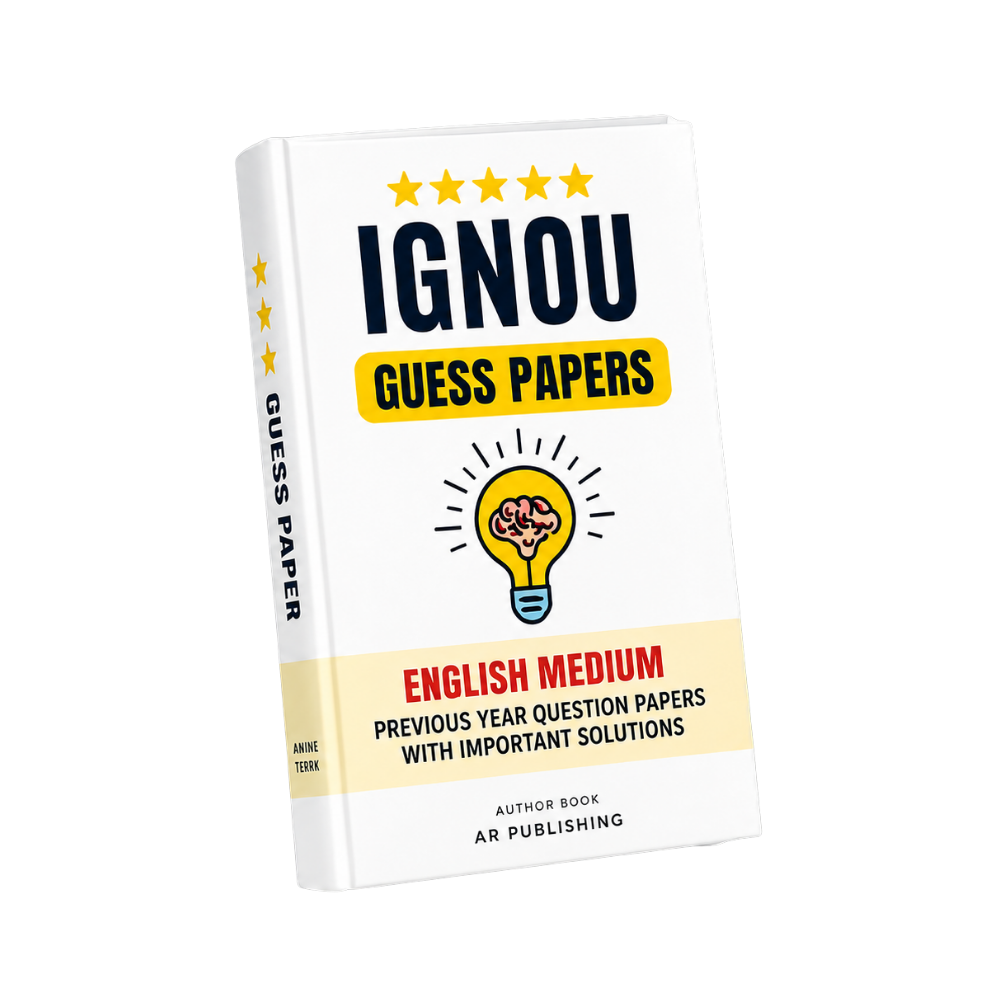
BABG 171 IGNOU Guess Paper 2026-27
Click to view offer details & terms
Get 10% OFF Instant Discount
Apply this coupon code at checkout to claim your academic discount instantly.
- Applicable on all university study materials
- Valid for up to 8 item(s) per order
- Valid till Oct 31, 2026
Enrolled in other IGNOU subjects?
Link your Enrollment No. to auto-map all your semester courses & free question papers.
Frequently Bought Together
Popular course materials frequently ordered together

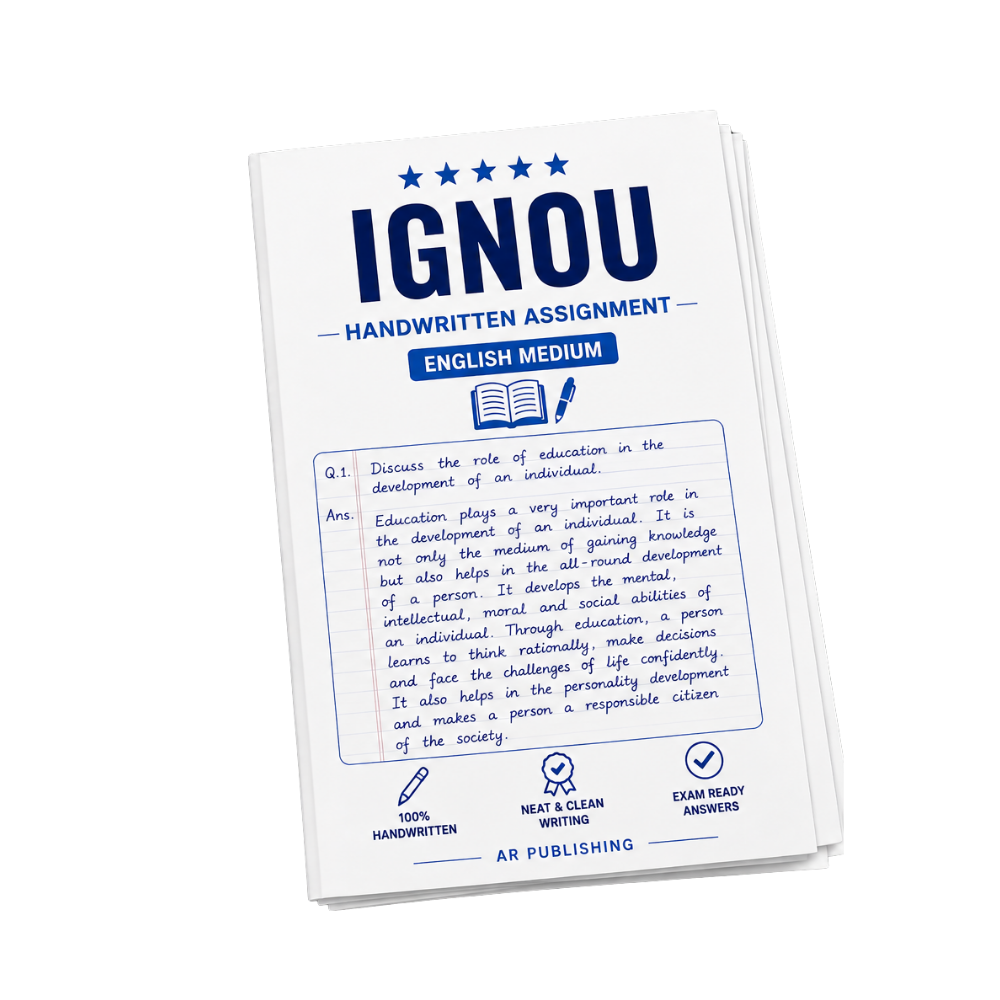
Syllabus & Overview
Course Scope and Syllabus Overview for BABG-171: Understanding B.R. Ambedkar
BABG-171: Understanding B.R. Ambedkar is a foundational course within IGNOU’s Bachelor of Arts (BAG) program under the School of Social Sciences, designed to critically examine the intellectual contributions of Dr. B.R. Ambedkar—India’s foremost architect of the Constitution and a visionary thinker on social justice, democracy, and economic reform. This course spans 20 meticulously structured units, blending historical analysis with contemporary relevance, exploring Ambedkar’s critiques of caste, colonialism, and economic inequality while dissecting his proposals for constitutional democracy, federalism, and social welfare. The syllabus integrates primary texts with public policy frameworks, equipping students to engage with Ambedkar’s arguments on citizenship, gender equality, labor rights, and state socialism. By synthesizing these themes, the course prepares students to evaluate modern governance challenges through Ambedkar’s lens, fostering analytical skills aligned with IGNOU’s CBCS curriculum.Key Syllabus Units and Topics
- Unit-1 Caste and Annihilation of Caste: Analyzes Ambedkar’s philosophical and political critiques of caste as a systemic oppression, emphasizing his call for its abolition through constitutional and social reforms, including the untouchability abolition act and the Scheduled Castes and Scheduled Tribes (Prevention of Atrocities) Act.
- Unit-5 Gender Equality and Empowerment of Women: Examines Ambedkar’s advocacy for gender justice, his role in drafting provisions for women’s rights in the Constitution, and his critiques of patriarchal structures, linking his ideas to modern feminist movements and legal protections.
- Unit-14 Democracy and Citizenship: Explores Ambedkar’s conceptualization of democracy as a tool for social justice, his warnings against majoritarianism, and his vision of an inclusive citizenship framework that addresses marginalization through affirmative action and constitutional safeguards.
- Unit-19 Constitutional Provisions and the Idea of Representation: Focuses on Ambedkar’s design of reservation systems, his debates on proportional representation, and how these mechanisms ensure political participation for historically excluded communities, with case studies on electoral reforms.
- Unit-20 Rights and Representations: Investigates the interplay between constitutional rights and political representation, analyzing Ambedkar’s arguments on minority rights, federalism, and the role of judiciary in upholding social justice, including critiques of judicial activism and legislative delays.
Frequently Asked Questions
Q: What is the marking scheme for the Term-End Examination (TEE) in BABG-171, and how are internal assignments weighted in the final grade?
A: The TEE for BABG-171 carries 100 marks, comprising objective and subjective questions, while internal assignments contribute 30 marks to the final grade, with each assignment typically worth 10 marks; assignments are submitted mid-semester and assessed for conceptual clarity and application of Ambedkar’s theories.
Q: Are there specific chapters or units in BABG-171 that frequently appear as repeated questions in past TEE papers, and how can students prioritize their revision?
A: Units such as Unit-1 (Caste and Annihilation of Caste), Unit-5 (Gender Equality), and Unit-14 (Democracy and Citizenship) consistently feature in TEE papers due to their foundational role in Ambedkar’s intellectual framework; prioritize these units while cross-referencing solved question papers to identify recurring themes like constitutional provisions, critiques of colonial economy, and social welfare policies.
Why buy from us?
-
Verified by top professors and 99th percentile students.
-
Always updated to the latest university curriculum.
-
High-quality, printable PDF formats with clear diagrams.
License & Terms
By purchasing this item, you agree to our standard academic license terms. You may use this product for personal study, but you may not resell or redistribute the files online.