

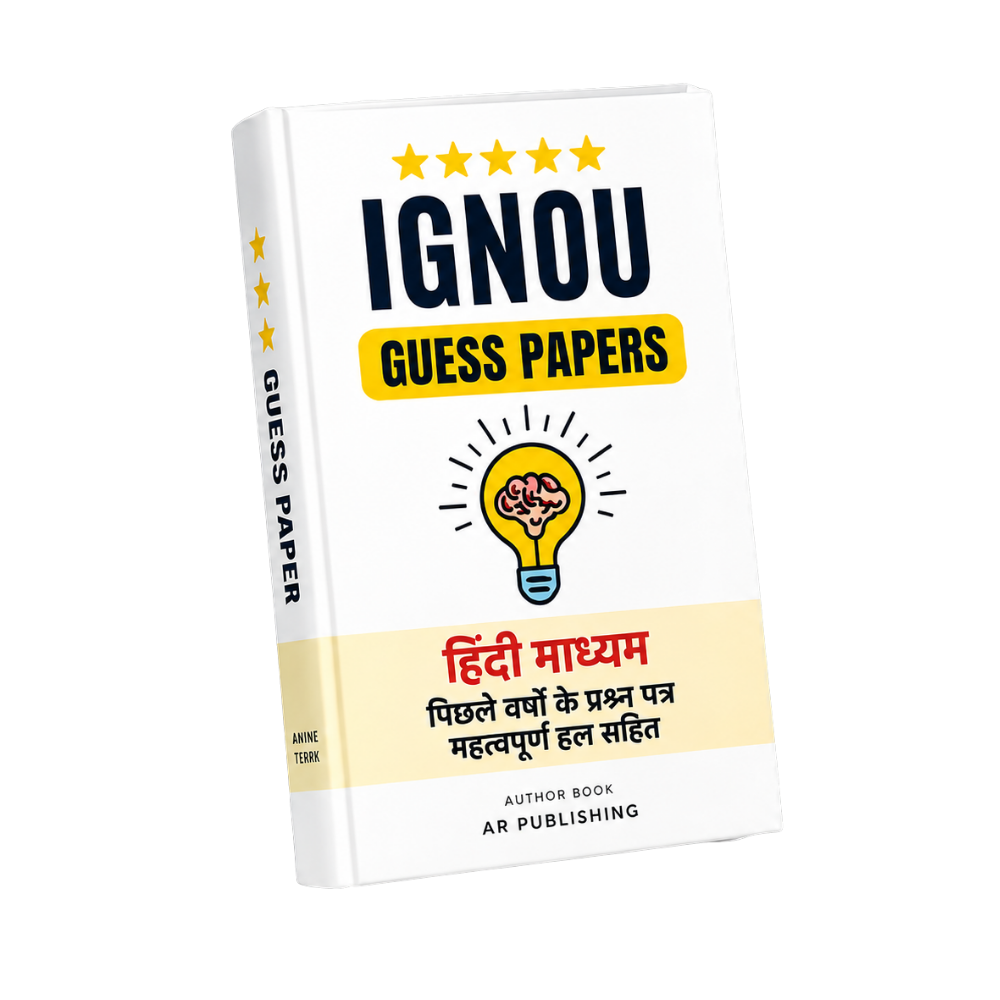
BANC-106 IGNOU Guess Paper 2026-27
Click to view offer details & terms
Get 10% OFF Instant Discount
Apply this coupon code at checkout to claim your academic discount instantly.
- Applicable on all university study materials
- Valid for up to 8 item(s) per order
- Valid till Oct 31, 2026
Frequently Bought Together
Popular course materials frequently ordered together
Syllabus & Overview
Course Scope & Syllabus Overview
BANC-106: Human Ecology: Biology and Cultural Dimensions is a core course in IGNOU’s Bachelor of Science (Honours) Anthropology program, designed to integrate biological and cultural perspectives on human existence. This course explores the interplay between human biology—including evolutionary adaptations, physiological responses, and ecological interactions—and cultural frameworks that shape societal behaviors, norms, and environmental relationships. Aligned with the IGNOU CBCS curriculum, it equips students with interdisciplinary insights into how biological traits influence cultural evolution while cultural systems reciprocally impact human health, survival, and sustainability. The study material emphasizes critical analysis of ecological systems, human adaptation strategies, and the anthropological dimensions of biodiversity, resource management, and public policy.Key Syllabus Units & Topics
- Block-1: Fundamentals of Human Ecology: Introduces foundational concepts of human ecology, including ecological systems theory, human-environment interactions, and the role of anthropology in studying ecological balance. Topics cover biotic and abiotic factors influencing human survival, ecological niches, and the evolutionary basis of human adaptability.
- Block-2: Human Ecology: Biological Dimensions: Examines physiological and genetic adaptations in humans, such as metabolic responses to climate, disease ecology, and the impact of nutrition on cultural practices. It also explores population dynamics, reproductive strategies, and the biological underpinnings of social structures.
- Block-3: Human Ecology: Cultural Dimensions: Analyzes how cultural systems—such as kinship, religion, and economic systems—mediate human relationships with the environment. Key themes include traditional ecological knowledge, cultural resource management, and the role of anthropology in sustainable development policies.
- Block-4: Human Ecology and Public Policy (if applicable in recent syllabi): Discusses the intersection of ecological principles with governance, focusing on policy frameworks for conservation, disaster management, and community-based ecological initiatives.
- Block-5: Case Studies in Human Ecology: Applies theoretical frameworks to real-world scenarios, including urbanization, deforestation, and climate change, highlighting anthropological interventions in ecological restoration and conflict resolution.
Frequently Asked Questions
Q: What is the marking scheme for BANC-106 Term-End Examination (TEE), and how are internal and external assessments weighted?
A: The TEE for BANC-106 carries 100 marks, comprising objective and subjective questions. Internal assessments (assignments) contribute 30% to the total grade, while the TEE accounts for 70%, with question distribution aligned to the syllabus weightage of each block.
Q: Are there repeated questions in past TEE papers for BANC-106, and how can students identify high-probability topics?
A: Yes, certain questions—particularly from core units like Block-2 (Biological Dimensions) and Block-3 (Cultural Dimensions)—recur frequently. Analyzing solved past papers (June/December cycles) reveals recurring themes such as human adaptation, cultural resource management, and ecological policy, which should be prioritized for revision.
Why buy from us?
-
Verified by top professors and 99th percentile students.
-
Always updated to the latest university curriculum.
-
High-quality, printable PDF formats with clear diagrams.
License & Terms
By purchasing this item, you agree to our standard academic license terms. You may use this product for personal study, but you may not resell or redistribute the files online.