

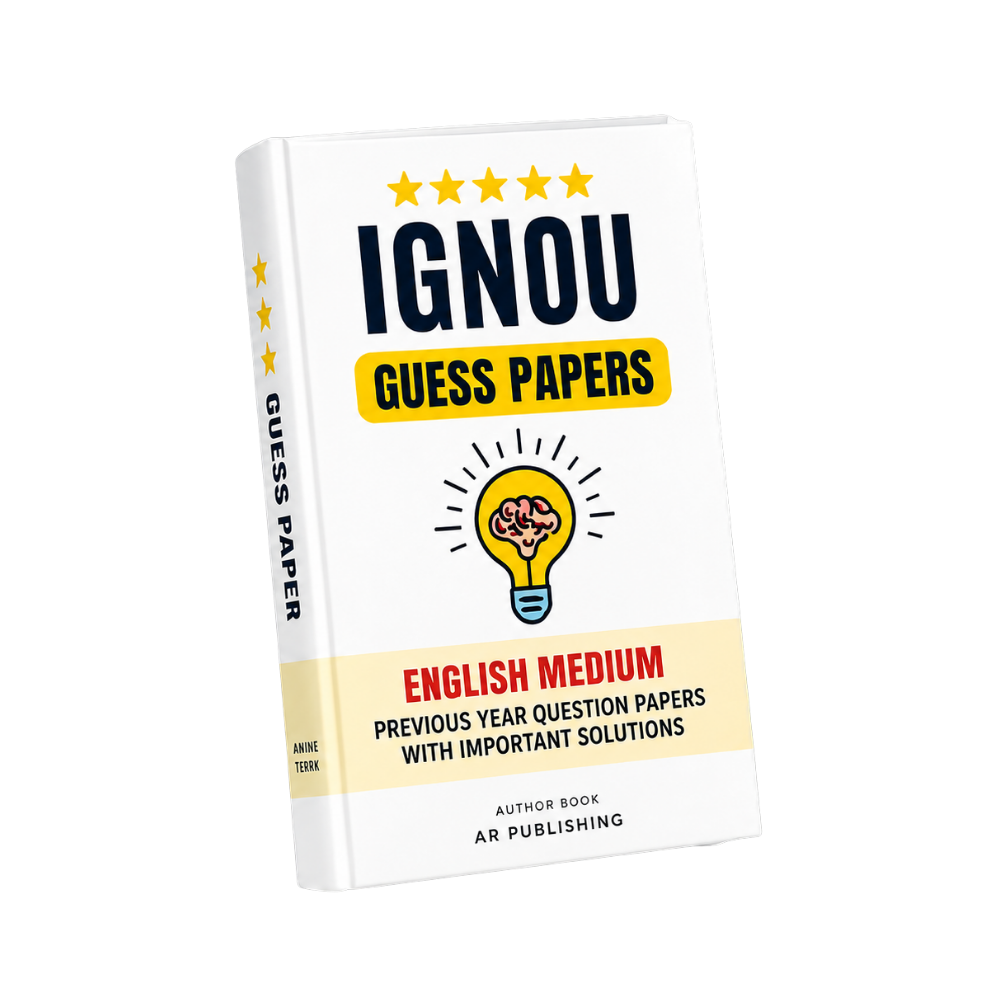
BBCET -145 IGNOU Guess Paper 2026-27
Click to view offer details & terms
Get 10% OFF Instant Discount
Apply this coupon code at checkout to claim your academic discount instantly.
- Applicable on all university study materials
- Valid for up to 8 item(s) per order
- Valid till Oct 31, 2026
Enrolled in other IGNOU subjects?
Link your Enrollment No. to auto-map all your semester courses & free question papers.
Frequently Bought Together
Popular course materials frequently ordered together
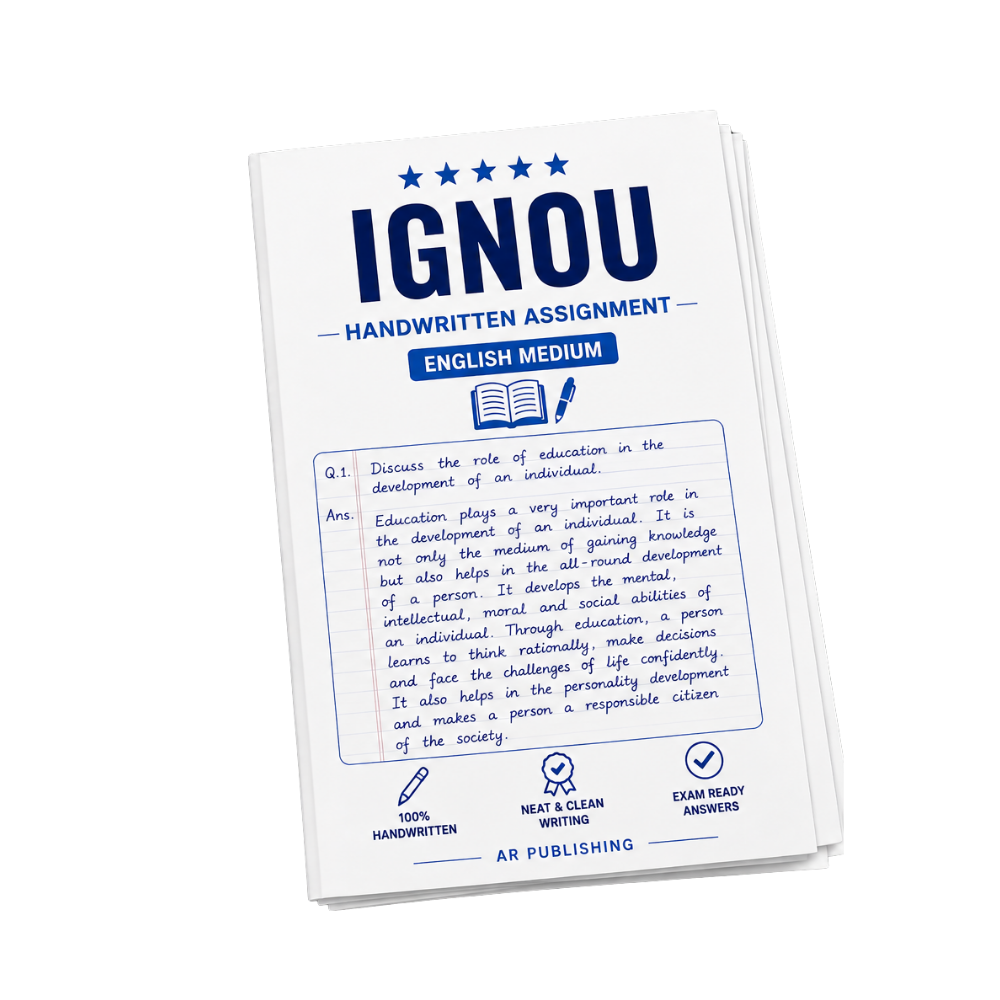
Syllabus & Overview
BBCET-145 Guess Paper (Digital PDF): Term-End Exam (TEE) Preparation
This structured guess paper for BBCET-145 (English/Hindi) synthesizes solved previous year questions from June/December sessions (2018–2023) and prioritizes scoring topics based on official IGNOU CBCS curriculum blocks. It includes chapter-wise question weightage, 3-hour exam time management tips, and subject-specific FAQs.
Key Syllabus Blocks Covered
- Block 1: Organic Chemistry Reactions and Mechanisms Focus on SN1/SN2/E1/E2 mechanisms, rearrangement reactions, and stereochemistry (25–30% weightage).
- Block 3: Polymer Chemistry and Applications Emphasis on polymerization techniques (addition vs. condensation), copolymerization, and real-world examples (e.g., nylon, Teflon).
- Block 5: Analytical Techniques in Chemistry Highlighted topics: UV-Vis spectroscopy, IR spectroscopy, and chromatography principles (15–20% weightage).
- Block 2: Thermodynamics and Kinetics Gibbs free energy calculations, rate laws, and activation energy (10–15% weightage).
- Block 4: Electrochemistry and Corrosion Nernst equation applications, fuel cells, and corrosion prevention strategies.
Exam Patterns and Question Weightage
Based on previous year papers, the TEE typically includes:
- 30–35% Numerical Problems (e.g., reaction stoichiometry, polymer yield calculations).
- 25–30% Short Answer Questions (e.g., mechanism steps, spectroscopy interpretation).
- 20–25% Long Descriptive Questions (e.g., compare SN2 vs. SN1, explain copolymerization).
- 10–15% Very Short Answer Questions (e.g., definitions, units).
3-Hour Exam Time Management Tips
- Allocate 45–60 minutes for numerical problems (prioritize high-weightage topics first).
- Spend 20–25 minutes on short answer questions (focus on clarity and key points).
- Save 30–40 minutes for long descriptive answers (use subheadings and diagrams where applicable).
- Leave 10–15 minutes for review (check calculations, grammar, and completeness).
Subject-Specific FAQs
- Q: How to differentiate between SN1 and SN2 mechanisms in exams?
Highlight substrate type (primary/secondary/tertiary), nucleophile strength, and solvent polarity. Use flowcharts for clarity.
- Q: What are the most common mistakes in polymer chemistry questions?
Confusing addition vs. condensation polymerization or mislabeling monomers (e.g., ethylene vs. vinyl chloride). Always verify reaction schemes.
Included Resources
- Solved previous year papers (June/December 2018–2023).
- Chapter-wise question banks with answer keys.
- Time-bound practice tests (3-hour format).
- FAQs and common pitfalls for each syllabus block.
Why buy from us?
-
Verified by top professors and 99th percentile students.
-
Always updated to the latest university curriculum.
-
High-quality, printable PDF formats with clear diagrams.
License & Terms
By purchasing this item, you agree to our standard academic license terms. You may use this product for personal study, but you may not resell or redistribute the files online.