

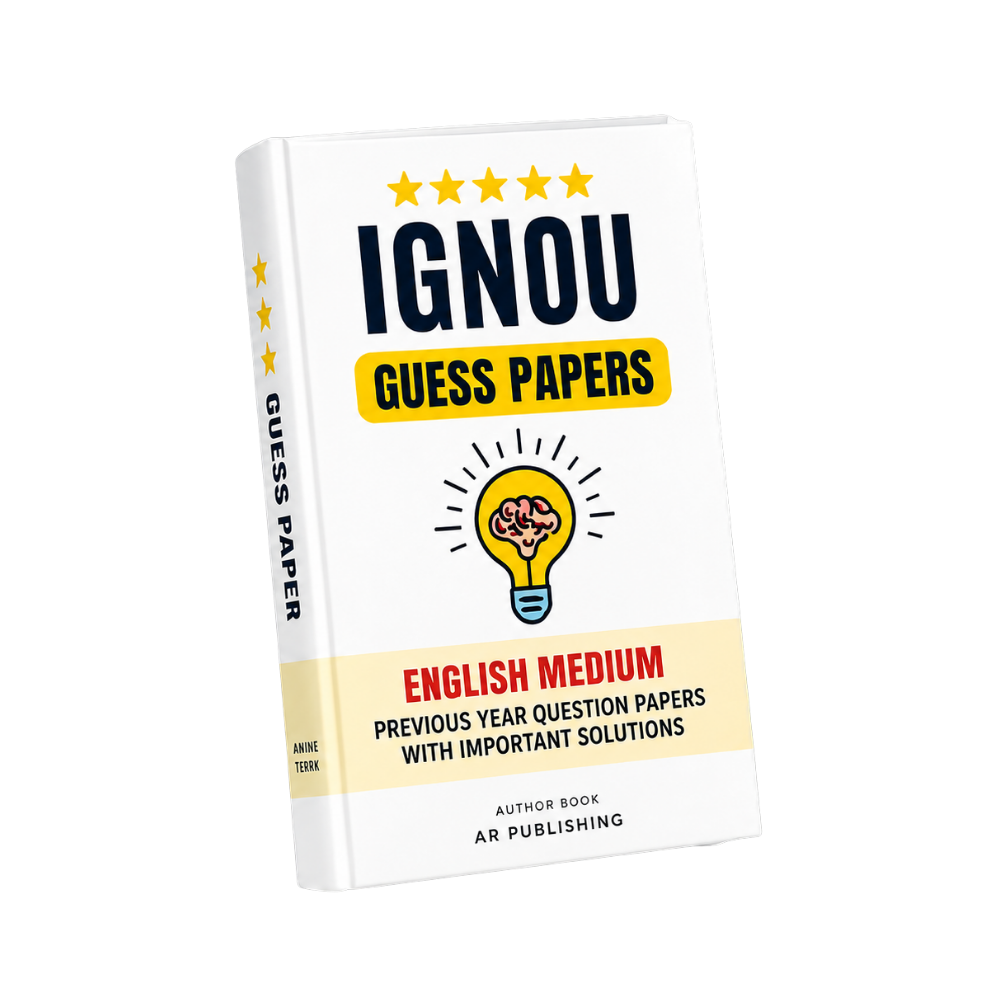
BCS-031 IGNOU Guess Paper 2026-27
Click to view offer details & terms
Get 10% OFF Instant Discount
Apply this coupon code at checkout to claim your academic discount instantly.
- Applicable on all university study materials
- Valid for up to 8 item(s) per order
- Valid till Oct 31, 2026
Enrolled in other IGNOU subjects?
Link your Enrollment No. to auto-map all your semester courses & free question papers.
Frequently Bought Together
Popular course materials frequently ordered together
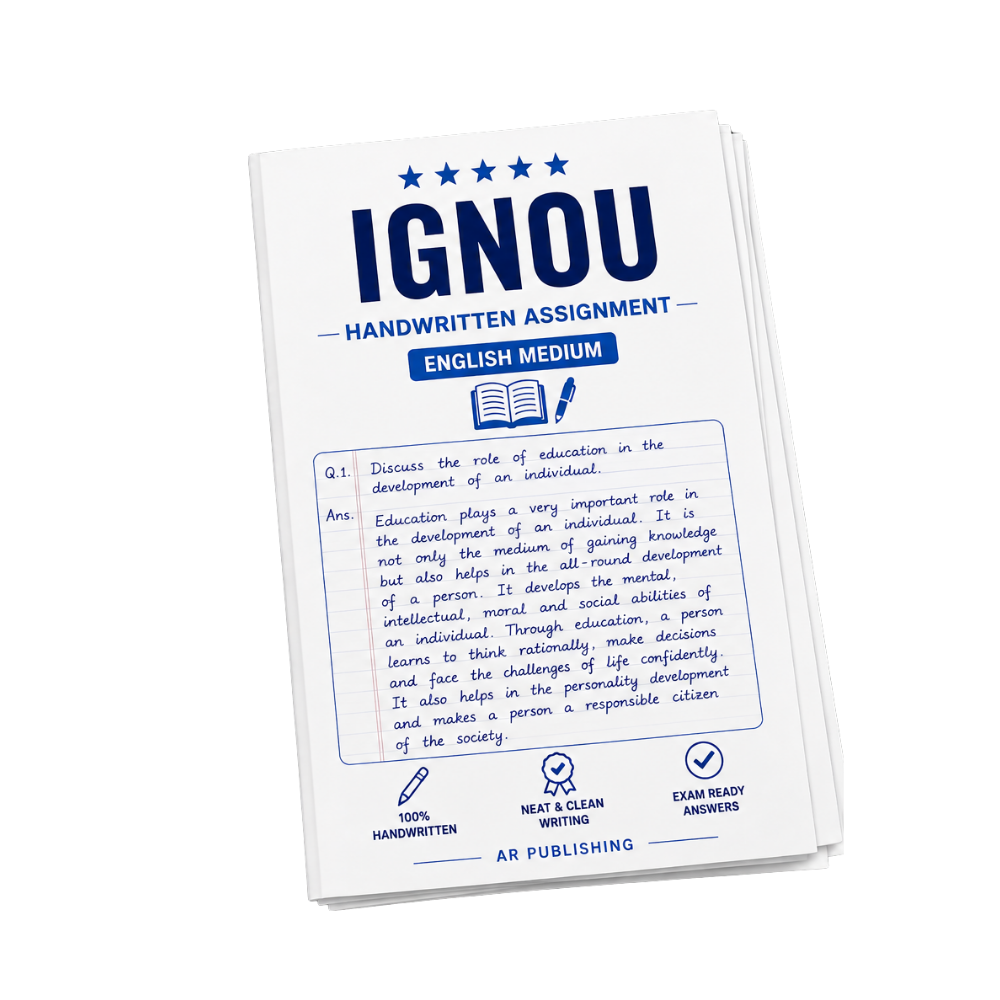
Syllabus & Overview
BCS-031 Guess Paper: Programming in C++ (Term-End Exam Focus)
This structured guess paper for BCS-031 leverages solved previous year papers (5–10 years) and chapter-wise question weightage to optimize 3-hour exam time management. It strictly adheres to the official IGNOU curriculum blocks for Programming in C++ under Computer Science/Information Technology.
Key Syllabus Blocks Covered
- Block-1: Basics of Object-Oriented Programming & C++
- Core OOP concepts: Classes, objects, constructors/destructors, and encapsulation.
- Memory management: Static vs. dynamic allocation, pointers, and references.
- Practical coding: File handling, input/output operations, and basic data structures (arrays, structures).
- Block-2: Inheritance and Polymorphism in C++
- Inheritance types: Single, multilevel, hierarchical, and multiple inheritance with real-world examples.
- Polymorphism: Function overloading, operator overloading, and virtual functions.
- Debugging and testing: Handling inheritance conflicts (diamond problem) and runtime polymorphism.
- Block-3: Advanced Features of C++
- Templates: Function templates and class templates with generic programming examples.
- Exception handling: Try-catch blocks, standard exceptions, and custom exception classes.
- STL (Standard Template Library): Iterators, algorithms, and containers (vector, list, map).
Exam Strategy & Weightage
- Block-1 (30–35%): Focus on coding questions (30%) and theoretical concepts (10–15%).
- Block-2 (35–40%): Prioritize polymorphism (20%) and inheritance-based problems (15%).
- Block-3 (25–30%): Emphasize STL (15%) and exception handling (10%).
Time Management Tips
- Allocate 45 minutes for Block-1 (basics) and 60 minutes for Block-2 (inheritance/polymorphism).
- Spend 30–40 minutes on Block-3 (advanced topics) with a 10-minute review for all sections.
- Attempt 2–3 coding questions in the first hour to secure partial marks.
Subject-Specific FAQs
- Q: Are there frequent questions on function overloading vs. operator overloading?
Yes. Operator overloading (e.g., +, =) carries 15–20% weightage in Block-2 exams, while function overloading is tested for basic understanding (10%). Prioritize practical examples (e.g., redefining << for custom classes).
- Q: How should I approach STL-based questions in TEE?
STL questions (Block-3) often require code + explanation. Focus on vector operations (insertion, iteration) and map usage (key-value pairs). Avoid memorization; emphasize logic (e.g., sorting with algorithms).
Sample Question Patterns (Past TEE Trends)
- Block-1: Write a C++ program to demonstrate constructor chaining with inheritance (20 marks).
- Block-2: Explain the difference between shallow and deep copying in C++ with a code example (15 marks).
- Block-3: Implement a generic stack using templates and handle exceptions for overflow/underflow (25 marks).
Note: Always refer to the official IGNOU curriculum for updated syllabus changes. This guess paper is based on verified patterns from June/December sessions (2018–2023).
Why buy from us?
-
Verified by top professors and 99th percentile students.
-
Always updated to the latest university curriculum.
-
High-quality, printable PDF formats with clear diagrams.
License & Terms
By purchasing this item, you agree to our standard academic license terms. You may use this product for personal study, but you may not resell or redistribute the files online.