

BECE-146 IGNOU Solved Assignment 2026-27
Click to view offer details & terms
Get 10% OFF Instant Discount
Apply this coupon code at checkout to claim your academic discount instantly.
- Applicable on all university study materials
- Valid for up to 8 item(s) per order
- Valid till Oct 31, 2026
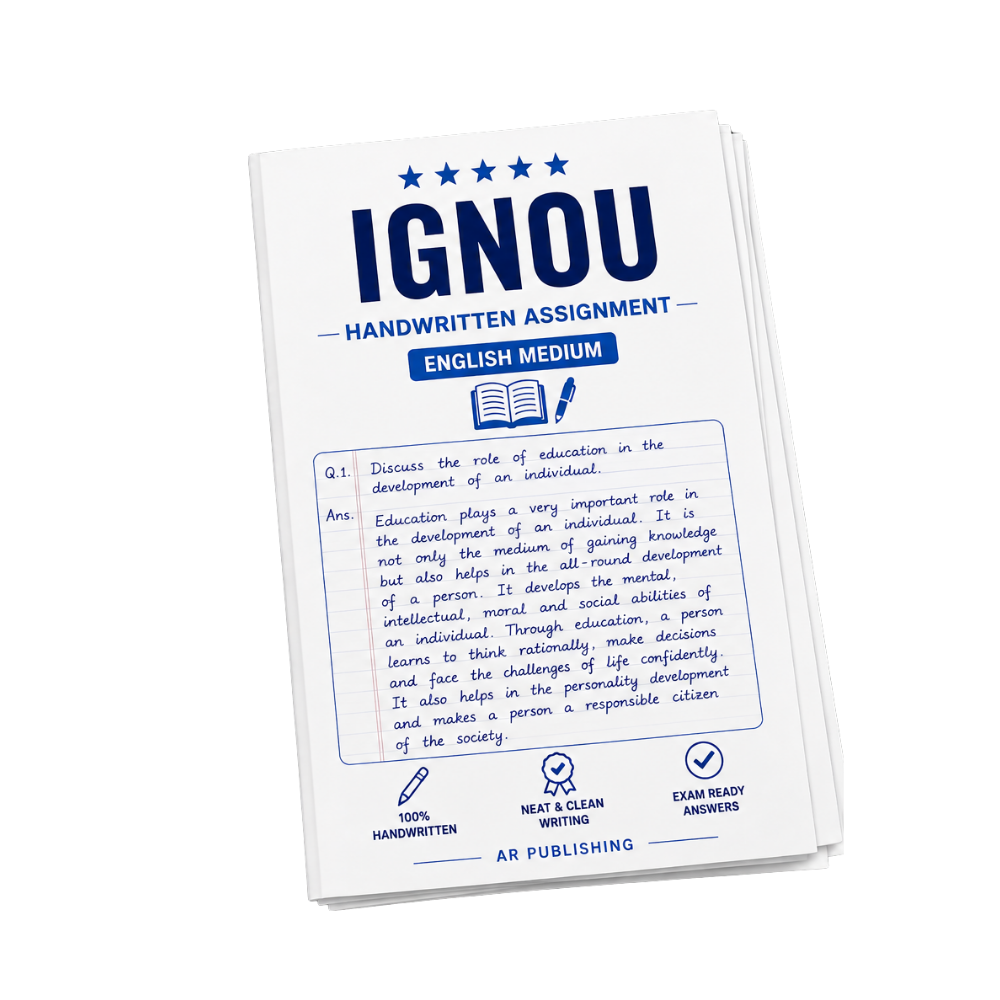
Frequently Bought Together
Popular course materials frequently ordered together
Syllabus & Overview
Course Scope & Syllabus Overview for BECE-146: Indian Economy-II
Indian Economy-II (BECE-146) under IGNOU’s Bachelor of Arts (BAG) curriculum delves into advanced economic analysis of India’s structural transformation, policymaking, and sectoral dynamics. This course builds on foundational economic principles to examine macroeconomic frameworks, agricultural productivity challenges, industrial growth strategies, and the evolving service sector—key pillars of India’s economic development. Aligned with the CBCS framework, it integrates theoretical models with empirical case studies, preparing students to critically assess policy impacts, sectoral reforms, and sustainable growth pathways. The study material ensures adherence to IGNOU’s academic rigor, offering precise references for TMA preparation that align with examiner expectations.
Key Syllabus Units & Topics
- Macroeconomic Policies: Covers fiscal and monetary policy instruments, inflation management, and their interplay with GDP growth, emphasizing India’s experience with stabilization and structural adjustment programs.
- Agricultural Sector: Analyzes agrarian reforms, land tenure systems, and technological interventions, with a focus on food security, rural employment, and the Green Revolution’s long-term sustainability.
- Industrial Sector: Explores industrialization trends, public-private sector dynamics, and sectoral shifts (e.g., from heavy industry to IT/pharma), including challenges like licensing reforms and infrastructure gaps.
- Service Sector: Examines the rise of tertiary employment, financial sector liberalization, and the role of services in export-led growth, alongside issues like informalization and skill mismatches.
- Development Challenges: Addresses regional disparities, human development indices, and inclusive growth strategies, linking theoretical frameworks (e.g., Amartya Sen’s capabilities approach) to policy debates.
Frequently Asked Questions
Q: How are TMA marks allocated in BECE-146, and what word limits must be strictly followed?
A: TMAs carry 30% of the total marks, with Section A requiring 500 words per question and Section B demanding 250 words. Adherence to word limits is mandatory; exceeding or falling short risks deduction or rejection.
Q: Are there specific reference books recommended for BECE-146, or can students rely solely on the study material?
A: While IGNOU’s prescribed study material is sufficient for TMA preparation, students may cross-reference with academic journals (e.g., Economic and Political Weekly) or textbooks like Indian Economy by Manmohan Singh for deeper insights, but always cite sources to avoid plagiarism.
Why buy from us?
-
Verified by top professors and 99th percentile students.
-
Always updated to the latest university curriculum.
-
High-quality, printable PDF formats with clear diagrams.
License & Terms
By purchasing this item, you agree to our standard academic license terms. You may use this product for personal study, but you may not resell or redistribute the files online.