

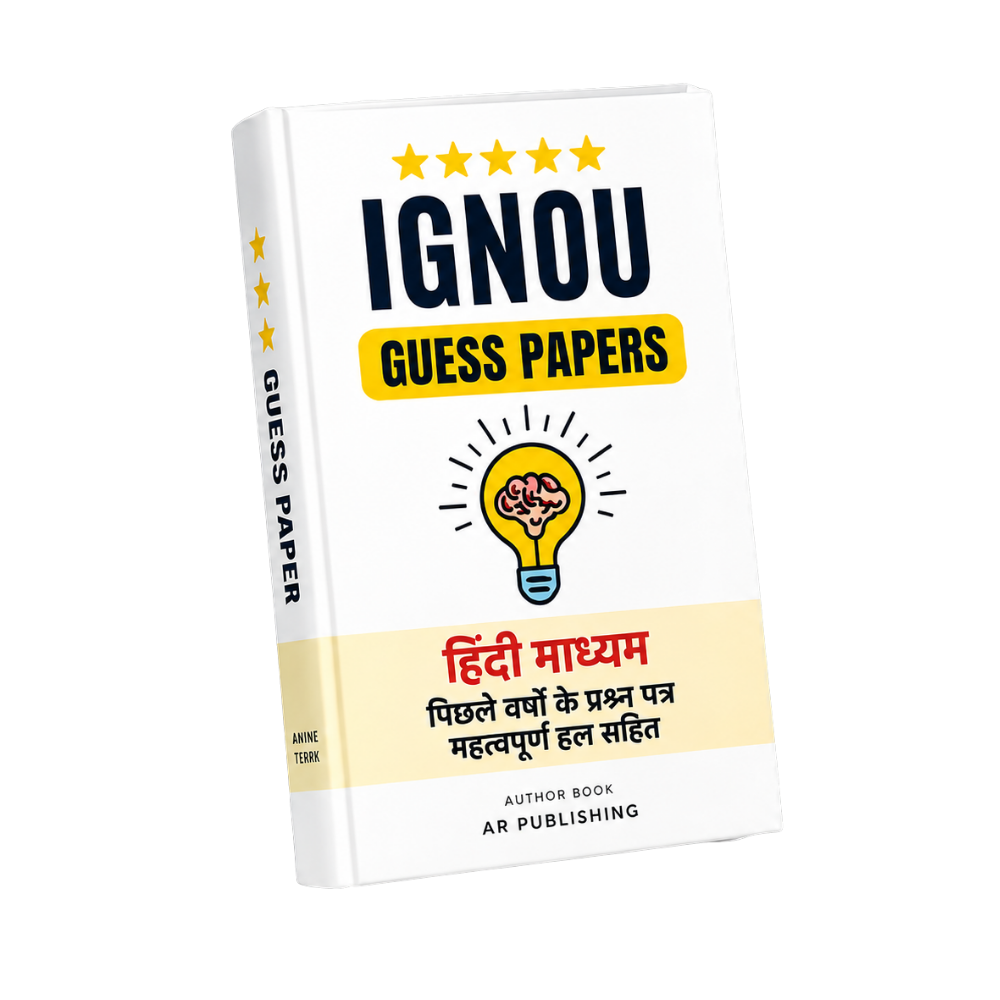
BEV-002 IGNOU Guess Paper 2026-27
Click to view offer details & terms
Get 10% OFF Instant Discount
Apply this coupon code at checkout to claim your academic discount instantly.
- Applicable on all university study materials
- Valid for up to 8 item(s) per order
- Valid till Oct 31, 2026
Enrolled in other IGNOU subjects?
Link your Enrollment No. to auto-map all your semester courses & free question papers.
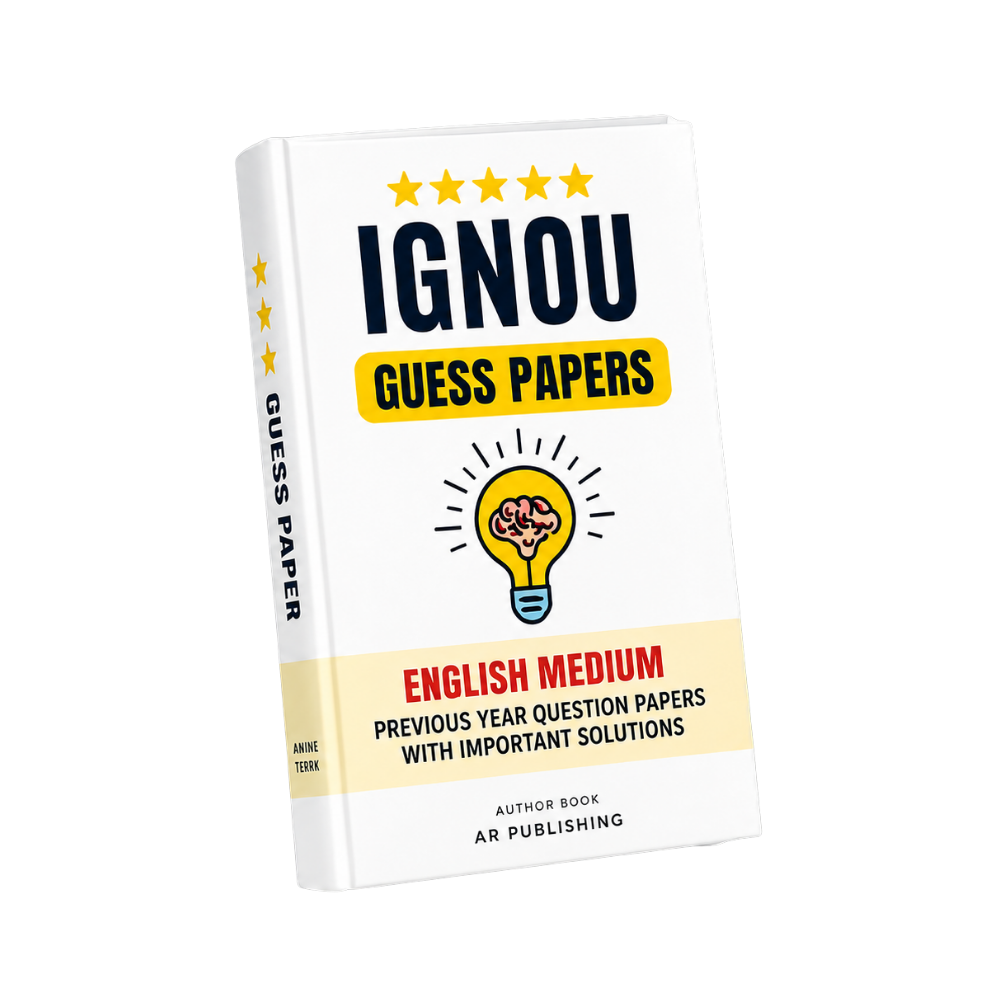
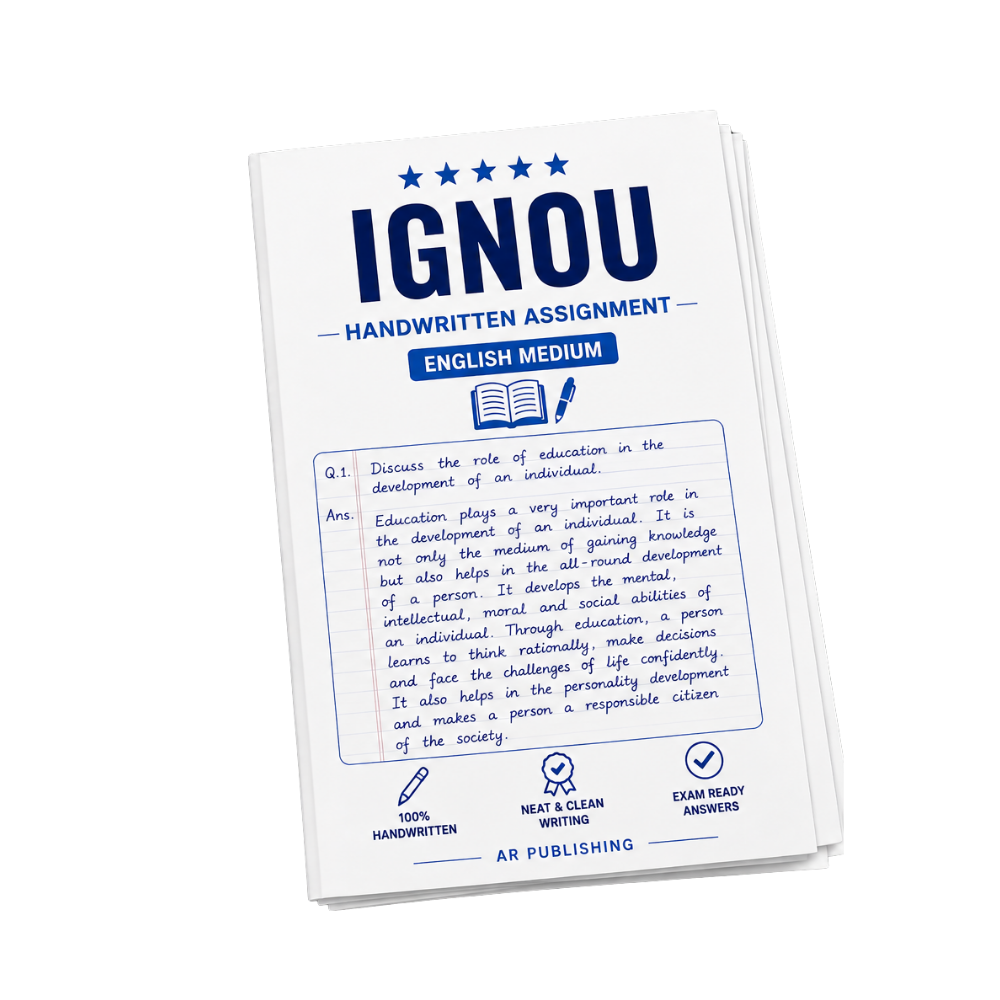
Frequently Bought Together
Popular course materials frequently ordered together

Syllabus & Overview
BEV-002 Guess Paper: Term-End Exam (TEE) Preparation Guide
The following structured content aligns with the official IGNOU curriculum for BEV-002 and includes chapter-wise question weightage, solved pattern analysis, and time-management tips for the 3-hour exam.
Key Syllabus Blocks & Focus Areas
- -1:
- High-weightage topics:
- Waste segregation at source (IS 15000:2009 compliance)
- Biodegradable vs. non-biodegradable waste management strategies
- Case studies: Delhi’s 3R (Reduce, Reuse, Recycle) policy implementation
- Landfill design and leachate management (previous year QP: 2020 Dec)
- Expected questions:
- Short-answer (SAQ): Define ‘zero waste cities’ with examples (2021 June).
- Long-answer (LAQ): Compare sanitary landfill vs. composting for municipal solid waste (MSW) (2022 Dec).
- High-weightage topics:
- -2:
- High-weightage topics:
- Agro-waste valorization: Biogas production from paddy straw (2019 June QP)
- Composting techniques (Vermicomposting vs. Aerobic composting)
- Nutrient recovery from crop residues (previous year: 2021 June)
- Expected questions:
- SAQ: Explain ‘anaerobic digestion’ with a flow diagram (2020 Dec).
- LAQ: Discuss government schemes for agro-waste management in India (2023 June).
- High-weightage topics:
- -3:
- High-weightage topics:
- Effluent treatment: Primary, secondary, and tertiary methods (2018 June QP)
- Hazardous waste classification (IS 3318:2016)
- Case study: Tata Steel’s waste-to-energy plant (previous year: 2022 Dec)
- Expected questions:
- SAQ: Define ‘BOD’ and ‘COD’ with their significance (2021 June).
- LAQ: Write a note on ‘extended producer responsibility (EPR)’ under MSW Rules, 2016 (2023 June).
- High-weightage topics:
- -4:
- High-weightage topics:
- Disaster waste management: Cyclone/hurricane scenarios (2020 June QP)
- Medical waste handling during pandemics (COVID-19 case study)
- Emergency response protocols for chemical spills (previous year: 2022 June)
- Expected questions:
- SAQ: Differentiate between ‘hazardous’ and ‘non-hazardous’ disaster waste (2021 Dec).
- LAQ: Design a waste management plan for a post-earthquake scenario (2023 Dec).
- High-weightage topics:
Exam Strategy & Time Management
- Allocate 40 minutes for reading the question paper and mapping answers to syllabus blocks.
- Prioritize SAQs (20 marks) first, then LAQs (30 marks). Use bullet points for clarity.
- For -1 and -3, focus on IS codes and government policies (e.g., MSW Rules, 2016).
- Avoid descriptive answers for numerical questions (e.g., landfill gas calculations).
Subject-Specific FAQs
Q: How to score full marks in case studies (e.g., Delhi’s 3R policy)? A: Use real-world data (e.g., tonnage reduced, recycling rates) and policy references (e.g., Ministry of Housing and Urban Affairs directives). Previous years’ QPs often expect quantitative analysis alongside explanations. Q: Are diagrams mandatory for -2 (agro-waste management)? A: Diagrams are highly recommended for topics like biogas plant layout or composting process flow. Even if not asked, they can fetch extra marks for clarity. Use IS-compliant symbols (e.g., for vermicomposting trays).Why buy from us?
-
Verified by top professors and 99th percentile students.
-
Always updated to the latest university curriculum.
-
High-quality, printable PDF formats with clear diagrams.
License & Terms
By purchasing this item, you agree to our standard academic license terms. You may use this product for personal study, but you may not resell or redistribute the files online.