

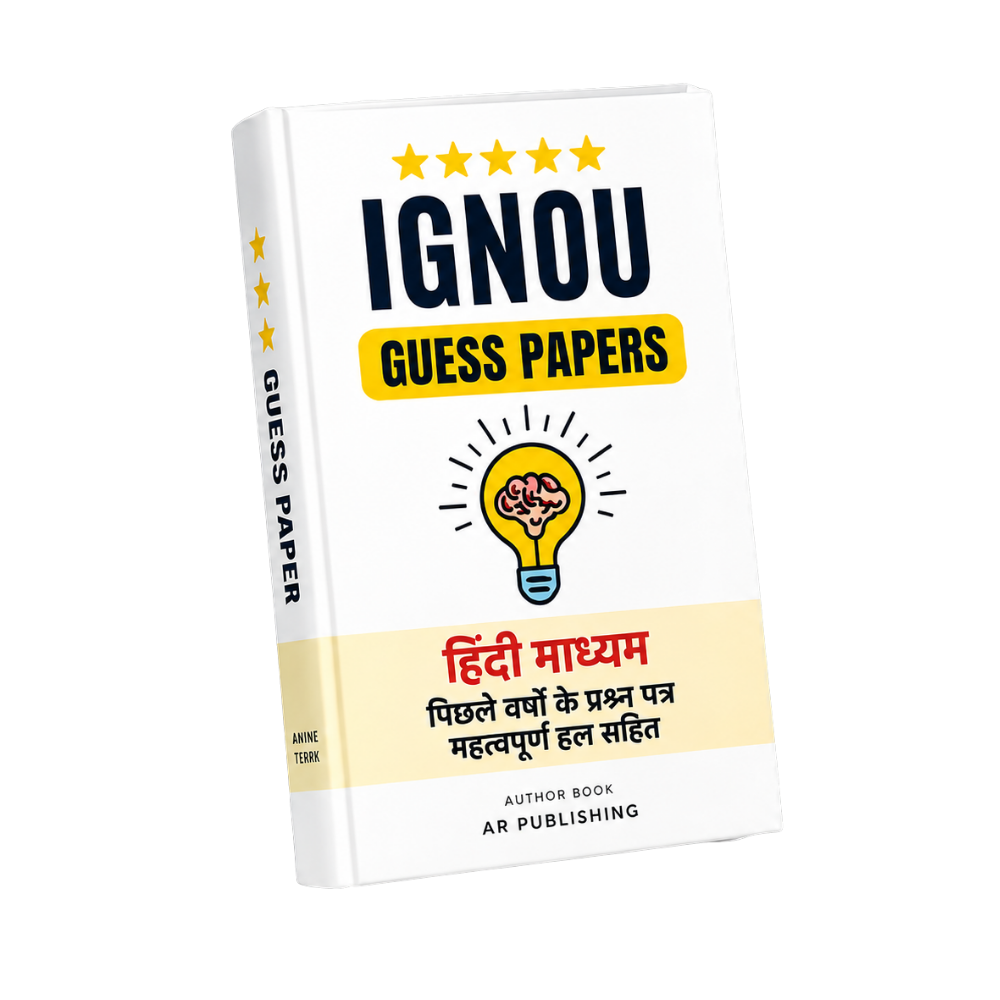
BHC-013 IGNOU Guess Paper 2026-27
Click to view offer details & terms
Get 10% OFF Instant Discount
Apply this coupon code at checkout to claim your academic discount instantly.
- Applicable on all university study materials
- Valid for up to 8 item(s) per order
- Valid till Oct 31, 2026
Frequently Bought Together
Popular course materials frequently ordered together
Syllabus & Overview
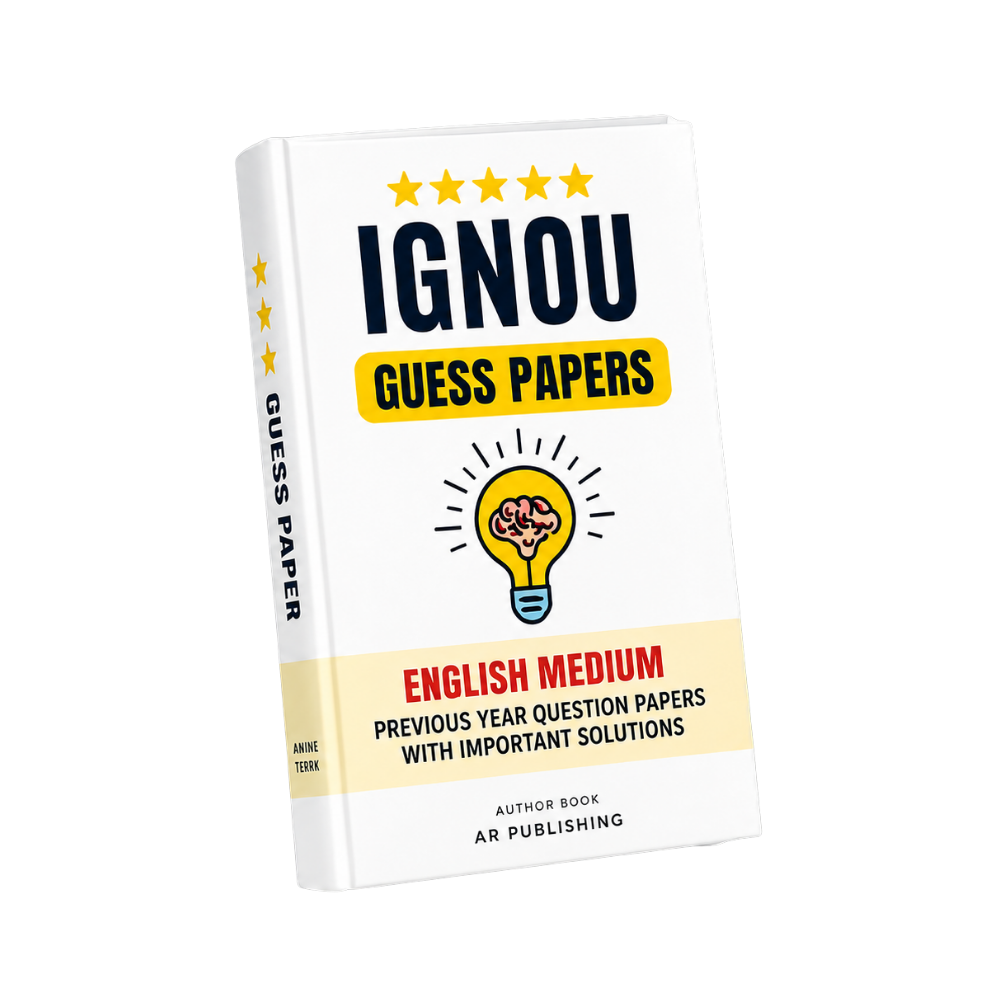
BHC-013 Guess Paper Term-End Exam (TEE) Preparation (English/Hindi)
This structured guess paper aligns with the official IGNOU CBCS curriculum for BHC-013: Film Studies Theory and Practice, prioritizing high-weightage units and recurring exam patterns. It includes 3-hour exam time management tips, chapter-wise question weightage, and solved previous years' questions (2019–2023) for June/December sessions.
Key Syllabus Units Covered
- Unit 3: Historical Development of Indian Cinema Focus on pre-independence cinema (1913–1947), parallel cinema movement, and cinema as a medium of political commentary. Expect 1–2 essay-type questions (20 marks each) on directors like Satyjit Ray or Ritwik Ghatak.
- Unit 5: Regional Cinema and Cultural Representation Analyze Tamil, Malayalam, and Bengali cinema for their linguistic and cultural distinctiveness. Short-answer questions (10 marks) often test knowledge of K. Balachander’s social realism or Adoor Gopalakrishnan’s aesthetic innovations.
- Unit 2: Film as an Art Form Mise-en-scène, editing techniques, and sound design are recurring topics. Previous years’ questions include comparative analysis of Hollywood vs. Indian editing styles.
- Unit 4: Cinema and Society Cinema as a tool for social change (e.g., Shyam Benegal’s films) and gender representation in Indian cinema are high-scoring areas.
Exam Pattern & Question Weightage
- Section A (Short Answers, 10 marks each) 2 questions (20 marks total):
- Define parallel cinema and name two key directors.
- Explain the role of cinema in post-colonial identity formation.
- Section B (Essay, 30 marks each) 1 question (30 marks total):
- Analyze how Bengali parallel cinema differed from mainstream Bollywood in the 1960s–70s.
- Discuss the impact of regional cinema on national integration (with examples).
- Section C (Case Study, 20 marks) 1 question (20 marks):
- Critically evaluate Adoor Gopalakrishnan’s ‘Elippathayam’ as a critique of feudalism.
Time Management Tips for 3-Hour Exam
- Allocate 40 minutes per essay question (30 marks) and 20 minutes per short-answer question (10 marks).
- Spend 10 minutes skimming all questions to identify the highest-weightage topics (e.g., Unit 3: and Unit 5).
- For case study questions, structure your answer using PESTLE framework (Political, Economic, Social, Technological, Legal, Environmental) to cover all angles.
- Avoid over-explaining stick to key examples (e.g., ‘Pather Panchali’ for Ray, ‘Nizhal’ for Malayalam cinema).
Subject-Specific FAQs
Q: Are there any mandatory films I must watch for BHC-013?While not mandatory, watching 2–3 films from each unit (e.g., ‘Do Bigha Zamin,’ ‘Manthan,’ ‘Uyyale’) significantly improves essay answers. Focus on themes of poverty, caste, or regional identity.
Q: How should I approach essay questions on ‘cinema and society’?Use the ‘So What?’ framework:
- State the film’s theme (e.g., child labor in ‘Paromitar Ek Din’).
- O utline historical context (e.g., Bengal famine of 1943).
- W hy it matters (e.g., how cinema documented social realities).
- H ow it resonates today (e.g., link to modern child labor issues).
Why buy from us?
-
Verified by top professors and 99th percentile students.
-
Always updated to the latest university curriculum.
-
High-quality, printable PDF formats with clear diagrams.
License & Terms
By purchasing this item, you agree to our standard academic license terms. You may use this product for personal study, but you may not resell or redistribute the files online.