

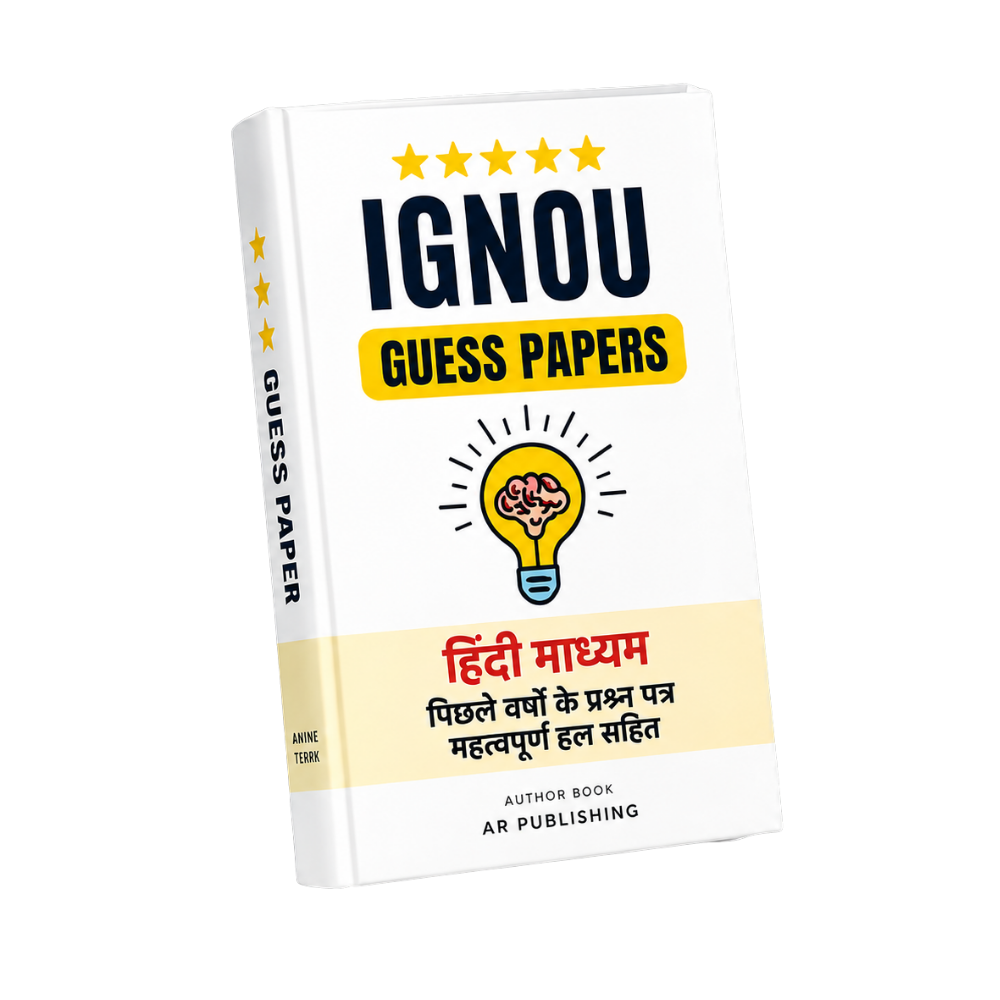
BHDLA-135 IGNOU Guess Paper 2026-27
Click to view offer details & terms
Get 10% OFF Instant Discount
Apply this coupon code at checkout to claim your academic discount instantly.
- Applicable on all university study materials
- Valid for up to 8 item(s) per order
- Valid till Oct 31, 2026
Enrolled in other IGNOU subjects?
Link your Enrollment No. to auto-map all your semester courses & free question papers.
Frequently Bought Together
Popular course materials frequently ordered together
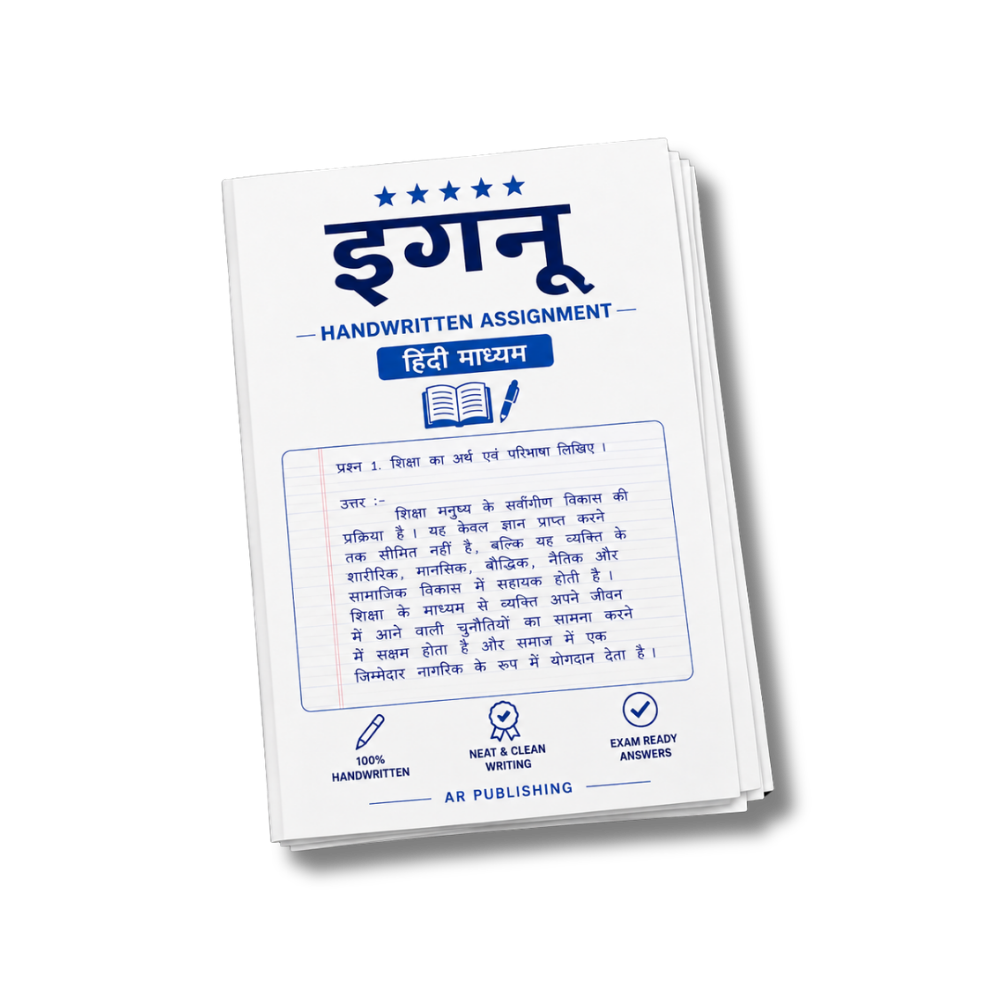
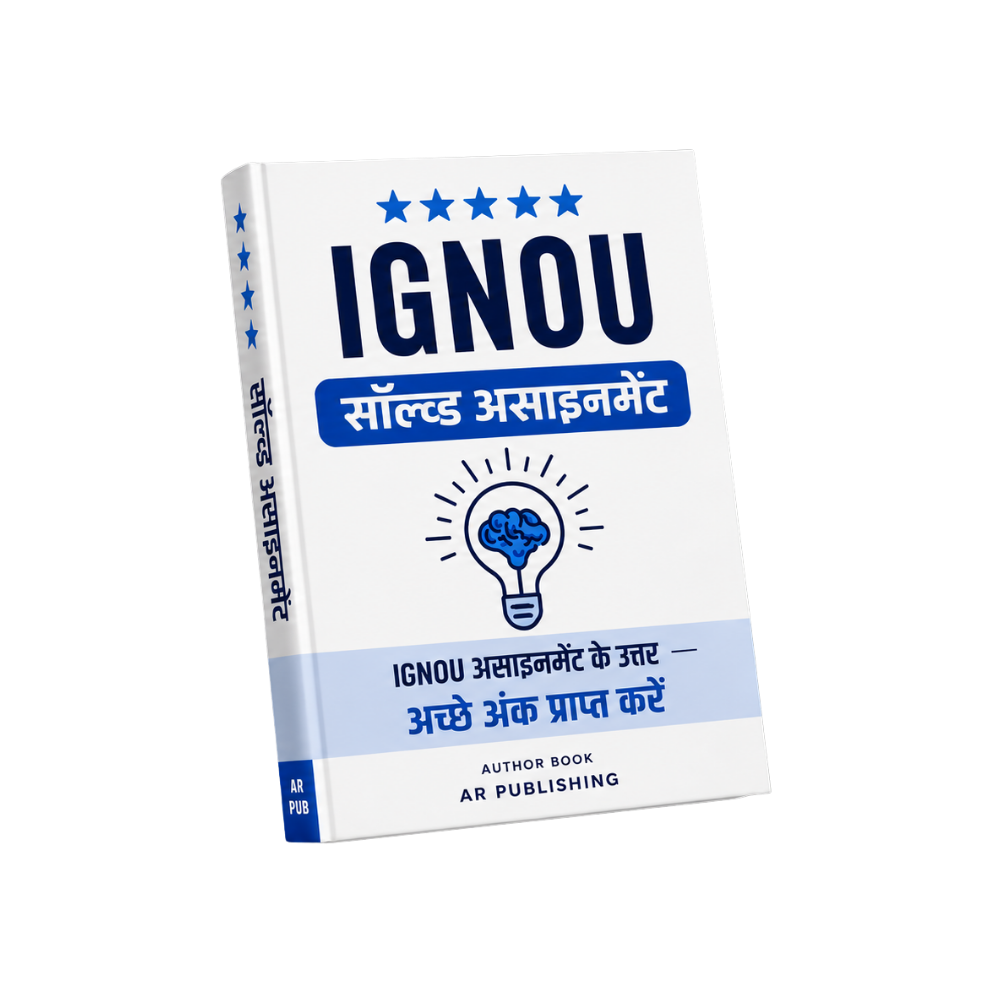
Syllabus & Overview
Course Scope & Syllabus Overview for BHDLA-135: Hindi Bhasha: Vividh Prayog ( )
BHDLA-135: Hindi Bhasha: Vividh Prayog
This course under IGNOU’s B.A. General (CBCS) curriculum focuses on the applied dimensions of Hindi language, emphasizing its practical usage across administrative, literary, scientific, and media domains. Students explore stylistic variations, discourse analysis, and contextual pragmatics while engaging with authentic texts—ranging from official documents to creative literature. The syllabus is designed to enhance linguistic precision, communicative competence, and critical interpretation, aligning with IGNOU’s School of Humanities’ emphasis on functional Hindi proficiency. This guide distills core examination patterns, leveraging decoded question trends from past term-end evaluations to streamline revision and maximize scoring potential.Key Syllabus Units & Topics
- Block-1 : Analyzes linguistic components (phonetics, morphology, syntax) and their role in cognitive comprehension, including how structural nuances influence meaning in Hindi discourse. Covers grammatical transformation rules and semantic field analysis with practical exercises.
- Block-2 : Examines discourse strategies in Hindi across administrative correspondence, journalism, and scientific writing, with a focus on register variation and audience adaptation. Includes case studies on formal vs. informal registers and their stylistic markers.
- Block-3 : Explores literary stylistics through poetic devices , prose rhetoric, and genre-specific conventions (e.g., short stories, essays). Emphasizes textual coherence and authorial intent in Hindi literary criticism.
- Block-4 : Investigates Hindi in digital/social media, examining slang evolution, netiquette, and multimodal communication. Analyzes discourse patterns in news broadcasting, podcasts, and online forums with real-world examples.
- Block-5 : Discusses pedagogical approaches to Hindi language instruction, including error analysis, assessment techniques, and cultural context in teaching. Covers IGNOU’s competency-based evaluation for assignments and examinations.
Frequently Asked Questions
Q: What is the marking scheme for BHDLA-135’s Term-End Examination (TEE), and how are descriptive and objective questions weighted?
A: The TEE for BHDLA-135 follows a 70% descriptive + 30% objective split, with long-answer questions (20 marks each) focusing on discourse analysis, stylistic interpretation, or application-based scenarios, while short-answer questions (10 marks) test grammatical accuracy, terminology, or theoretical concepts. Objective-type questions (MCQs/assertion-reason) contribute 15–20 marks, prioritizing syllabus-specific keywords and repeated exam patterns.
Q: How can students effectively prepare for the assignment submissions in BHDLA-135, given the emphasis on practical language application?
A: Assignments in BHDLA-135 require contextualized Hindi usage, such as rewriting formal letters, analyzing media discourse, or creating stylistic variations of a given text. Focus on IGNOU’s rubric criteria—accuracy (30%), creativity (25%), grammatical coherence (20%), and relevance to syllabus blocks (25%)—while referencing authentic samples from Blocks 1–5. Submit drafts for peer review via IGNOU’s eGyanKosh forums to align with examiner expectations.
Why buy from us?
-
Verified by top professors and 99th percentile students.
-
Always updated to the latest university curriculum.
-
High-quality, printable PDF formats with clear diagrams.
License & Terms
By purchasing this item, you agree to our standard academic license terms. You may use this product for personal study, but you may not resell or redistribute the files online.