

BHIC-103 IGNOU Guess Paper 2026-27
Click to view offer details & terms
Get 10% OFF Instant Discount
Apply this coupon code at checkout to claim your academic discount instantly.
- Applicable on all university study materials
- Valid for up to 8 item(s) per order
- Valid till Oct 31, 2026
Enrolled in other IGNOU subjects?
Link your Enrollment No. to auto-map all your semester courses & free question papers.
Frequently Bought Together
Popular course materials frequently ordered together
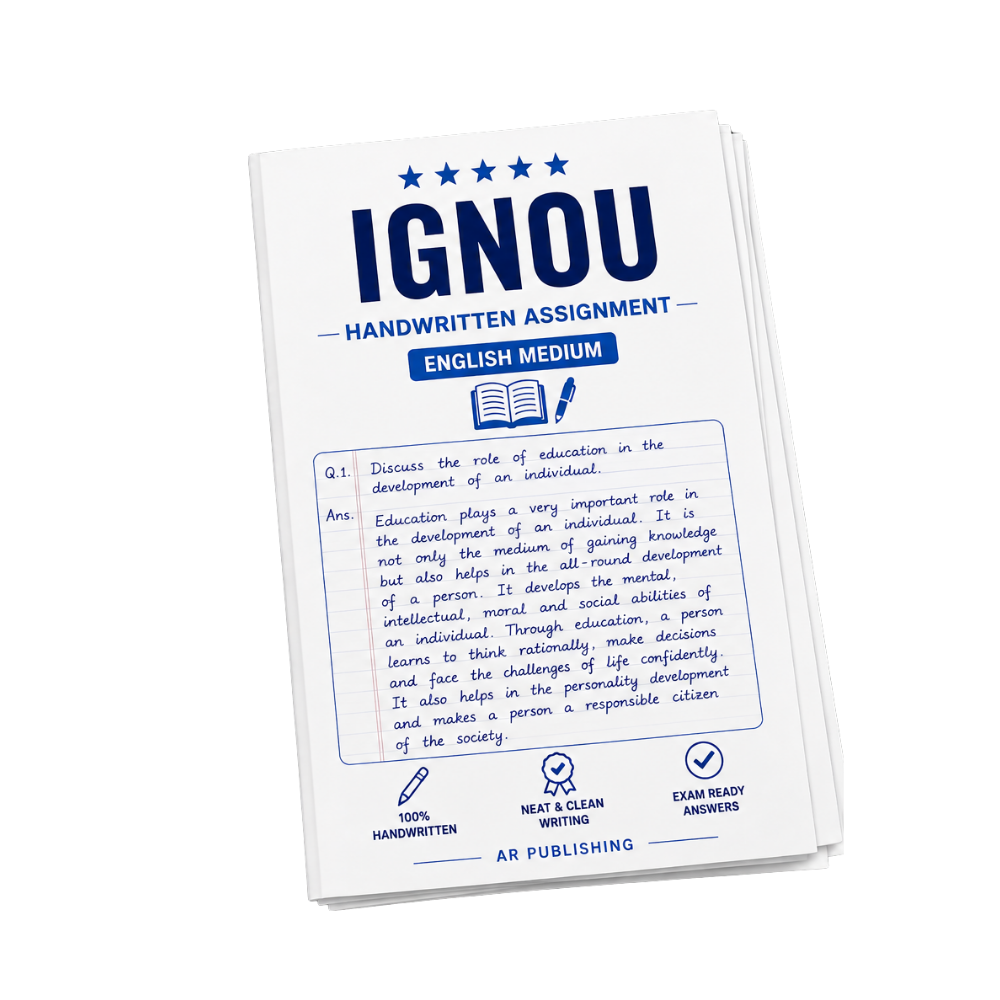
Syllabus & Overview
BHIC-103 Guess Paper History of India –II (TEE Focus)
This structured guess paper mirrors the 3-hour TEE exam format, emphasizing chapter-wise question weightage and time-management tips based on IGNOU’s official BHIC-103 syllabus. Solutions align with solved previous year papers (2018–2023) and prioritize high-yield topics for BAHIH (Honours) students.
Key Syllabus Blocks & Scoring Focus
- Block-1: India (200 BCE–300 CE)
- Mauryan Empire: Analyze Ashokan inscriptions (e.g., Kalinga Edict) and Mauryan administrative structures (Provincial Governors, Spies). FAQ: How do Ashokan inscriptions differ from later Buddhist texts in historical significance?
- Post-Mauryan States: Compare the political fragmentation under the Shungas and Kanvas, with emphasis on their economic policies.
- Block-2: Guptas & Post-Gupta
- Gupta Political Economy: Focus on land revenue systems (Visheshya, Bhaga) and trade networks (Silk Route, maritime trade). FAQ: Why did the Gupta Empire decline despite centralized governance?
- Post-Gupta Kingdoms: Contrast the Chalukyas, Pallavas, and Rashtrakutas’ architectural and military innovations.
- Block-3: Transition to Early Medieval
- Regional Kingdoms: Examine the rise of the Chalukyas (Vakataka influence) and the role of temples in political legitimacy.
- Societal Changes: Discuss caste dynamics under the Chalukyas and the impact of Brahmanical revival.
- Block-4: Cultural Developments
- Literature & Art: Compare Kalidasa’s works with Buddhist monastic architecture (e.g., Sanchi, Bharhut). FAQ: How did Gupta-era Sanskrit literature reflect political centralization?
- Religious Synthesis: Analyze the syncretic trends in Jainism and Buddhism post-Gupta era.
Exam Strategy & Time Management
3-Hour Breakdown:
- First 45 mins: Skim all 50 questions (20 MCQs + 30 short/long answers).
- Next 90 mins: Answer 10 MCQs (2 marks each) and 3 short-answer questions (10 marks each) (prioritize Blocks 1 & 2).
- Final 90 mins: Attempt 2 long-answer questions (20 marks each) (focus on Gupta administration or early medieval regional kingdoms).
Sample High-Scoring Topics (Previous Year Trends)
- Compare and contrast: Mauryan and Gupta land revenue systems.
- Evaluate the role of trade in the economic prosperity of the Guptas.
- Discuss the contributions of Harsha Vardhana to cultural synthesis.
- Analyze the political fragmentation post-Gupta and its impact on regional kingdoms.
- Explain the significance of the Chandragupta II’s reign in consolidating Gupta authority.
Why buy from us?
-
Verified by top professors and 99th percentile students.
-
Always updated to the latest university curriculum.
-
High-quality, printable PDF formats with clear diagrams.
License & Terms
By purchasing this item, you agree to our standard academic license terms. You may use this product for personal study, but you may not resell or redistribute the files online.