

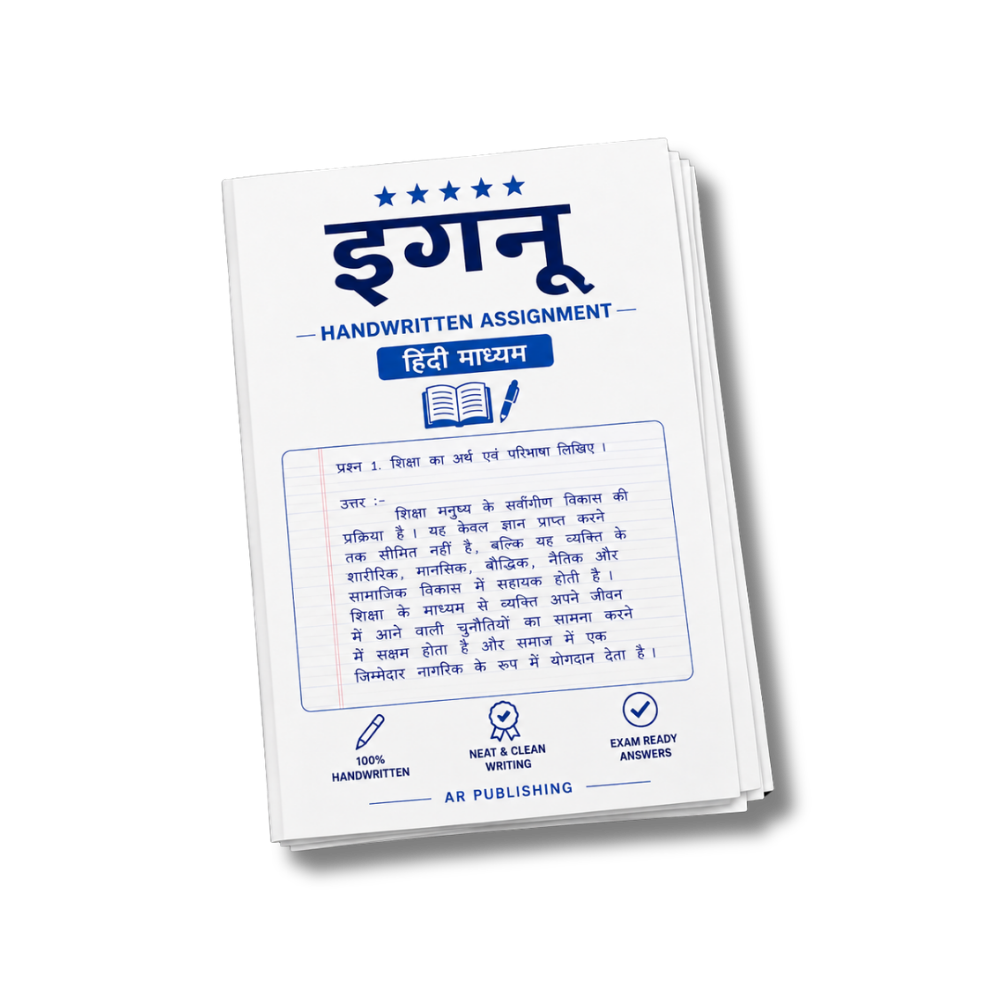
BHIC-113 IGNOU Handwritten Assignment 2026-27
Click to view offer details & terms
Get 10% OFF Instant Discount
Apply this coupon code at checkout to claim your academic discount instantly.
- Applicable on all university study materials
- Valid for up to 8 item(s) per order
- Valid till Oct 31, 2026
Frequently Bought Together
Popular course materials frequently ordered together
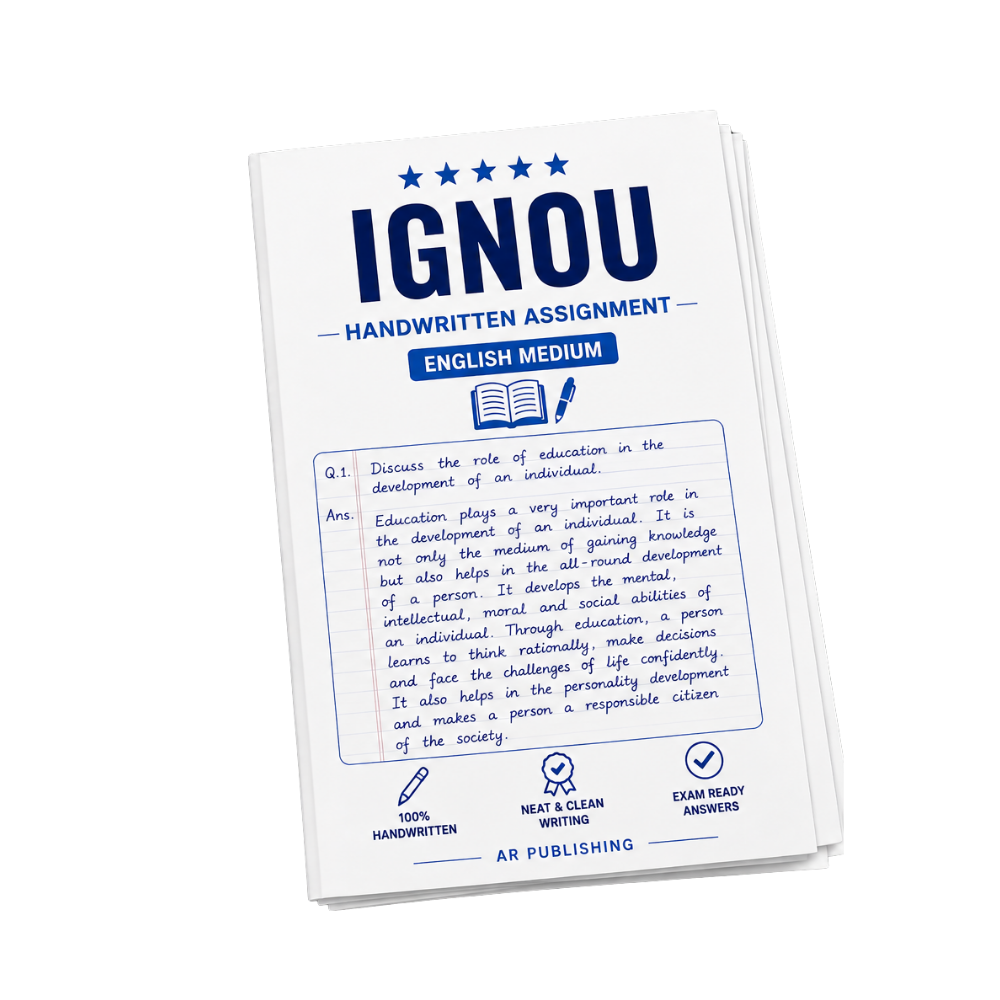
Syllabus & Overview
BHIC-113 Handwritten Assignment: Comprehensive Coverage of Modern India’s Political and Social Transformation (1857–1950)
This handwritten assignment for BHIC-113: -VII (c.1857-1950) is meticulously crafted to align with the IGNOU Bachelor of Arts (Honours) History curriculum, offering students a structured, ready-to-submit solution for assignments under the School of Social Sciences. The assignment spans pivotal phases of India’s struggle for independence, constitutional evolution, and the establishment of a democratic republic, ensuring academic rigor and adherence to the prescribed syllabus. Written on premium 80 GSM A4 ruled paper with clear, legible handwriting, it includes a pre-filled IGNOU cover page and the original question paper, eliminating last-minute formatting errors.Key Syllabus Units and Topics Covered
- Unit 11: : This unit examines the 1942 Quit India Movement, analyzing its origins, key leaders (Gandhi, Nehru, Patel), mass participation, and the British response, including the suppression of civil disobedience and the shift toward direct governance.
- Unit 14: : Focuses on Gandhi’s philosophical foundations (ahimsa, satyagraha), strategic approaches to nonviolent resistance, and his role in unifying diverse social groups through moral leadership and mass mobilization.
- Unit 19: 1945–1947: Explores the post-WWII geopolitical landscape, the failure of Cripps Mission, the Cabinet Mission Plan, and the negotiations leading to India’s partition, with emphasis on communal tensions and the role of the Constituent Assembly.
- Unit 20: : Critically evaluates the ideological underpinnings of communal politics, the role of the Muslim League, and the consequences of partition, including the refugee crisis and early challenges to nation-building.
- Unit 21: : Covers the drafting of the Indian Constitution, federal structure debates, and the adoption of democratic principles, highlighting the contributions of figures like Dr. B.R. Ambedkar and the challenges of implementing secular governance.
Frequently Asked Questions
Q: What is the marking scheme for BHIC-113 assignments, and how much weight do they carry toward the final grade?
A: Assignments in BHIC-113 contribute 30% to the total marks, while the term-end examination accounts for the remaining 70%. Each assignment is graded on clarity, historical accuracy, and adherence to the prescribed structure, with a passing criterion of 50% in both components.
Q: Are there specific guidelines for referencing sources in BHIC-113 assignments, or can students rely solely on the prescribed textbook?
A: While the prescribed textbook (India’s Struggle for Independence, 1857–1947) is mandatory, students must cite additional academic sources (e.g., IGNOU study materials, scholarly articles) using APA or MLA format to demonstrate critical engagement with the syllabus. Plagiarism is strictly penalized, and originality is evaluated rigorously.
Why buy from us?
-
Verified by top professors and 99th percentile students.
-
Always updated to the latest university curriculum.
-
High-quality, printable PDF formats with clear diagrams.
License & Terms
By purchasing this item, you agree to our standard academic license terms. You may use this product for personal study, but you may not resell or redistribute the files online.