

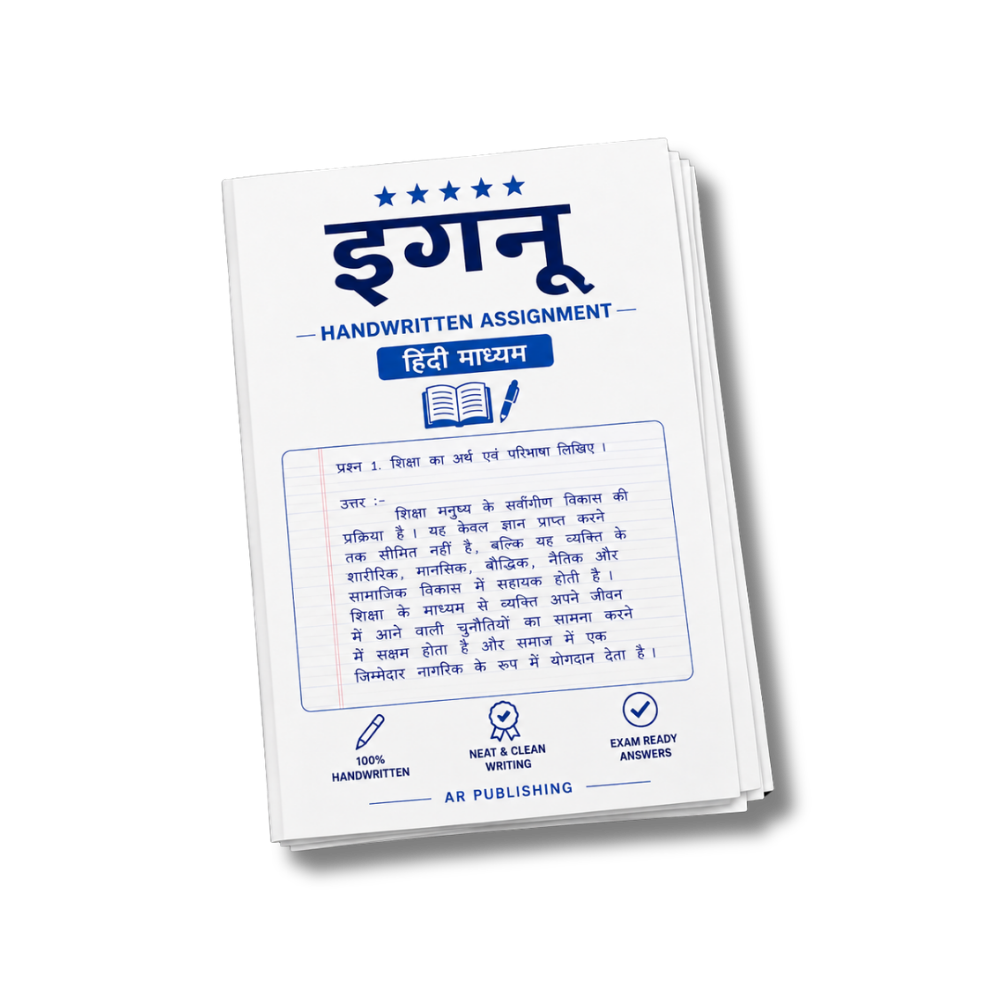
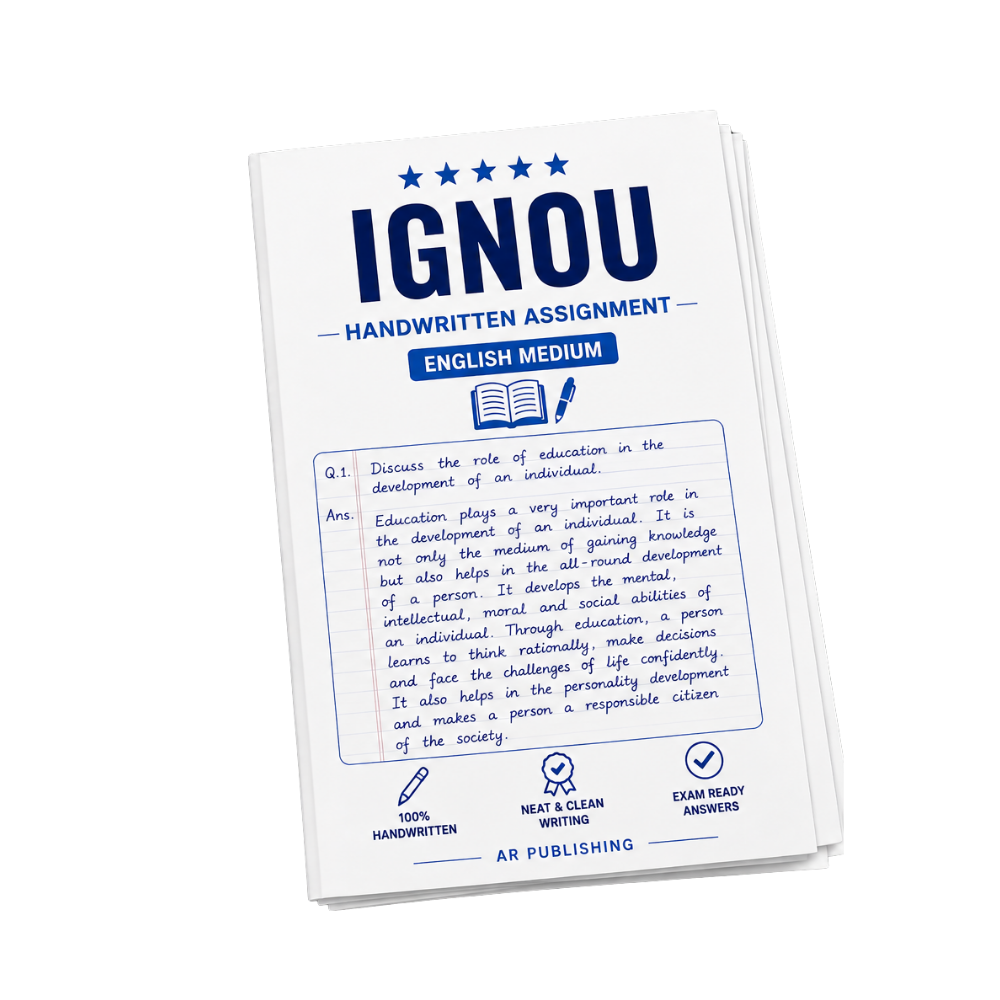
BLE-012 IGNOU Handwritten Assignment 2026-27
Click to view offer details & terms
Get 10% OFF Instant Discount
Apply this coupon code at checkout to claim your academic discount instantly.
- Applicable on all university study materials
- Valid for up to 8 item(s) per order
- Valid till Oct 31, 2026
Frequently Bought Together
Popular course materials frequently ordered together
Syllabus & Overview
BLE-012 Co-operative Law Physical Handwritten Assignment (80 GSM A4 Rulings)
This ready-to-submit hard copy assignment is designed exclusively for IGNOU’s Certificate (School of Law) BLE-012 course, covering all mandatory blocks with detailed, human-handwritten explanations on 80 GSM ruled A4 paper. Delivered via Speed Post with an attached official IGNOU front page and printed question paper for seamless submission.
Key Syllabus Coverage (Official IGNOU Curriculum BLE-012)
- Block-1: Genesis, Objectives, Features, and Development
- Historical evolution of cooperative societies in India and globally.
- Core objectives: Economic empowerment, social justice, and sustainable development.
- Distinctive features: Democratic governance, voluntary membership, and limited returns.
- Case studies on cooperative development milestones (e.g., Multi-State Cooperative Societies Act, 2002).
- Block-2: Registration, Amendment of Bye-Laws, Membership, and Management
- Step-by-step registration process under the Multi-State Cooperative Societies Act and state-specific laws.
- Amendment procedures for bye-laws: Legal compliance and stakeholder approval.
- Membership eligibility, rights, and obligations (e.g., voting rights, liability limits).
- Management structures: Board of directors, committees, and internal audits.
- Block-3: Regulative Framework of Co-operatives
- Role of the Cooperative Audit Authority and regulatory oversight.
- Financial regulations: Capital structure, dividend policies, and reserve funds.
- Anti-corruption measures and transparency requirements.
- Comparison of cooperative laws across states (e.g., Maharashtra vs. Tamil Nadu models).
- Block-4: Dispute Settlement, Dissolution, Offences, and Penalties
- Internal dispute resolution mechanisms (e.g., grievance committees).
- Extraneous dissolution procedures: Legal grounds and member rights.
- Offences under the Cooperative Societies Act: Misuse of funds, fraud, and penalties.
- Appeal processes and judicial remedies for cooperative disputes.
Subject-Specific FAQs
- Q: How does the registration process differ for a primary vs. multi-state cooperative?
A: Primary cooperatives register under state laws (e.g., Maharashtra Cooperative Societies Act), while multi-state cooperatives follow the 2002 Act, requiring central registration and compliance with both state and central directives.
- Q: What are the legal consequences of failing to amend bye-laws as per regulatory changes?
The cooperative may face penalties under Section 80 of the Act, including fines, suspension of operations, or dissolution. Non-compliance also voids legal validity for transactions.
Assignment Features
- Neat, legible handwriting on 80 GSM A4 ruled paper for clarity.
- Includes official IGNOU front page and printed question paper for submission.
- Delivered via Indian Speed Post to the student’s registered address.
- Strictly aligned with the latest IGNOU curriculum (verified via eGyanKosh).
Why buy from us?
-
Verified by top professors and 99th percentile students.
-
Always updated to the latest university curriculum.
-
High-quality, printable PDF formats with clear diagrams.
License & Terms
By purchasing this item, you agree to our standard academic license terms. You may use this product for personal study, but you may not resell or redistribute the files online.