

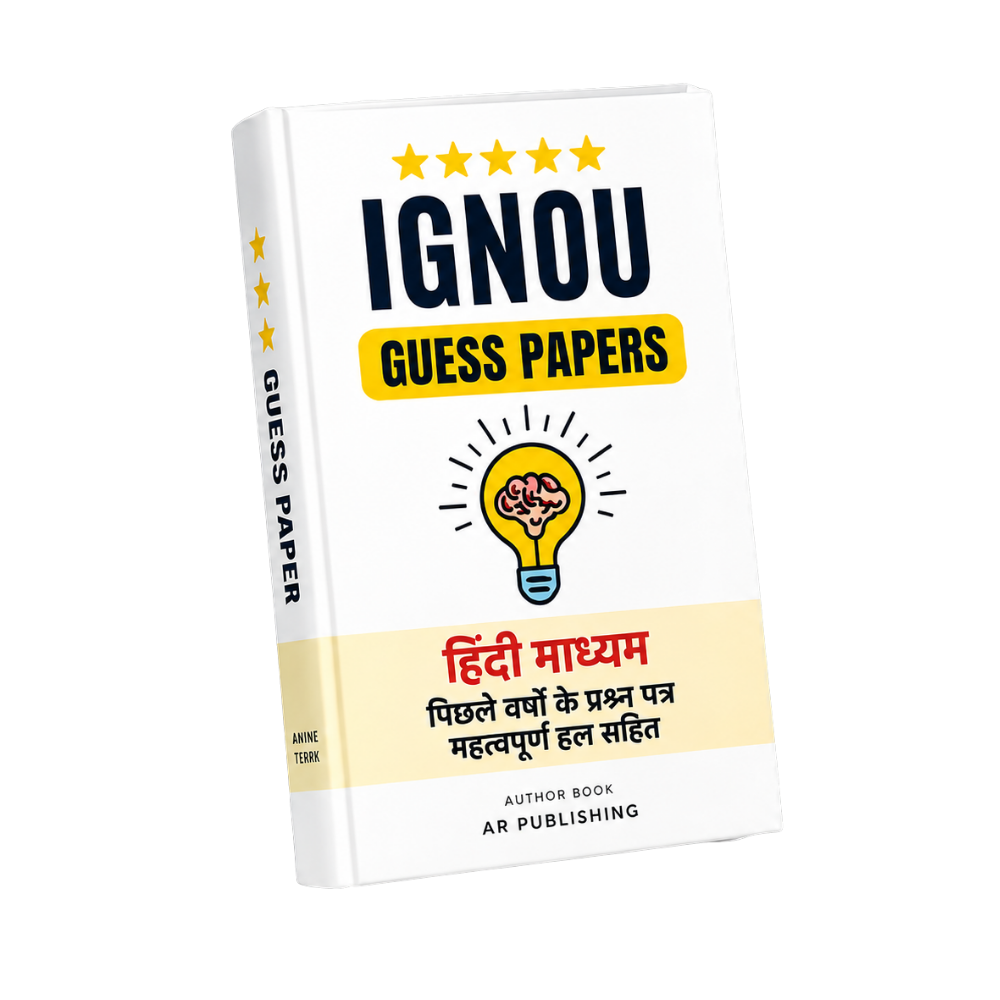
BLE-036 IGNOU Guess Paper 2026-27
Click to view offer details & terms
Get 10% OFF Instant Discount
Apply this coupon code at checkout to claim your academic discount instantly.
- Applicable on all university study materials
- Valid for up to 8 item(s) per order
- Valid till Oct 31, 2026
Frequently Bought Together
Popular course materials frequently ordered together
Syllabus & Overview
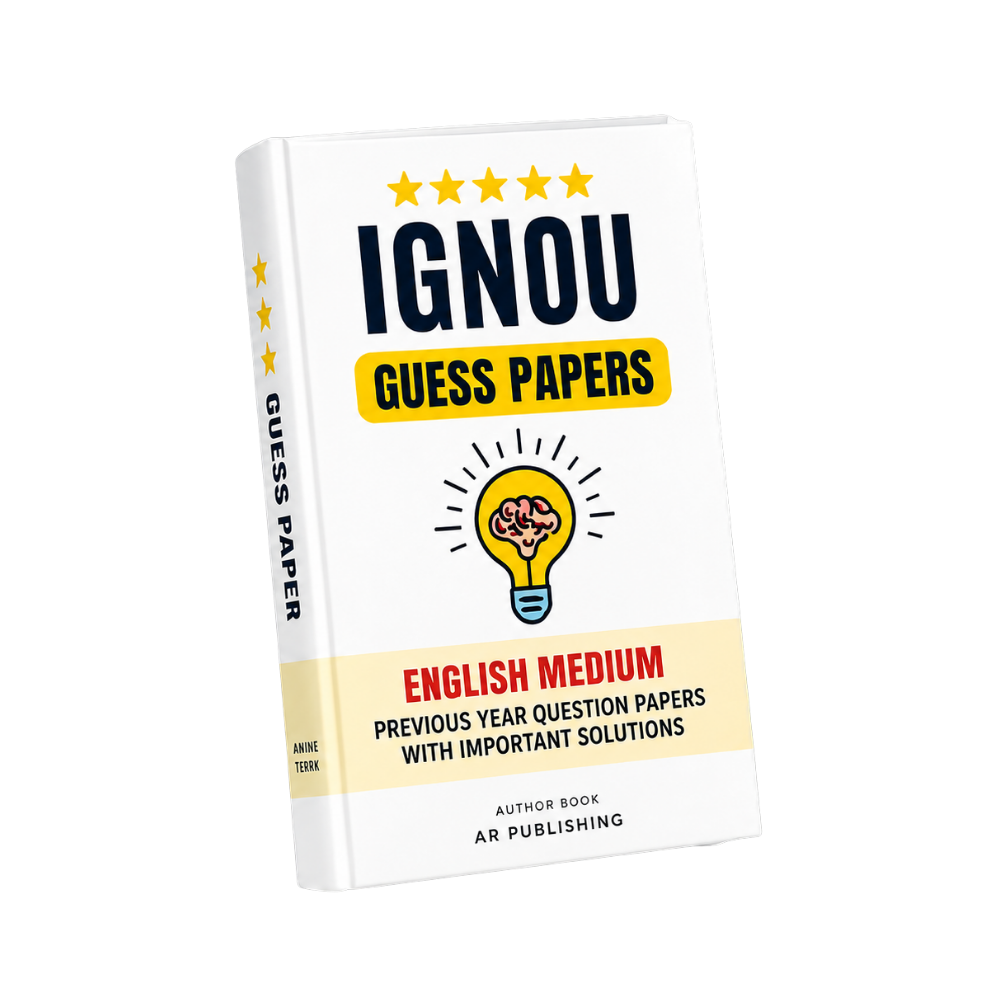
BLE-036 (Application of International Humanitarian Law) Guess Paper (Digital PDF)
This structured guess paper aligns with the Certificate (School of Law) curriculum for BLE-036, focusing on Term-End Exam (TEE) scoring patterns from the last 5–10 sessions (June & December). It includes chapter-wise weightage, time management tips, and high-probability questions based on official IGNOU past papers.
Key Syllabus Blocks & Focus Areas
- Block-1: Who May Apply IHL?
- Examine the jurisdictional scope of IHL (e.g., states, ICRC, NGOs, and armed groups).
- Analyze Geneva Conventions (1949) and Additional Protocols (1977) on applicability to conflicts.
- Common TEE questions: ‘Discuss the legal standing of non-state actors under IHL.’
- Block-2: National vs. International Application of IHL
- Compare domestic enforcement (e.g., criminalization of war crimes) vs. international mechanisms (ICC, UN Security Council).
- Case studies: ‘How does India incorporate IHL into its military manuals?’
- Expected questions: ‘Evaluate the role of national courts in enforcing IHL.’
- Block-3: International Application of IHL
- Focus on UN Security Council resolutions and ICC jurisdiction over war crimes.
- Key topics: ‘Analyze the role of the UN in monitoring IHL violations.’
- Past TEE trends: ‘Compare IHL enforcement in Syria vs. Ukraine.’
- Block-4: Role of ICRC in IHL Application
- Discuss ICRC’s neutral role, humanitarian missions, and detention standards (e.g., Geneva Convention III).
- Common question: ‘How does ICRC verify IHL compliance in conflict zones?’
- Time-saving tip: Memorize ICRC’s 7 Core Principles for quick referencing.
- Block-5: Role of Other Institutions
- Cover Amnesty International, Red Cross, and regional bodies (e.g., AU, ASEAN).
- Expected question: ‘Assess the effectiveness of NGOs in IHL advocacy.’
- Past paper pattern: ‘Compare IHL enforcement by the ICC vs. national courts.’
Exam Time Management (3-Hour Strategy)
- Allocate 45 minutes per block (15–20 mins writing, 10–15 mins review).
- Prioritize case studies (e.g., Rwanda genocide, Syrian conflict) for 20–25 marks.
- Avoid rote memorization; focus on legal reasoning (e.g., ‘Why did the ICC issue an arrest warrant for Omar al-Bashir?’).
- Use bullet points for definitions (e.g., ‘What is “distinction” under IHL?’) to save time.
Subject-Specific FAQs
- Q: Are there differences in IHL application between internal vs. international armed conflicts?
Yes. Internal conflicts (e.g., civil wars) are governed by Additional Protocol II (1977), which mandates minimum humanitarian standards (e.g., protection of civilians, medical personnel). International conflicts follow Geneva Conventions I–IV and Additional Protocol I, with stricter rules on combatant status and weapons use.
- Q: How does the ICC differ from national courts in enforcing IHL?
The ICC has complementarity—it intervenes only if the state fails to prosecute. National courts (e.g., Spain’s 1998 arrest of Pinochet) rely on universal jurisdiction for crimes like genocide. The ICC lacks jurisdiction over state parties that withdraw (e.g., Philippines in 2023), while national courts can prosecute anyone for core IHL violations.
Past TEE Question Patterns (June/Dec Sessions)
- Short Answer (10–15 marks): Define ‘unlawful combatant’ (Block-1) or ‘ICRC’s role in prisoner treatment’ (Block-4).
- Long Answer (25–30 marks): Compare IHL enforcement in Afghanistan vs. Libya (Block-3) or ICRC’s neutrality vs. political pressure (Block-4).
- Case Study (30 marks): Analyze ICC’s arrest warrant for Putin (2023) under IHL principles.
Why buy from us?
-
Verified by top professors and 99th percentile students.
-
Always updated to the latest university curriculum.
-
High-quality, printable PDF formats with clear diagrams.
License & Terms
By purchasing this item, you agree to our standard academic license terms. You may use this product for personal study, but you may not resell or redistribute the files online.