

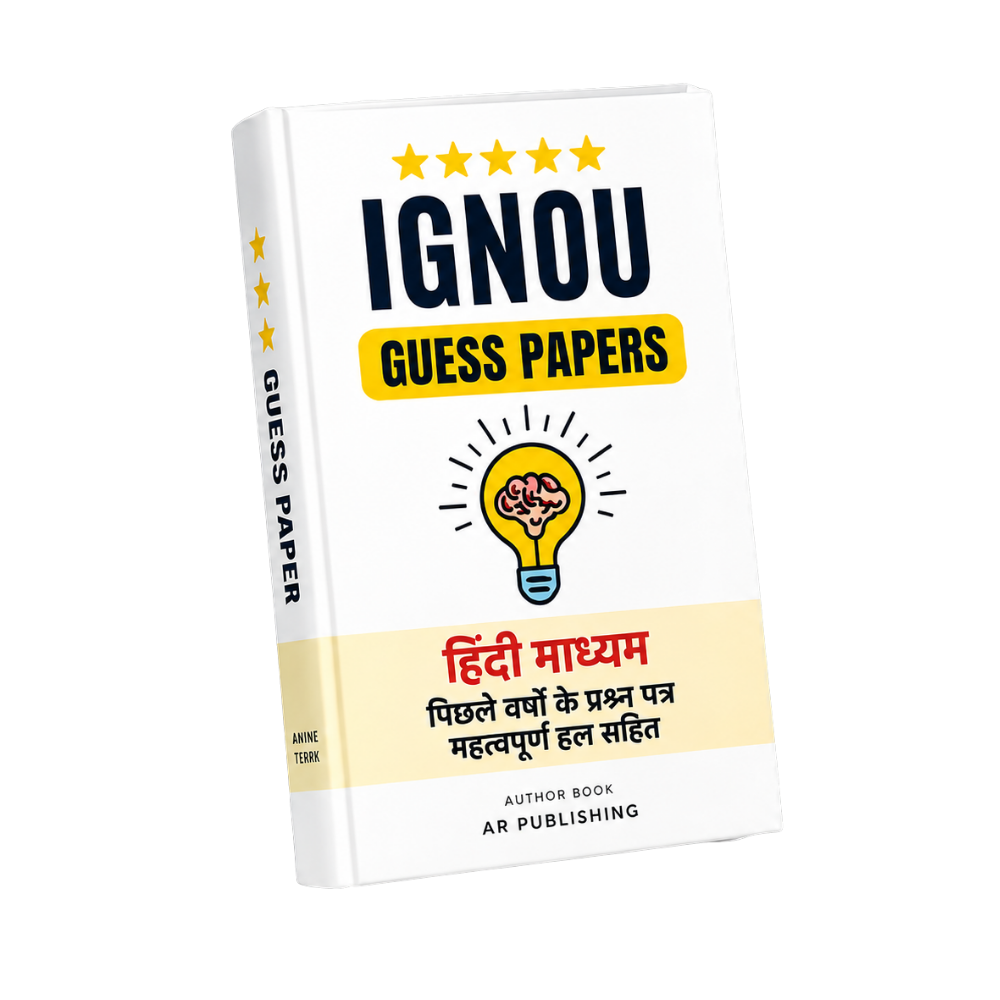
BLE-104 IGNOU Guess Paper 2026-27
Click to view offer details & terms
Get 10% OFF Instant Discount
Apply this coupon code at checkout to claim your academic discount instantly.
- Applicable on all university study materials
- Valid for up to 8 item(s) per order
- Valid till Oct 31, 2026
Frequently Bought Together
Popular course materials frequently ordered together
Syllabus & Overview
Course Scope & Syllabus Overview: BLE-104 Principles of Food Science and Nutrition
BLE-104, a core component of IGNOU’s Bachelor’s Degree Programme in Dietetics and Food Service Management, explores the scientific principles governing food composition, preservation, and nutritional value. This course integrates biochemistry, microbiology, and sensory evaluation to analyze how food undergoes physical and chemical transformations during processing, storage, and preparation. Students gain insights into the biochemical reactions affecting food quality, the role of additives and preservatives, and the nutritional implications of dietary choices—critical for careers in public health, clinical nutrition, and food industry regulation. The syllabus is designed to bridge theoretical knowledge with practical applications, ensuring graduates can critically assess food safety standards and nutritional guidelines as outlined in the IGNOU CBCS curriculum.Key Syllabus Units & Topics
- Unit 1: Fundamentals of Food Science: Covers the chemical and physical properties of major food constituents—carbohydrates, proteins, lipids, vitamins, and minerals—including their roles in nutrition and food functionality.
- Unit 2: Food Preservation Techniques: Examines traditional and modern preservation methods such as canning, freezing, dehydration, and irradiation, emphasizing their impact on food safety and shelf life.
- Unit 3: Food Additives and Contaminants: Analyzes the classification, regulatory frameworks, and functional roles of food additives (e.g., antioxidants, emulsifiers), alongside risks posed by contaminants like mycotoxins and heavy metals.
- Unit 4: Nutritional Assessment and Dietary Guidelines: Focuses on methods for evaluating dietary intake, nutrient requirements across life stages, and evidence-based dietary recommendations per WHO/FAO standards.
- Unit 5: Sensory Evaluation and Food Quality: Introduces principles of sensory science, including taste, texture, and aroma perception, and their integration into quality control protocols for food products.
Frequently Asked Questions
Q: What is the marking scheme for BLE-104’s Term-End Examination (TEE), and how are internal assignments weighted?
A: The TEE for BLE-104 carries 100 marks, with sections on short answers, long answers, and practical applications. Assignments contribute 30% to the final grade, while the TEE constitutes 70%, requiring consistent engagement with both theoretical and applied components.
Q: Are there recurring themes in BLE-104 exam questions, and how can students prioritize revision?
A: Repeated questions often focus on biochemical reactions, regulatory standards for additives, and case studies on nutritional deficiencies. Prioritize chapter-wise weightage—Units 2 and 3 (preservation and additives) frequently feature in exams—while practicing time-bound mock answers to align with the 3-hour duration.
Why buy from us?
-
Verified by top professors and 99th percentile students.
-
Always updated to the latest university curriculum.
-
High-quality, printable PDF formats with clear diagrams.
License & Terms
By purchasing this item, you agree to our standard academic license terms. You may use this product for personal study, but you may not resell or redistribute the files online.