

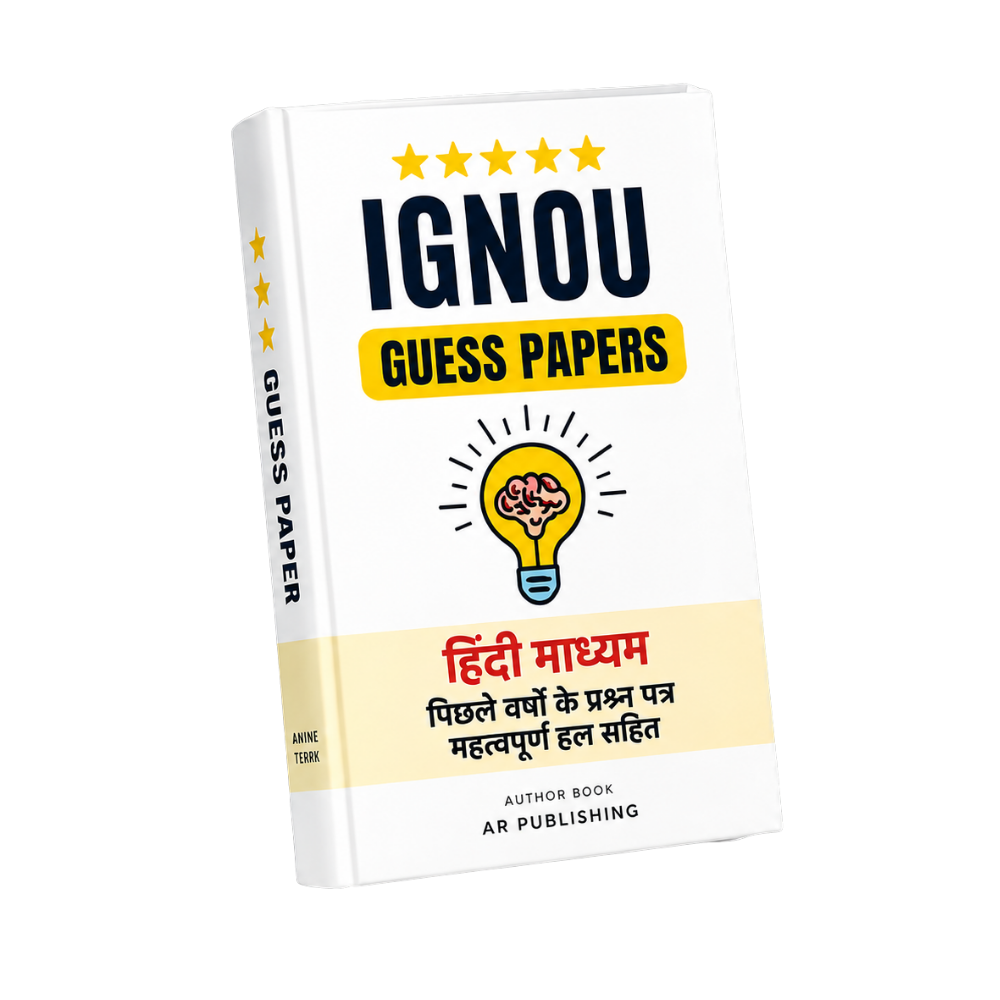
BPCC-103 IGNOU Guess Paper 2026-27
Click to view offer details & terms
Get 10% OFF Instant Discount
Apply this coupon code at checkout to claim your academic discount instantly.
- Applicable on all university study materials
- Valid for up to 8 item(s) per order
- Valid till Oct 31, 2026
Frequently Bought Together
Popular course materials frequently ordered together
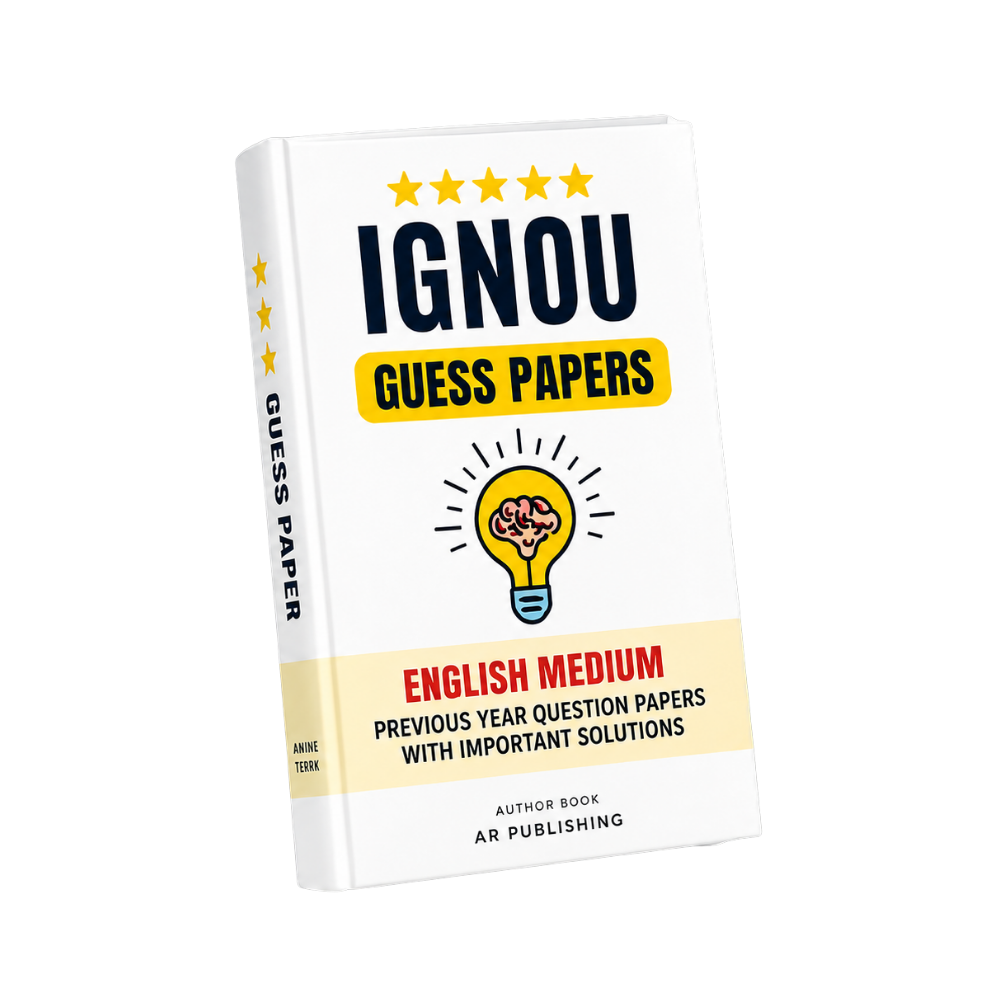
Syllabus & Overview
Course Scope & Syllabus Overview: BPCC-103 Psychology of Individual Differences
IGNOU’s BPCC-103: Psychology of Individual Differences explores the theoretical and empirical foundations of human variability, emphasizing how genetic, environmental, and experiential factors shape cognitive, emotional, and behavioral traits. Aligned with the Bachelor of Arts (Honours) Psychology curriculum, this course examines core constructs such as intelligence, aptitude, personality theories, motivational dynamics, and cultural influences on individual behavior. Students engage with empirical research, case studies, and practical applications to develop critical analytical skills, preparing them for both academic assessments and real-world psychological interventions.Key Syllabus Units & Topics
- Block-1 Individual Differences: This unit dissects the nature-nurture debate, covering classical theories of individuality (e.g., Galton’s early work) and modern frameworks like the Big Five personality model, while analyzing measurement tools such as standardized tests and inventories.
- Block-2 Intelligence and Aptitude: Focuses on intelligence theories (e.g., Gardner’s multiple intelligences, Sternberg’s triarchic model) and aptitude assessment, including group vs. individual testing methodologies and cultural biases in psychological evaluation.
- Block-3 Indian Thoughts in Psychology: Integrates indigenous perspectives on individuality, such as Ayurvedic temperaments and Vedantic concepts of Purusha and Prakriti, alongside comparative analyses with Western psychological paradigms.
- Block-4 Motivation and Creativity: Explores intrinsic/extrinsic motivation theories (e.g., Deci & Ryan’s self-determination theory) and creativity models (e.g., Guilford’s divergent thinking), with case studies on workplace and artistic innovation.
- Block-5 Guidelines for Practical: Provides hands-on training in administering psychological tests (e.g., Binet-Simon scales, MMPI), interpreting results, and ethical considerations in individual assessment.
Frequently Asked Questions
Q: How are marks distributed in BPCC-103’s Term-End Examination (TEE), and what is the passing criterion?
A: The TEE carries 100 marks, with internal assessment (assignments) contributing 20 marks, resulting in a total of 120 marks. The passing criterion is 40% aggregate (48 marks out of 120), including both internal and external evaluations.
Q: Which units in BPCC-103 have historically appeared most frequently in past TEE papers?
A: Blocks 2 (Intelligence and Aptitude) and 4 (Motivation and Creativity) consistently feature prominently in past papers, often accounting for 40–50% of questions. Focus on theories (e.g., Spearman’s g, Maslow’s hierarchy) and practical applications for higher scores.
Why buy from us?
-
Verified by top professors and 99th percentile students.
-
Always updated to the latest university curriculum.
-
High-quality, printable PDF formats with clear diagrams.
License & Terms
By purchasing this item, you agree to our standard academic license terms. You may use this product for personal study, but you may not resell or redistribute the files online.