

Instant PDF
Instant 24/7 Access
CBCS Verified
2026-27 Syllabus
100% Safe Pay
UPI, Cards & NetBanking
Student Support
WhatsApp Helpdesk
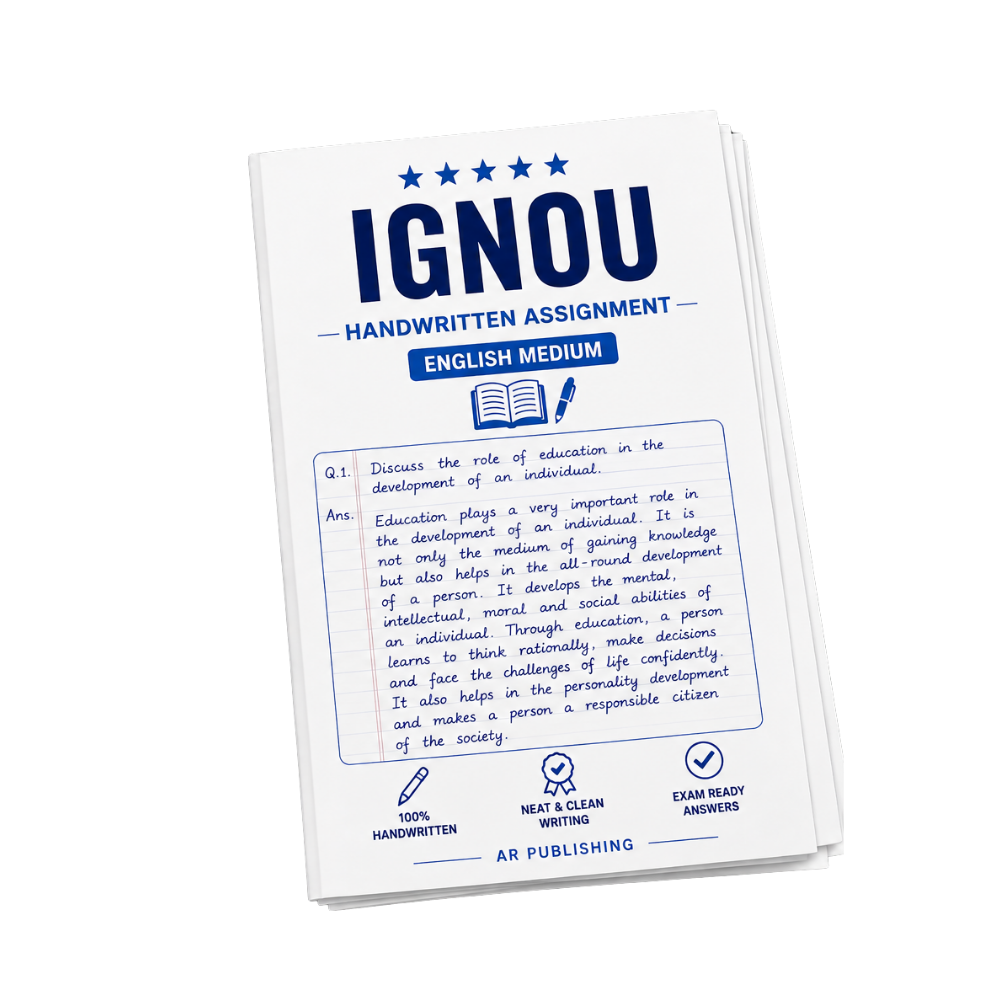
BPSC-111 IGNOU Handwritten Assignment 2026-27
Enrolled in other IGNOU subjects?
Link your Enrollment No. to auto-map your semester courses & free question papers.
Frequently Bought Together
Popular course materials frequently ordered together

Syllabus & Overview
Course Scope & Syllabus Overview
BPSC-111: Classical Political Philosophy is a foundational course under IGNOU’s Bachelor of Arts (Honours) Political Science programme, designed to explore the intellectual origins of political thought. This course critically examines the philosophical frameworks of ancient and early modern thinkers, tracing their influence on modern governance, ethics, and statecraft. Through rigorous engagement with primary texts and secondary interpretations, students develop analytical skills to assess enduring debates on justice, sovereignty, and human nature. The curriculum integrates historical context with contemporary relevance, ensuring students grasp both the theoretical depth and practical implications of classical political theories.Key Syllabus Units & Topics
- Block-1 Text and Context: Introduces the philosophical foundations of political theory, analyzing the relationship between politics, morality, and metaphysics. Topics include the nature of the state, the role of philosophy in governance, and the evolution of political thought from pre-Socratic philosophers to early political theorists.
- Block-2 Plato: Focuses on Plato’s Republic and Laws, dissecting his theory of the ideal state, the philosopher-king, and the allegory of the cave. The unit explores Plato’s critique of democracy, his vision of justice, and the interplay between reason, virtue, and political order.
- Block-3 Aristotle: Examines Aristotle’s Politics and Nicomachean Ethics, emphasizing his classification of governments, the concept of eudaimonia (human flourishing), and the role of citizenship. The unit contrasts his organic view of the state with Plato’s idealism, while addressing his ideas on law, property, and the common good.
- Block-4 Machiavelli: Analyzes The Prince and Discourses on Livy, highlighting Machiavelli’s pragmatic approach to power, leadership, and morality in politics. The unit evaluates his separation of ethics and statecraft, his analysis of republicanism, and his enduring influence on modern political realism.
- Block-6 Locke: Covers John Locke’s Second Treatise of Government, focusing on natural rights, social contract theory, and the limits of state authority. The unit explores his critique of absolute monarchy, his defense of property rights, and his foundational contributions to liberal political thought.
Frequently Asked Questions
Q: What is the marking scheme for BPSC-111 assignments, and how many marks are allocated per question?
A: The BPSC-111 assignments typically carry 30 marks, with each question or part allocated proportionally based on the study material’s weightage. Review the assignment question paper for specific mark distribution, as some questions may carry 5–10 marks depending on their complexity.
Q: What are the minimum pass marks required for BPSC-111, and how does the examination pattern work?
A: The passing criteria for BPSC-111 is 40% aggregate marks across theory and assignments. The examination includes a 100-mark theory paper (two hours) and 30 marks for assignments, with no separate pass marks for assignments—only the overall score determines eligibility.
Why buy from us?
-
Verified by top professors and 99th percentile students.
-
Always updated to the latest university curriculum.
-
High-quality, printable PDF formats with clear diagrams.
License & Terms
By purchasing this item, you agree to our standard academic license terms. You may use this product for personal study, but you may not resell or redistribute the files online.