

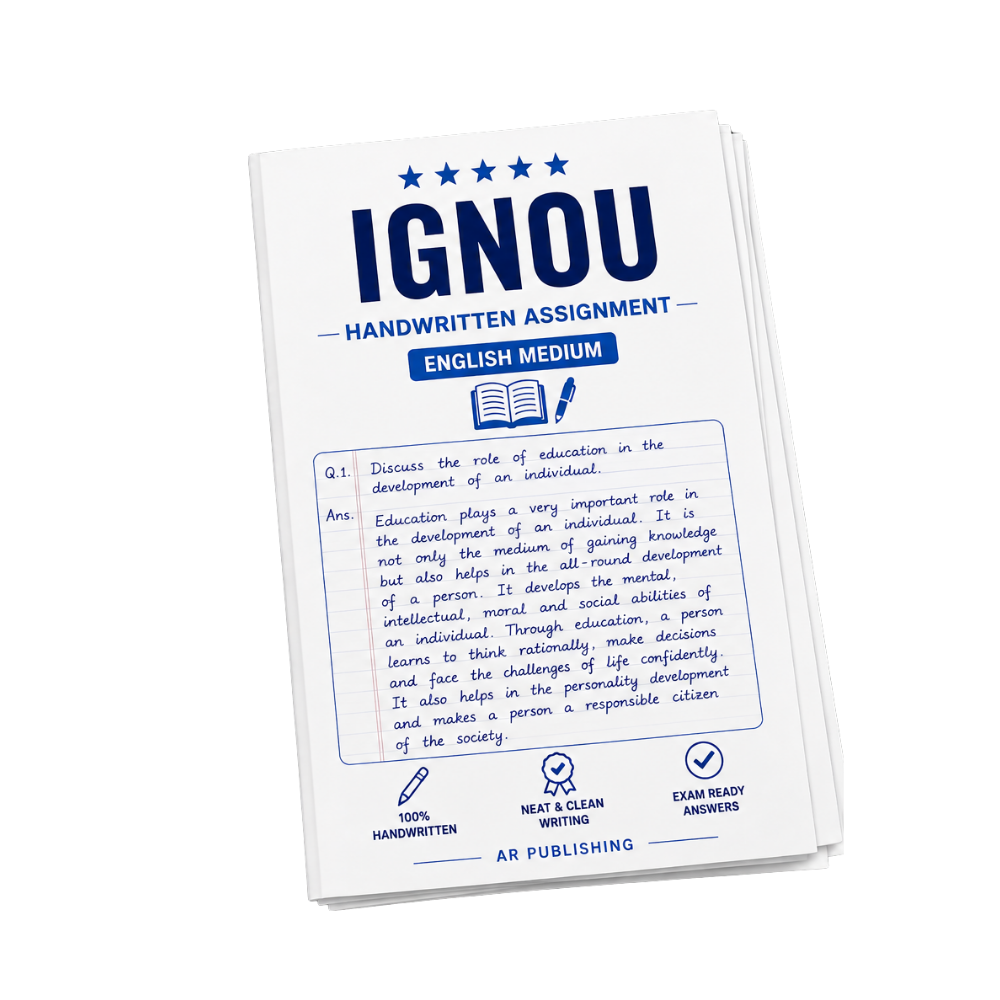
BPYC-107 IGNOU Handwritten Assignment 2026-27
Click to view offer details & terms
Get 10% OFF Instant Discount
Apply this coupon code at checkout to claim your academic discount instantly.
- Applicable on all university study materials
- Valid for up to 8 item(s) per order
- Valid till Oct 31, 2026
Frequently Bought Together
Popular course materials frequently ordered together
Syllabus & Overview
Course Scope and Syllabus Overview for BPYC-107: Philosophy of Religion
BPYC-107: Philosophy of Religion is a core course under the IGNOU Bachelor of Arts (Philosophy) program, designed to critically examine the conceptual foundations of religious belief, theological reasoning, and philosophical debates surrounding faith. This course explores the intersection of philosophy and religion, offering students a structured framework to analyze existential questions, metaphysical arguments, and ethical implications tied to religious thought. Through systematic study of key philosophical traditions—including classical, modern, and contemporary approaches—students develop rigorous analytical skills to evaluate the rationality of religious claims, the nature of divine existence, and the philosophical justifications for religious pluralism. The curriculum emphasizes both theoretical depth and practical application, ensuring students engage with primary texts, logical frameworks, and interdisciplinary perspectives. By addressing foundational issues such as the problem of God’s existence, the nature of religious experience, and contemporary debates on secularism and faith, this course prepares students to articulate coherent philosophical responses to religious phenomena.Key Syllabus Units and Topics
- Block-1: Religion: Meaning, Nature, and Origin: This unit investigates the philosophical definitions of religion, distinguishing between secular and theological interpretations. It explores the historical and anthropological origins of religious belief systems, examining how cultural contexts shape religious narratives and rituals.
- Block-2: Introduction to the Philosophy of Religion: Students are introduced to the core methodologies of philosophical inquiry into religion, including the role of reason, faith, and empirical evidence. The unit covers foundational texts and thinkers who laid the groundwork for modern philosophical theology.
- Block-3: Problem of Affirming God’s Existence-I: This block delves into classical arguments for God’s existence, such as the ontological, cosmological, and teleological arguments. Students critically assess the logical validity and philosophical implications of each, while also addressing counterarguments and skepticism.
- Block-4: Problem of Affirming God’s Existence-II: Focusing on contemporary perspectives, this unit examines empirical and naturalistic challenges to traditional proofs of God’s existence. It includes discussions on the problem of evil, the fine-tuning argument, and the role of science in theological debates.
- Block-5: Religious Pluralism and Some Contemporary Debates: The final block explores the philosophical implications of religious diversity, evaluating exclusivist, inclusivist, and pluralist stances. It addresses modern debates on secularism, religious syncretism, and the compatibility of faith with modern ethical frameworks.
Frequently Asked Questions
Q: What is the marking scheme for the BPYC-107 examination, and how are assignments graded?
A: The BPYC-107 examination follows a weighted marking system where the Theory paper carries 80 marks and the Assignment carries 20 marks. Assignments are evaluated based on logical coherence, depth of analysis, and adherence to philosophical reasoning, with a minimum passing score of 40% required in each component.
Q: Are there specific pass marks for BPYC-107, and how does the assignment contribute to the final grade?
A: To pass BPYC-107, students must secure a minimum of 40% in both the Theory paper and the Assignment. The Assignment, worth 20 marks, must be submitted in the prescribed format and meet the word limit to be considered for evaluation. A well-structured, handwritten submission adhering to IGNOU guidelines significantly enhances the chances of securing full marks.
Why buy from us?
-
Verified by top professors and 99th percentile students.
-
Always updated to the latest university curriculum.
-
High-quality, printable PDF formats with clear diagrams.
License & Terms
By purchasing this item, you agree to our standard academic license terms. You may use this product for personal study, but you may not resell or redistribute the files online.