

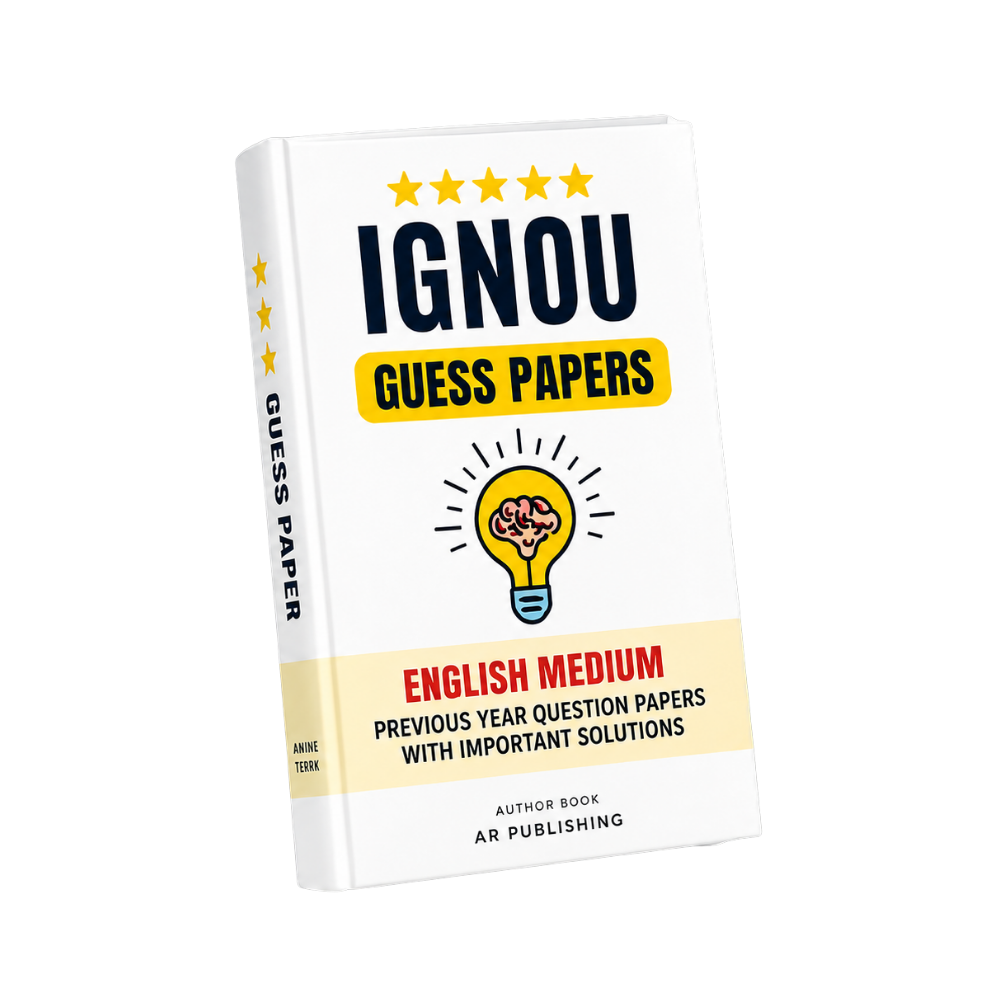
BRL-013 IGNOU Guess Paper 2026-27
Click to view offer details & terms
Get 10% OFF Instant Discount
Apply this coupon code at checkout to claim your academic discount instantly.
- Applicable on all university study materials
- Valid for up to 8 item(s) per order
- Valid till Oct 31, 2026
Enrolled in other IGNOU subjects?
Link your Enrollment No. to auto-map all your semester courses & free question papers.
Frequently Bought Together
Popular course materials frequently ordered together
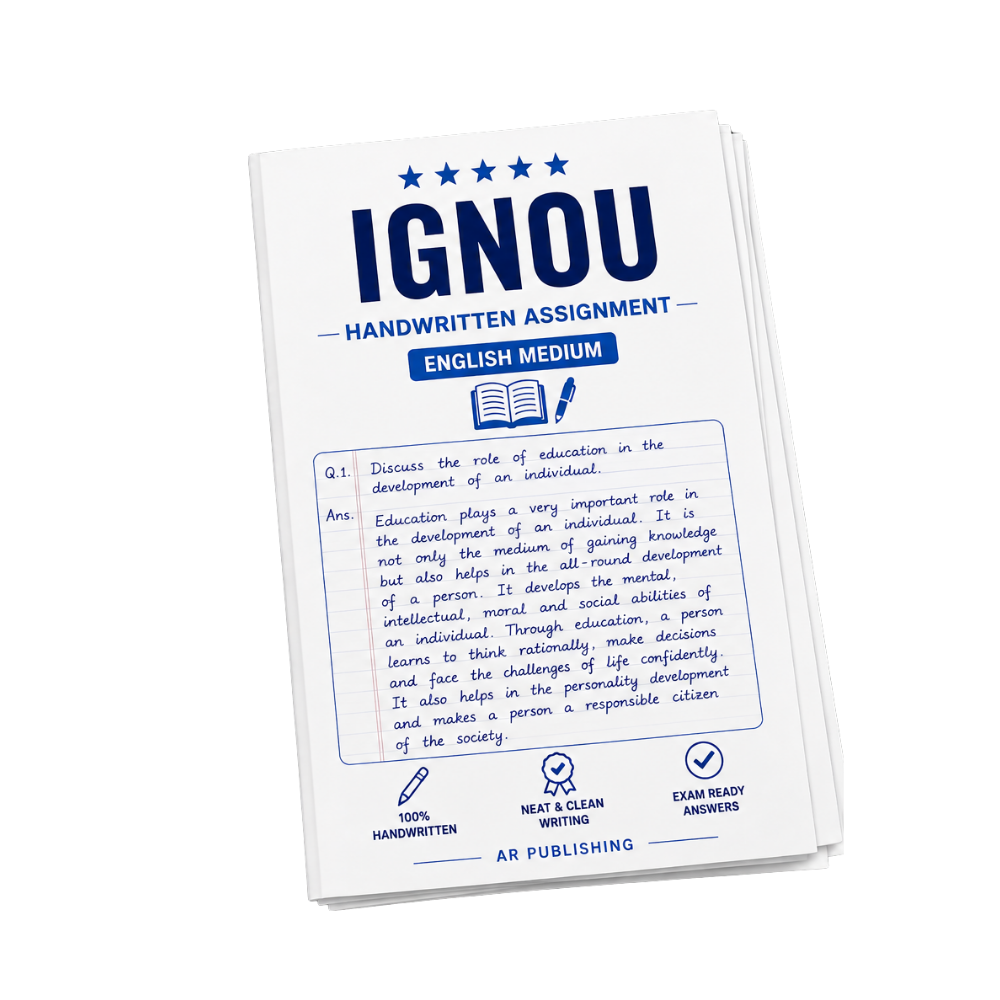
Syllabus & Overview
BRL-013 Guess Paper: Customer Value Management (Term-End Exam Focus)
This structured guess paper consolidates key scoring areas from BRL-013 (Customer Value Management) based on 5+ years of IGNOU TEE patterns. Emphasizes chapter-wise weightage, high-probability questions, and exam time optimization for BBA(Retailing) students.
Exam Structure & Weightage
- Unit-2: Customer Value Expectations (15-20% weight)
- GAP analysis models (expectation vs. perceived performance)
- Customer segmentation by value expectations (high/low involvement segments)
- Case studies on retail pricing strategies and perceived value
- Unit-6: Service Quality Management (20-25% weight)
- Gap Model of Service Quality (Parasuraman et al.) with real-world retail examples
- Service quality dimensions (reliability, responsiveness, assurance) in e-commerce
- Short-answer questions on SERVQUAL framework and its limitations
- Unit-10: CVM in the Indian Context (10-15% weight)
- Indian consumer behavior trends (affordability vs. aspirational value)
- Role of digital payment systems in enhancing perceived value
- Comparative analysis: Urban vs. rural customer value perceptions
- Unit-7: Customer Loyalty and Retention (15% weight)
- RFM (Recency, Frequency, Monetary) analysis for loyalty programs
- Cost-benefit analysis of retention strategies (e.g., loyalty discounts)
- Case studies on Indian retail chains (e.g., Reliance, Flipkart) and loyalty initiatives
- Unit-4: Customer Value Generation (10% weight)
- Value co-creation models (e.g., customer-brand collaboration)
- Bundle pricing and perceived value (theory + examples)
- Short-answer questions on dynamic pricing strategies
3-Hour Exam Time Management Tips
- Allocate 40-45 minutes per question (15 questions × 3 hours). Prioritize high-weightage units (e.g., Unit-6, Unit-2).
- For case studies (common in Unit-10/Unit-7), spend 10-12 minutes per case, focusing on CVM frameworks (e.g., GAP Model, SERVQUAL).
- Short-answer questions (e.g., Unit-4 on bundle pricing) should be answered in 5-6 lines with real-world examples (e.g., Indian retail trends).
- Avoid spending more than 15 minutes on any single question unless it’s a high-scoring unit (e.g., Unit-6).
Subject-Specific FAQs
- Q: Are diagrams allowed in BRL-013 exams?
A: Yes, simple diagrams (e.g., GAP Model, SERVQUAL framework) are acceptable if labeled clearly. Avoid complex graphs; focus on clarity.
- Q: How to score well in case studies (common in Unit-10)?
Use Indian retail examples (e.g., Reliance Digital’s discounts, Flipkart’s loyalty programs) and apply CVM frameworks
Why buy from us?
-
Verified by top professors and 99th percentile students.
-
Always updated to the latest university curriculum.
-
High-quality, printable PDF formats with clear diagrams.
License & Terms
By purchasing this item, you agree to our standard academic license terms. You may use this product for personal study, but you may not resell or redistribute the files online.