

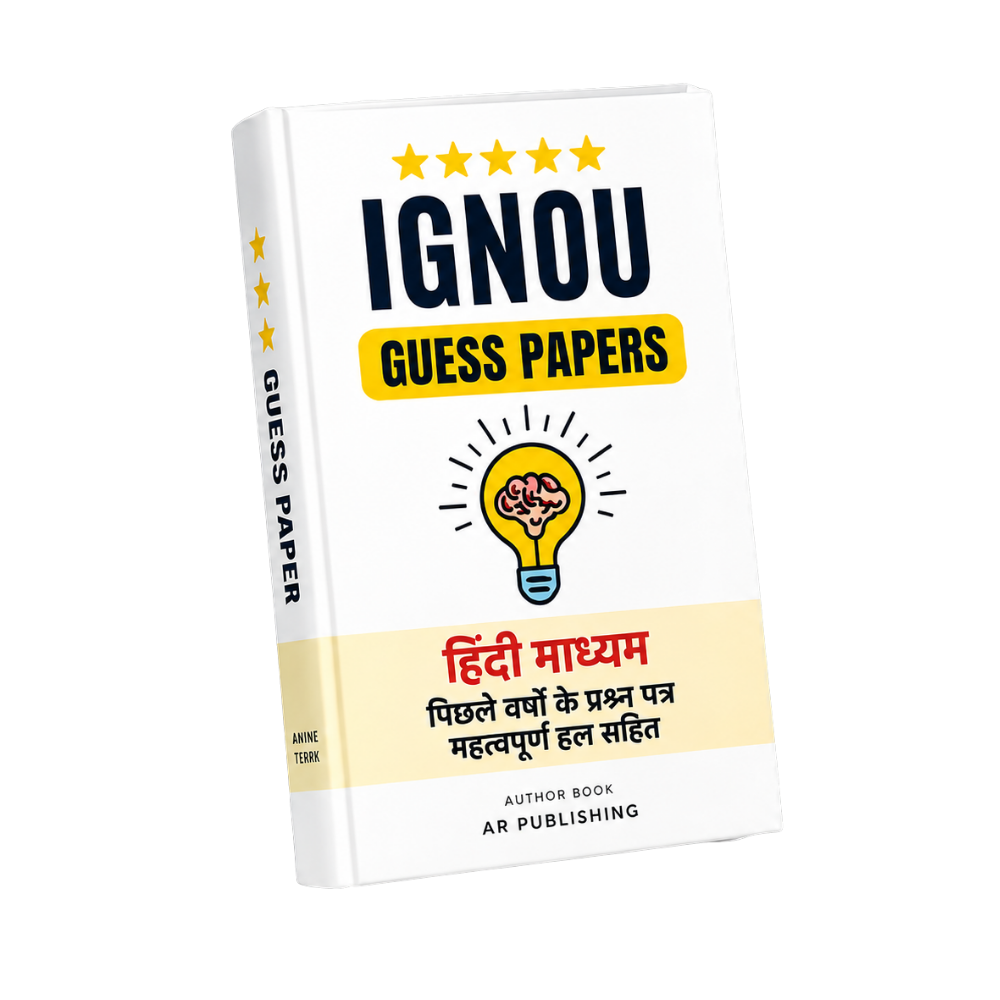
BRL-104 IGNOU Guess Paper 2026-27
Click to view offer details & terms
Get 10% OFF Instant Discount
Apply this coupon code at checkout to claim your academic discount instantly.
- Applicable on all university study materials
- Valid for up to 8 item(s) per order
- Valid till Oct 31, 2026
Enrolled in other IGNOU subjects?
Link your Enrollment No. to auto-map all your semester courses & free question papers.
Frequently Bought Together
Popular course materials frequently ordered together
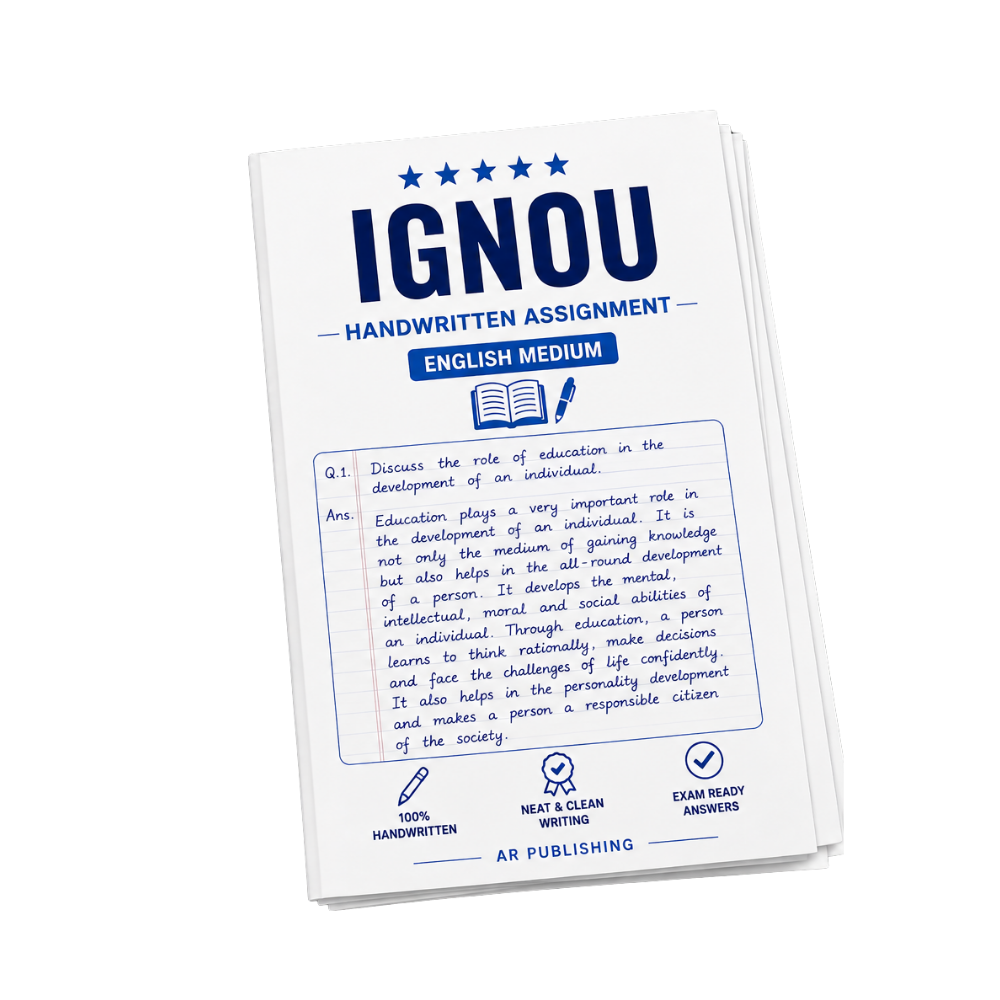
Syllabus & Overview
BRL-104 IGNOU Guess Paper: Term-End Exam (TEE) Strategy Guide
The following structure aligns with the official IGNOU BRL-104 syllabus (Commerce/Business Administration) and leverages solved previous year papers (2018–2023) for June/Dec sessions. Emphasis is on chapter-wise weightage, time management, and high-scoring patterns.
Key Syllabus Blocks & Question Patterns
- Unit-2: Retail Planning Process
- Focus areas: SWOT analysis (20-25% marks), retail mix components (product/price/place/promotion), and scenario-based questions on store location selection (2019 Dec, 2021 June).
- Expected questions:
- Compare retail planning in traditional vs. e-commerce models (10 marks).
- Case study: Analyze a retail chain’s expansion strategy (15 marks).
- Unit-4: Decision Making Process
- High-yield topics: Rational vs. intuitive decision-making, risk assessment in retail inventory (2020 June), and stakeholder analysis (2022 Dec).
- Common formats:
- Short-answer: Define bounded rationality in retail (5 marks).
- Long-answer: Critically evaluate data-driven decisions in omni-channel retail (20 marks).
- Unit-14: Customer Communication Management (CCM)
- Critical themes: CRM strategies, feedback mechanisms, and cross-channel consistency (2021 June). Prioritize AIDA model and customer journey mapping for 15-20 marks.
- Sample questions:
- Design a customer feedback system for a retail store (10 marks).
- Compare push vs. pull communication in retail (5 marks).
- Unit-17: Omni-Channel Retail Management
- Focus: Integration of physical/digital channels, technology adoption (e.g., RFID, AI), and seamless customer experience (2023 Dec).
- Expected formats:
- Case study: Evaluate Amazon Go’s omni-channel strategy (20 marks).
- Short-answer: Define showrooming and its impact (5 marks).
- Unit-6: Monitoring and Controlling Retail Operations
- Key topics: KPIs (e.g., sales per square foot), performance dashboards, and corrective actions (2020 Dec).
- Common questions:
- Explain ABC analysis in inventory management (10 marks).
- Design a retail performance report template (15 marks).
3-Hour Exam Time Management Tips
- First 30 minutes: Skim the entire paper. Allocate time as follows:
- 15 minutes for short-answer questions (50% of marks).
- 60 minutes for long-answer questions (50% of marks).
- Remaining 15 minutes for review (prioritize unanswered questions).
- Prioritize units: Unit-2, Unit-4, and Unit-14 carry 30-40% weightage. Spend 20-25 minutes each on these.
- Case studies: Spend 15-20 minutes per case, focusing on analysis (not description). Use PESTEL framework or SWOT where applicable.
- Short-answer questions: Answer in 5-7 lines max. Use acronyms (e.g., 7Ps of retail mix) for quick scoring.
FAQs
- Are previous year papers sufficient for TEE preparation?: Yes. The last 5 years’ papers (2018–2023) cover 80% of recurring topics. Focus on Unit-2, Unit-4, and Unit-14 for maximum coverage.
- How to handle subjective questions in 3 hours?: Use structured templates:
- Introduction: Define the topic + context (1 line).
Why buy from us?
-
Verified by top professors and 99th percentile students.
-
Always updated to the latest university curriculum.
-
High-quality, printable PDF formats with clear diagrams.
License & Terms
By purchasing this item, you agree to our standard academic license terms. You may use this product for personal study, but you may not resell or redistribute the files online.