

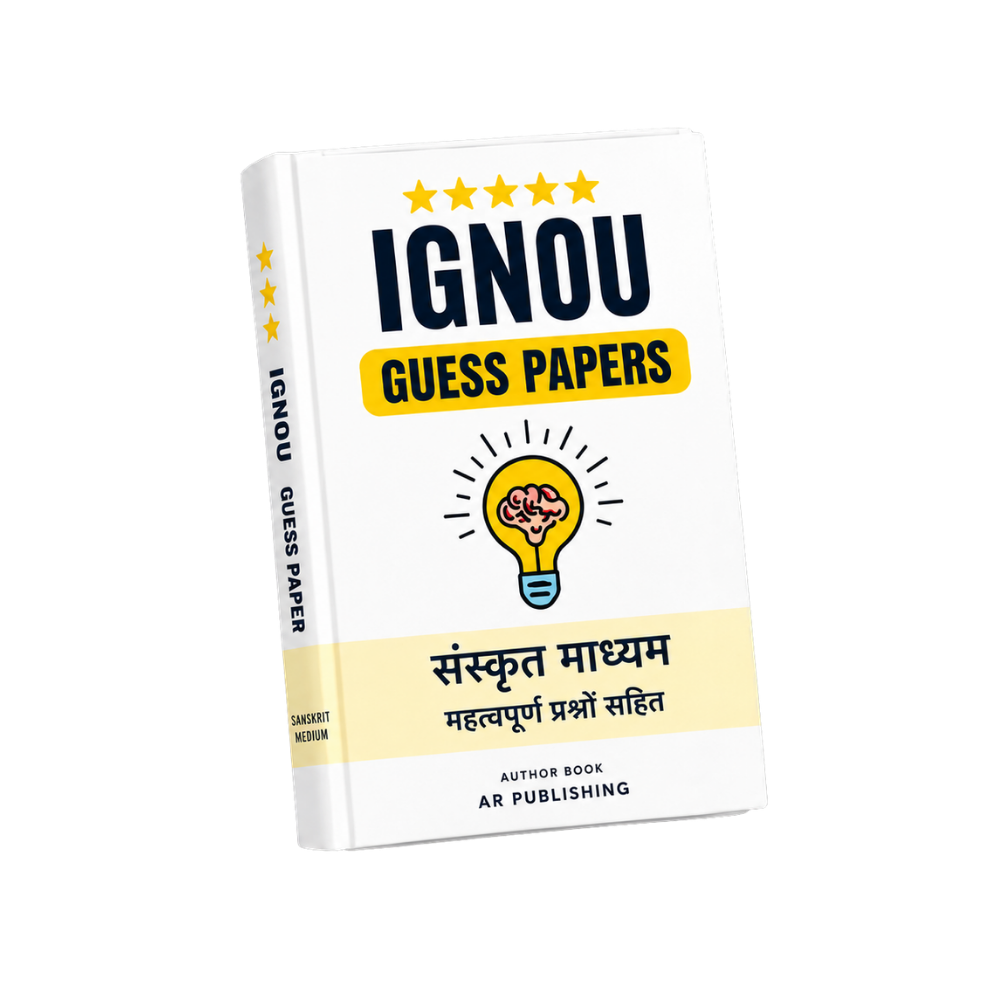
BSKC-186 IGNOU Guess Paper 2026-27
Click to view offer details & terms
Get 10% OFF Instant Discount
Apply this coupon code at checkout to claim your academic discount instantly.
- Applicable on all university study materials
- Valid for up to 8 item(s) per order
- Valid till Oct 31, 2026
Enrolled in other IGNOU subjects?
Link your Enrollment No. to auto-map all your semester courses & free question papers.
Frequently Bought Together
Popular course materials frequently ordered together
Syllabus & Overview
Course Scope and Syllabus Overview for BSKC-186: Sanskrit Studies
BSKC-186: Sanskrit Studies is a foundational course within IGNOU’s CBCS curriculum, designed to introduce students to the linguistic, literary, and philosophical richness of Sanskrit. This course spans Sanskrit grammar (vyakarana), classical poetic traditions, dramatic literature, and philosophical treatises, ensuring a comprehensive understanding of the language’s evolution and its role in shaping Indian thought. The syllabus emphasizes both theoretical and practical mastery, enabling learners to analyze texts critically, decode grammatical structures, and appreciate the cultural and intellectual legacy of classical Sanskrit.Key Syllabus Units and Topics
- Unit 1: Sanskrit Vyakarana (Grammar): Covers fundamental principles of Paninian grammar, including sandhi (phonetic assimilation), samasya (compound formation), and pratyahara (deletion), with exercises in parsing sentences and identifying grammatical rules.
- Unit 2: Vedic Literature and Rituals: Explores the structure of Vedic mantras, the significance of yajna (sacrificial rituals), and the philosophical underpinnings of the Samhitas and Brahmanas, with a focus on linguistic and ritualistic precision.
- Unit 3: Classical Sanskrit Poetry (Kavya): Analyzes the works of poets like Kalidasa and Bhavabhuti, dissecting meters (chandas), rhetorical devices (alankaras), and thematic conventions in devotional and heroic poetry.
- Unit 4: Sanskrit Drama and Rasa Theory: Examines the structure of Sanskrit plays (nataka), the application of rasa (emotional aesthetics), and the role of characters (naya) in conveying moral and philosophical dilemmas.
- Unit 5: Philosophical Shastras (Nyaya, Yoga, Vedanta): Introduces key texts like the Nyaya Sutras, Yoga Sutras, and the Bhagavad Gita, analyzing their logical frameworks, metaphysical propositions, and their influence on Indian thought.
Frequently Asked Questions
Q: What is the examination pattern for BSKC-186, and how are marks distributed among theory and practical components?
A: The BSKC-186 Term-End Examination (TEE) carries 100 marks, with a 70-mark theory paper (including objective and descriptive questions) and a 30-mark assignment component. Practical components like translation or grammar exercises are assessed within the theory paper.
Q: How can students effectively prepare for repeated questions in the BSKC-186 exam, given the focus on classical texts?
A: Focus on solving past 5–10 years’ question papers (June/December cycles) to identify recurring themes in grammar, Vedic rituals, or poetic analysis. Prioritize high-weightage units like vyakarana and rasa theory, as these appear consistently in exams.
Why buy from us?
-
Verified by top professors and 99th percentile students.
-
Always updated to the latest university curriculum.
-
High-quality, printable PDF formats with clear diagrams.
License & Terms
By purchasing this item, you agree to our standard academic license terms. You may use this product for personal study, but you may not resell or redistribute the files online.