


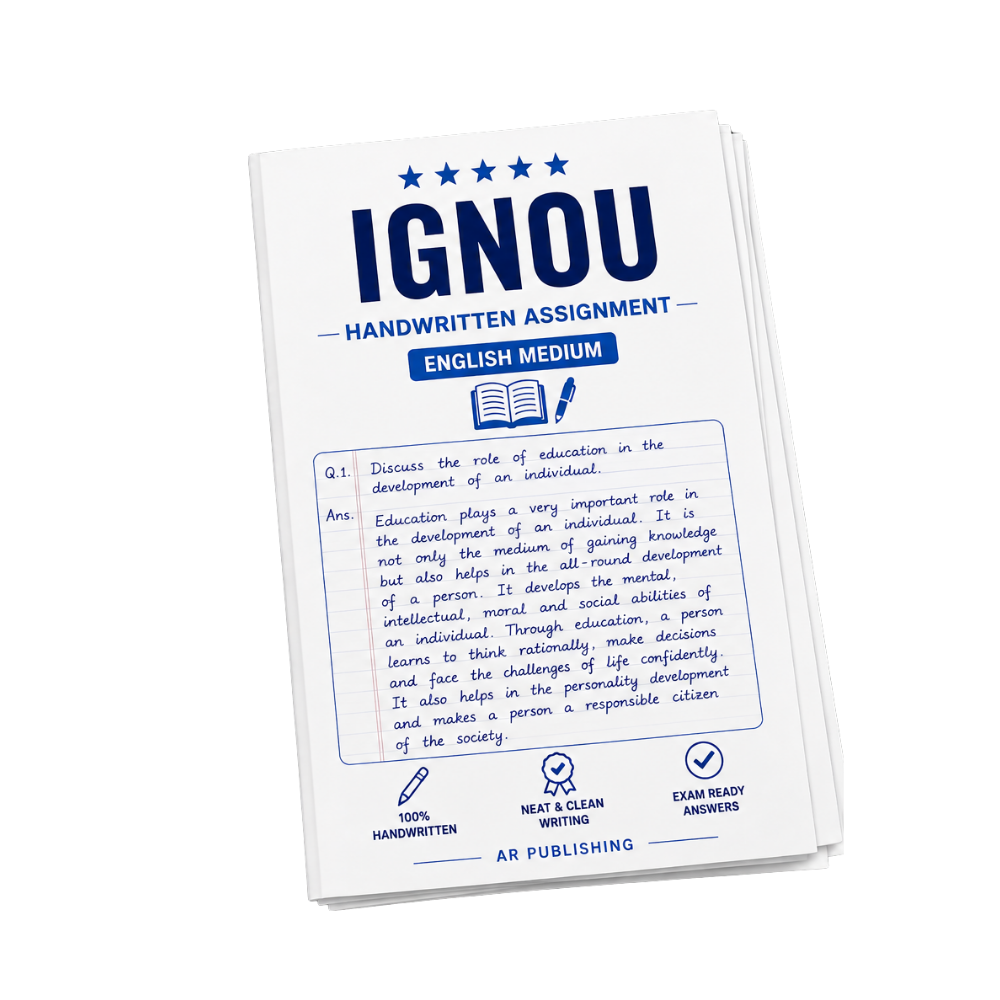
BSKE-142 IGNOU Handwritten Assignment 2026-27
Click to view offer details & terms
Get 10% OFF Instant Discount
Apply this coupon code at checkout to claim your academic discount instantly.
- Applicable on all university study materials
- Valid for up to 8 item(s) per order
- Valid till Oct 31, 2026
Frequently Bought Together
Popular course materials frequently ordered together

Syllabus & Overview
Course Scope & Syllabus Overview: BSKE-142
BSKE-142: is a specialized course within IGNOU’s Bachelor of Arts (BAG) program under the School of Humanities, designed to explore the theoretical and practical dimensions of Sanskrit theatrical traditions. This course meticulously examines the historical evolution of stagecraft, dramatic structure, and aesthetic principles rooted in classical Sanskrit texts. Students engage with the philosophical underpinnings of rasa theory, the craft of nāṭyaśāstra, and the performative techniques that define traditional Indian theater. Through structured analysis, it bridges ancient textual traditions with contemporary interpretive practices, equipping learners to critically evaluate dramatic compositions and their cultural significance. The curriculum emphasizes both textual and performative aspects, ensuring students develop a nuanced understanding of how Sanskrit plays (nāṭaka, nātaka) function as repositories of philosophical, moral, and aesthetic ideals. Assignments are crafted to encourage reflective writing, enabling students to articulate their grasp of theatrical conventions and their relevance in modern contexts.Key Syllabus Units & Topics
- -1 : This unit dissects the classification of theatrical spaces (bhūmi)—such as open-air stages, indoor arenas, and temple platforms—and the architectural principles governing stage design (prāṅgāna). It also explores the role of costumes (ābharaṇa), makeup (alankāra), and props (upakaraṇa) in embodying character and narrative authenticity.
- -2 : Focusing on the nāṭaka genre, this block analyzes the structural elements like vastus (theme), nāyaka (protagonist), and virat (antagonist), while delving into the rasa theory—how emotional states (rasa) like śrṅgāra (romance) or vīra (heroism) manifest through dialogue and performance.
- -3 : Tracing the lineage of Sanskrit theater from the Nāṭyaśāstra of Bharata to medieval and modern adaptations, this unit highlights pivotal playwrights like Bhavabhūti and Kālidāsa. It examines how royal patronage, religious rituals, and literary movements shaped theatrical practices across centuries.
Frequently Asked Questions
Q: What is the marking scheme for the BSKE-142 assignment, and how many marks are allocated to each unit?
A: The BSKE-142 assignment carries 30 marks, with each of the three syllabus blocks (-1, -2, -3) typically contributing 10 marks each. The evaluation focuses on conceptual clarity, textual references, and analytical depth in responses.
Q: Are there specific pass marks required for the BSKE-142 course, and how does the assignment contribute to the final grade?
A: The pass marks for BSKE-142 are 40 out of 100, with the assignment accounting for 30% of the total score. Students must achieve at least 30% in the assignment to proceed to the theory examination, which carries 70 marks.
Why buy from us?
-
Verified by top professors and 99th percentile students.
-
Always updated to the latest university curriculum.
-
High-quality, printable PDF formats with clear diagrams.
License & Terms
By purchasing this item, you agree to our standard academic license terms. You may use this product for personal study, but you may not resell or redistribute the files online.