

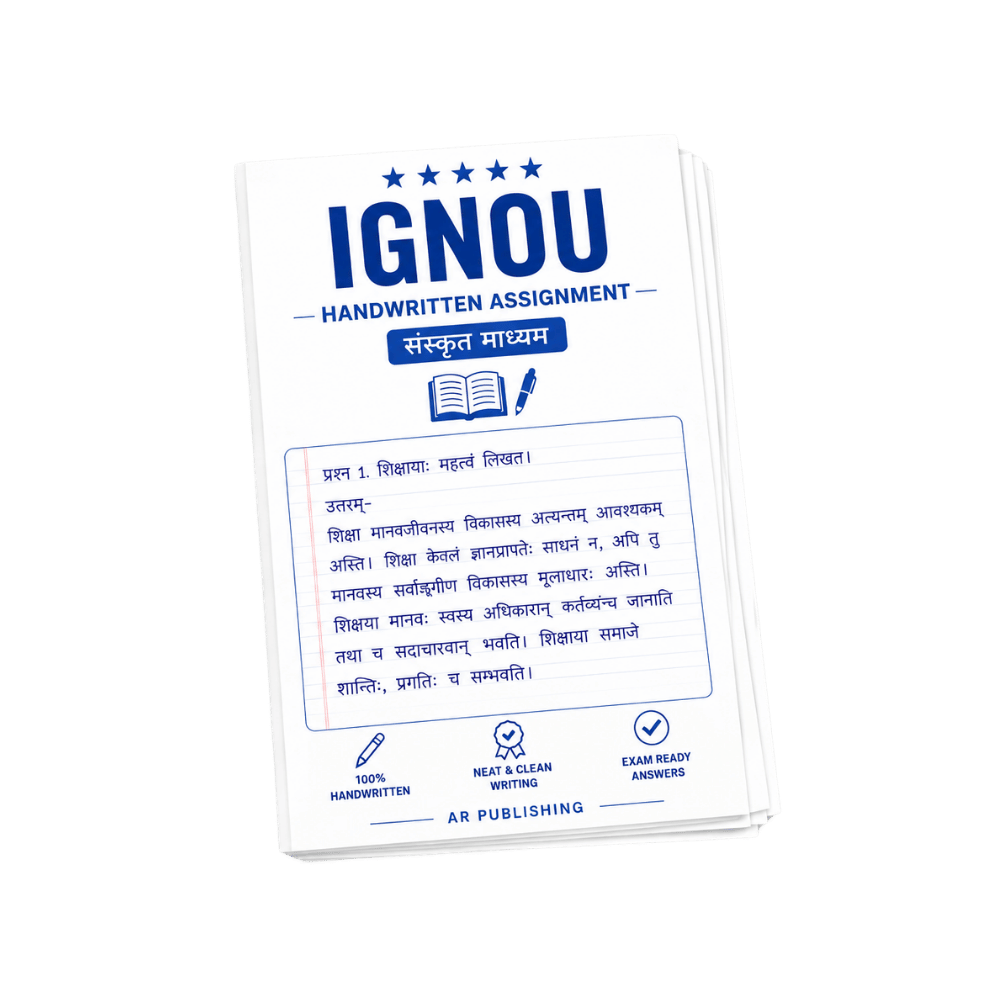
BSKE-151 IGNOU Handwritten Assignment 2026-27
Click to view offer details & terms
Get 10% OFF Instant Discount
Apply this coupon code at checkout to claim your academic discount instantly.
- Applicable on all university study materials
- Valid for up to 8 item(s) per order
- Valid till Oct 31, 2026
Enrolled in other IGNOU subjects?
Link your Enrollment No. to auto-map all your semester courses & free question papers.
Frequently Bought Together
Popular course materials frequently ordered together


Syllabus & Overview
Course Scope & Syllabus Overview for BSKE-151:
BSKE-151: is a specialized course under the Bachelor of Arts in Applied Sanskrit (BAASK) program, designed to bridge classical Sanskrit studies with modern computational methodologies. This course equips students with foundational knowledge of computational linguistics as applied to Sanskrit, covering digital transcription techniques, linguistic annotation, and corpus-based analysis. It aligns with the IGNOU CBCS curriculum by integrating theoretical frameworks with practical applications, ensuring students can engage critically with Sanskrit texts through digital tools while maintaining linguistic authenticity. The syllabus emphasizes both the preservation of Sanskrit’s grammatical intricacies and the adaptation of traditional methodologies for contemporary scholarly and computational use.Key Syllabus Units & Topics
- Unit 1: : This unit introduces core concepts of computational linguistics, including digital representation of Sanskrit scripts, Unicode standards, and the role of algorithms in linguistic analysis. Students explore foundational theories of phonetics, morphology, and syntax as they relate to Sanskrit.
- Unit 2: : Focusing on Paninian grammar, this unit examines how Sanskrit’s complex morphological and syntactic rules can be digitized for computational processing. Topics include part-of-speech tagging, dependency parsing, and the application of rule-based systems in Sanskrit corpora.
- Unit 3: : Students learn about the creation and curation of Sanskrit digital corpora, including text normalization, lemmatization, and the use of XML/TEI standards for markup. Practical exercises involve processing Sanskrit texts using computational tools for research purposes.
- Unit 4: : This unit addresses unique challenges in applying computational techniques to Sanskrit, such as handling sandhi (phonetic contractions), sandhi-vichchedha (separation of compound words), and the representation of sandhi in digital formats. It also covers ethical considerations in digitizing classical texts.
- Unit 5: : The final unit explores practical applications of computational linguistics in Sanskrit, including OCR (Optical Character Recognition) for ancient manuscripts, machine translation frameworks, and the role of AI in preserving and disseminating Sanskrit knowledge. It concludes with a forward-looking discussion on emerging trends in digital Sanskrit studies.
Frequently Asked Questions
Q: What is the marking scheme for the BSKE-151 assignment, and how many marks are allocated to each unit?
A: The BSKE-151 assignment typically carries 30 marks, distributed across all five units. Each unit’s contribution is proportionate to its weight in the overall syllabus, with internal assessment focusing on conceptual clarity, accuracy in linguistic analysis, and adherence to computational methodologies outlined in the course.
Q: What are the minimum pass marks required for BSKE-151, and how does the examination pattern differ from other BAASK courses?
A: The minimum pass marks for BSKE-151 are 40%, with the examination comprising both internal (assignment) and external (term-end) assessments. Unlike some BAASK courses, BSKE-151 emphasizes practical application through computational exercises, and the term-end exam includes both theoretical and hands-on components to evaluate proficiency in digital Sanskrit analysis.
Why buy from us?
-
Verified by top professors and 99th percentile students.
-
Always updated to the latest university curriculum.
-
High-quality, printable PDF formats with clear diagrams.
License & Terms
By purchasing this item, you agree to our standard academic license terms. You may use this product for personal study, but you may not resell or redistribute the files online.