

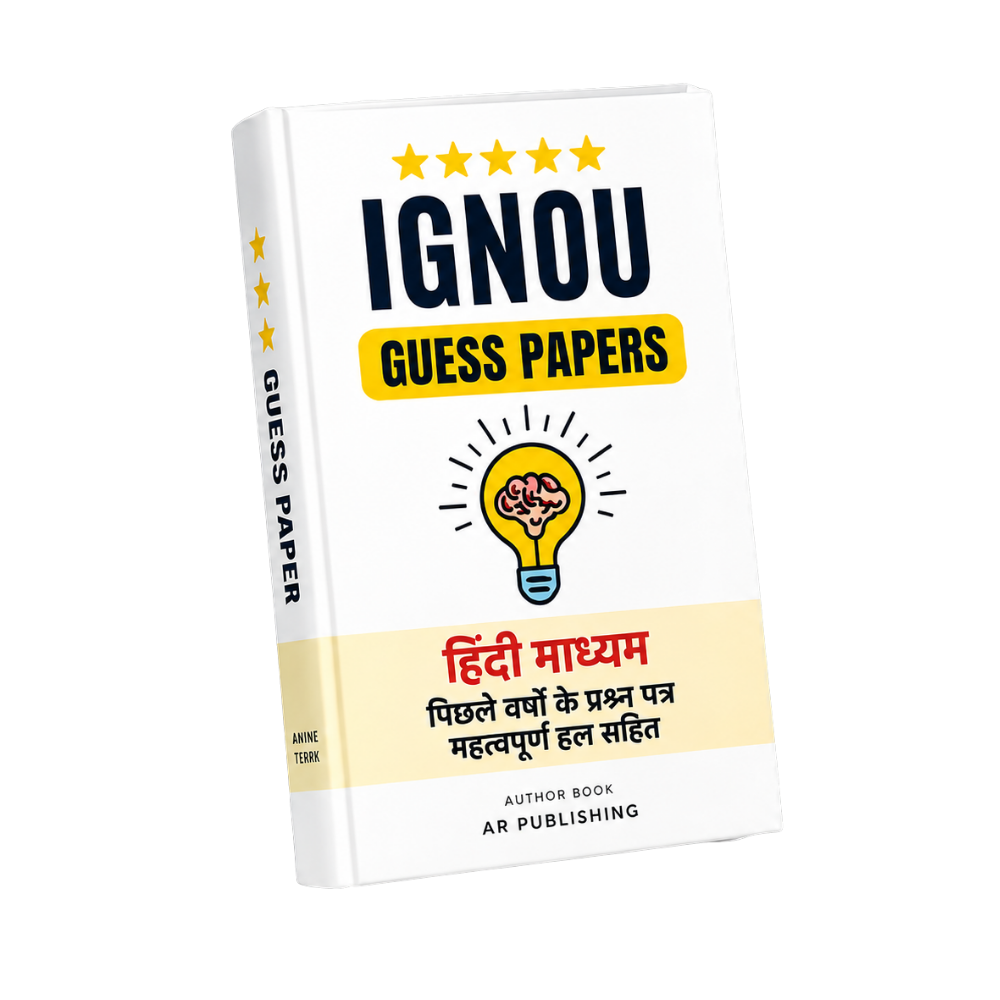
BSOC-105 IGNOU Guess Paper 2026-27
Click to view offer details & terms
Get 10% OFF Instant Discount
Apply this coupon code at checkout to claim your academic discount instantly.
- Applicable on all university study materials
- Valid for up to 8 item(s) per order
- Valid till Oct 31, 2026
Frequently Bought Together
Popular course materials frequently ordered together

Syllabus & Overview
Course Scope and Syllabus Overview: IGNOU BSOC-105 Political Sociology
IGNOU’s BSOC-105: Political Sociology is a core course under the Bachelor of Arts (Honours) Sociology (BASOH) programme, designed to bridge political theory with sociological analysis. This course examines the interplay between political structures, power dynamics, and societal formations, aligning with the CBCS framework. Students explore foundational concepts like state-society relations, governance mechanisms, and grassroots power structures, while critically engaging with theories from classical political sociology (e.g., Marx, Weber) to contemporary critiques of authoritarianism and democracy. The syllabus emphasizes both theoretical rigor and empirical relevance, equipping learners to analyze real-world political phenomena through a sociological lens.Key Syllabus Units and Topics
- Block-1: Understanding Political Sociology: Introduces the discipline’s core questions—how power is distributed, legitimized, and contested—while distinguishing political sociology from political science and sociology. Key themes include the state as an institution, ideological formations, and the role of civil society in political processes.
- Block-2: Basic Concepts: Covers essential frameworks like authority, legitimacy (Weberian typologies), and pluralism vs. elitism. Topics include political socialization, interest groups, and the impact of globalization on traditional political structures.
- Block-3: Political System: Analyzes constitutional frameworks, governance models (democratic vs. authoritarian), and the functioning of political parties. Special focus on electoral systems, lobbying, and the media’s role in shaping public opinion.
- Block-4: Everyday State and Local Structure of Power: Examines micro-level power dynamics—local governance, bureaucracy, and grassroots resistance—through case studies of rural/urban communities. Theories of patronage, clientelism, and social movements are central.
Frequently Asked Questions
Q: What is the marking scheme for BSOC-105 Term-End Examination (TEE), and how are internal assignments weighted?
A: The TEE carries 100 marks (50% of total course weight), while assignments account for 30 marks (15% each). The remaining 20 marks come from tutorials and other internal assessments. Focus on both theory and application to maximize scores.
Q: Are there recurring questions in BSOC-105 exams, and how can I prioritize revision based on past papers?
A: Yes, 20–30% of questions repeat annually, particularly from Blocks 1 and 3 (theoretical foundations and political systems). Prioritize solved past papers (June/December cycles) and note chapter-wise weightage—e.g., Block-2 and Block-4 often feature case-based questions requiring critical analysis.
Why buy from us?
-
Verified by top professors and 99th percentile students.
-
Always updated to the latest university curriculum.
-
High-quality, printable PDF formats with clear diagrams.
License & Terms
By purchasing this item, you agree to our standard academic license terms. You may use this product for personal study, but you may not resell or redistribute the files online.