

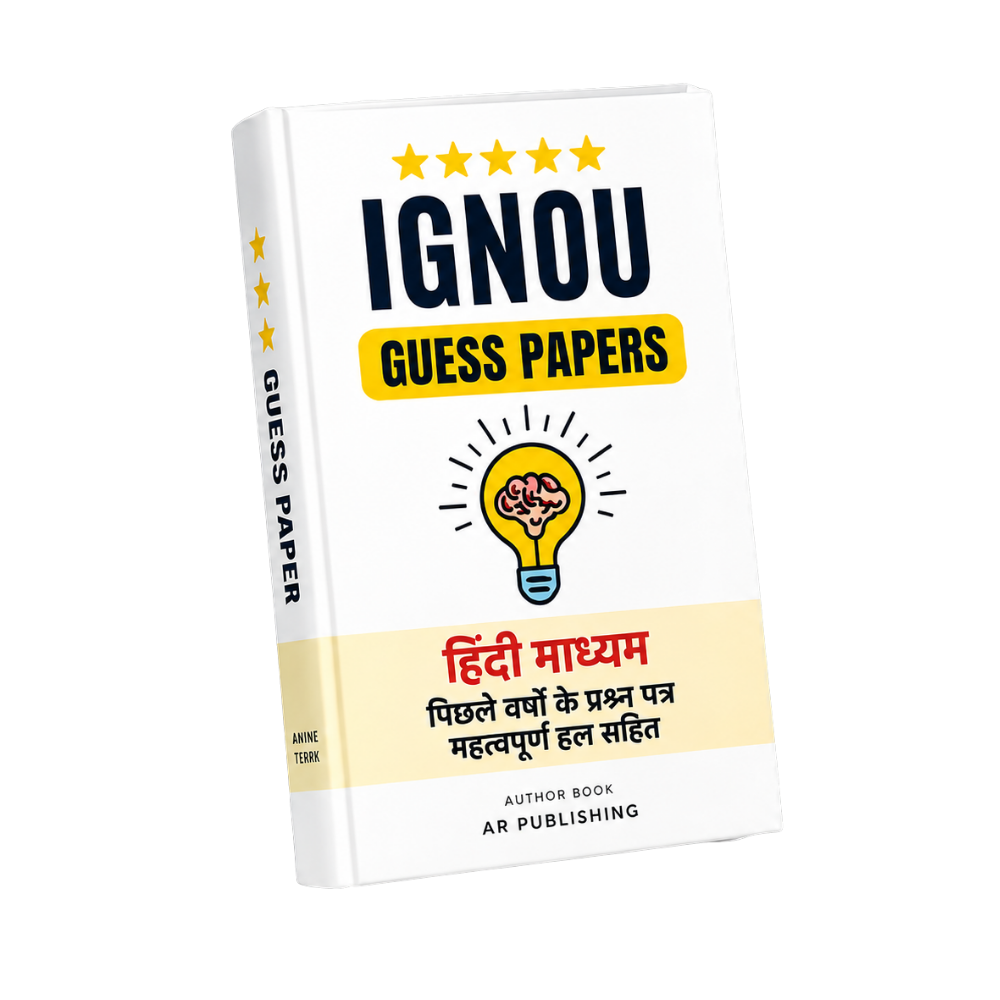
BSOC-110 IGNOU Guess Paper 2026-27
Click to view offer details & terms
Get 10% OFF Instant Discount
Apply this coupon code at checkout to claim your academic discount instantly.
- Applicable on all university study materials
- Valid for up to 8 item(s) per order
- Valid till Oct 31, 2026
Frequently Bought Together
Popular course materials frequently ordered together

Syllabus & Overview
BSOC-110 Guess Paper Social Stratification (Term-End Exam Focus)
This structured guide aligns with the official IGNOU curriculum for BSOC-110 (Social Stratification) and prioritizes topics from previous years' Term-End Exams (June/December sessions, 2018–2023). It includes chapter-wise weightage, high-probability questions, and time-management tips for the 3-hour exam.
Key Syllabus Blocks & Scoring Focus
- Block-1: Introducing Stratification
- Definition and dimensions of stratification (economic, social, political).
- Comparison of Marx’s class theory vs. Weber’s status/party model (20–25% weight in TEE).
- Caste system in India: Structural-functionalist vs. conflict perspectives (frequently asked in descriptive questions).
- Block-2: Theories of Stratification
- Dahrendorf’s power-based stratification and its critique of Marx.
- Modernization theory and its limitations (often paired with empirical Indian case studies).
- Global stratification: Dependency theory vs. World Systems Analysis (high-yield for essays).
- Block-3: Identities and Inequalities
- Gender stratification: Intersectionality with class and caste (mandatory for 15–20 marks).
- Ethnic and racial inequalities: Comparative analysis of South Asia vs. Western models.
- Discrimination theories (Blumer’s symbolic interactionism, Bonilla-Silva’s racial hierarchy).
- Block-4: Social Mobility and Reproduction
- Intragenerational vs. intergenerational mobility (empirical data from Indian Census).
- Education and stratification: Bourdieu’s cultural capital theory (frequent short-answer topic).
- Reproduction of inequality: Davis-Moore thesis and critiques (linked to meritocracy debates).
Exam Strategy for 3 Hours
- Allocate 45 minutes for reading the question paper and planning answers (prioritize 20-mark questions first).
- For descriptive questions (30–40 marks), structure answers using theory critique Indian context
Why buy from us?
-
Verified by top professors and 99th percentile students.
-
Always updated to the latest university curriculum.
-
High-quality, printable PDF formats with clear diagrams.
License & Terms
By purchasing this item, you agree to our standard academic license terms. You may use this product for personal study, but you may not resell or redistribute the files online.