

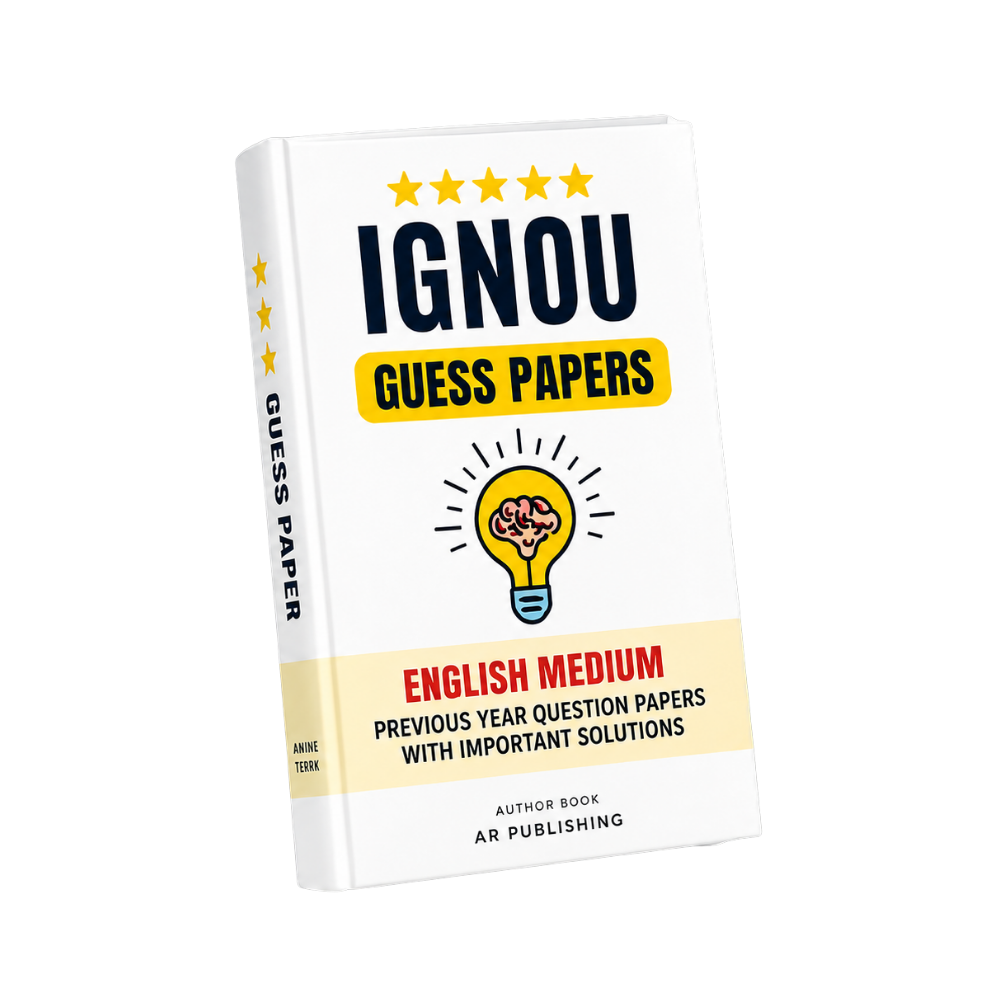
BSOE-141 IGNOU Guess Paper 2026-27
Click to view offer details & terms
Get 10% OFF Instant Discount
Apply this coupon code at checkout to claim your academic discount instantly.
- Applicable on all university study materials
- Valid for up to 8 item(s) per order
- Valid till Oct 31, 2026
Enrolled in other IGNOU subjects?
Link your Enrollment No. to auto-map all your semester courses & free question papers.
Frequently Bought Together
Popular course materials frequently ordered together
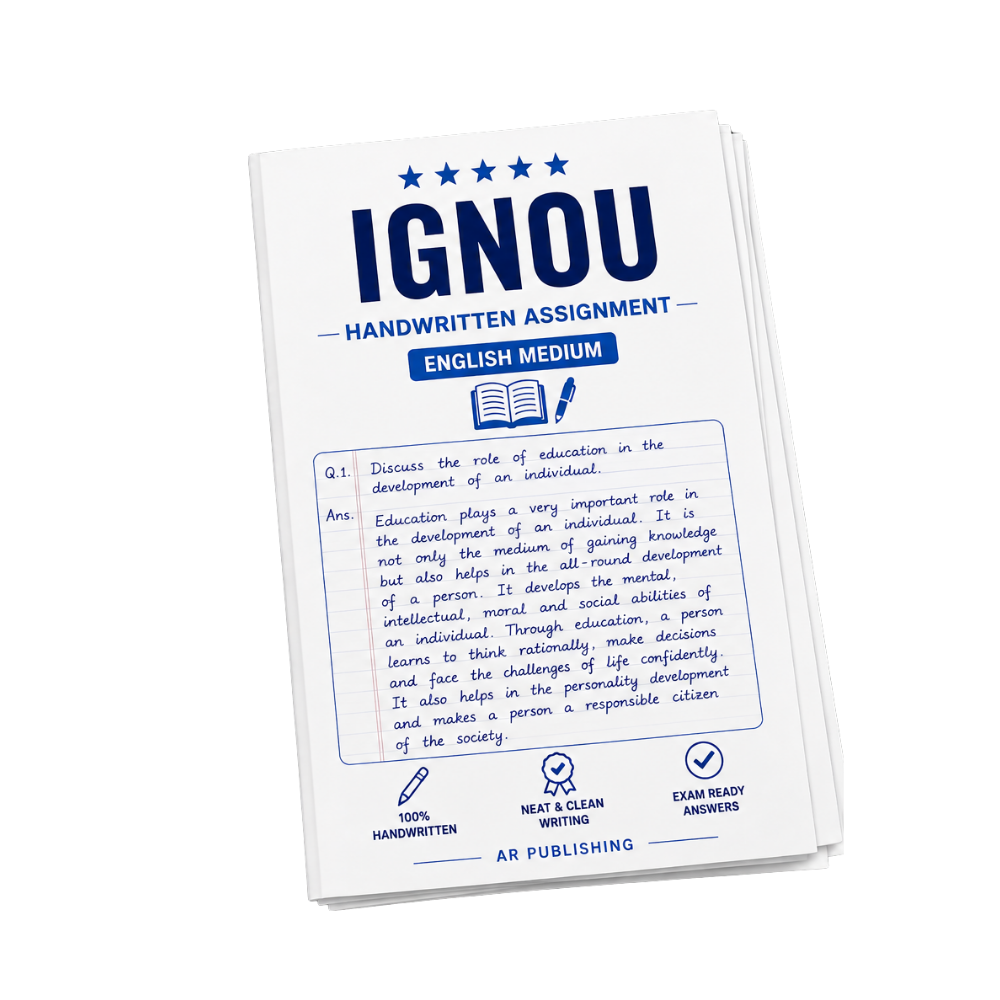
Syllabus & Overview
BSOE-141 Guess Paper: Urban Sociology (Term-End Exam Focus)
This structured guess paper for BSOE-141 (Urban Sociology) is designed to align with IGNOU’s official curriculum and past exam trends (2018–2023). It prioritizes chapter-wise question weightage, critical analysis, and time management for the 3-hour exam. Key focus areas include theoretical frameworks, urban migration, cultural politics, and occupation dynamics.
Block 1: Introducing Urban Sociology
This block lays the foundation for understanding urbanization as a sociological phenomenon. Key topics include:
- Theories of Urbanization: Comparative analysis of Marxist (e.g., Henri Lefebvre’s The Production of Space), Functionalist (e.g., Louis Wirth’s Urbanism as a Way of Life), and Postmodernist perspectives on cities.
- Urbanization in Global Context: Focus on historical and contemporary patterns, with emphasis on colonial legacies and neoliberal urban governance.
- Key Exam Patterns: Past questions often test definitions of urbanization, critiques of Wirth’s urbanism thesis, and comparisons between pre-industrial and post-industrial cities.
Block 2: Perspectives in Urban Sociology
This block explores diverse sociological lenses to analyze urban spaces. High-weightage topics include:
- Critical Urban Theory: Discussions on gentrification, spatial inequality, and the role of the state in urban development (e.g., David Harvey’s The Right to the City).
- Gender and Urban Spaces: Case studies on women’s mobility, public/private space dynamics, and urban policies (e.g., slum rehabilitation programs).
- Exam Focus: Expect essay-type questions on Harvey’s spatial justice framework or gendered access to urban resources.
Block 3: Migration, Occupation, and Settlements
Migration and occupation are central to urban sociology. Key areas include:
- Urban Migration Theories: Push-pull factors, internal vs. international migration, and the role of labor markets (e.g., Ernest Burgess’ concentric zone model).
- Informal Settlements: Analysis of squatter colonies, slum governance, and policy responses (e.g., Jawaharlal Nehru National Urban Renewal Mission).
- Past Paper Trends: Questions often link migration data (e.g., Census reports) to theoretical models or critique policy failures in urban housing.
Block 4: Cultural Politics of Urban Space
This block examines how culture, identity, and power shape urban landscapes. Critical topics:
- Urban Identity and Resistance: Movements like Naxalbari or Slum Dwellers International and their cultural dimensions.
- Public Space and Governance: Case studies on festivals, protests, and the commodification of urban culture (e.g., Mumbai’s Dharavi or Delhi’s Jantar Mantar).
- Exam Strategy: Prepare for comparative essays on cultural politics in megacities (e.g., Mumbai vs. Kolkata) or critiques of top-down urban planning.
Time Management Tips for BSOE-141 TEE
- Allocate 40 minutes per question (3-hour exam). Prioritize 20-mark questions first.
- For theoretical questions (e.g., Marxist vs. Functionalist urbanism), use 3-point frameworks (e.g., cause-effect-outcome).
- Cite case studies (e.g., Mumbai’s Dharavi, Delhi’s slums) for Block 3/4 to score higher.
- Avoid rote memorization; focus on critical analysis of urban policies and theories.
FAQs for BSOE-141 Students
Q1: Are past year papers sufficient for TEE preparation?Yes, analyzing past papers (2018–2023) helps identify recurring themes (e.g., migration theories, gentrification critiques). Combine them with block-wise notes for comprehensive coverage.
Q2: How to score in descriptive answers?Use theoretical models (e.g., Wirth’s urbanism, Lefebvre’s spatial dialectics) and real-world examples (e.g., policies like Smart Cities Mission). Structure answers with introduction-definition-analysis-conclusion.
Why buy from us?
-
Verified by top professors and 99th percentile students.
-
Always updated to the latest university curriculum.
-
High-quality, printable PDF formats with clear diagrams.
License & Terms
By purchasing this item, you agree to our standard academic license terms. You may use this product for personal study, but you may not resell or redistribute the files online.