


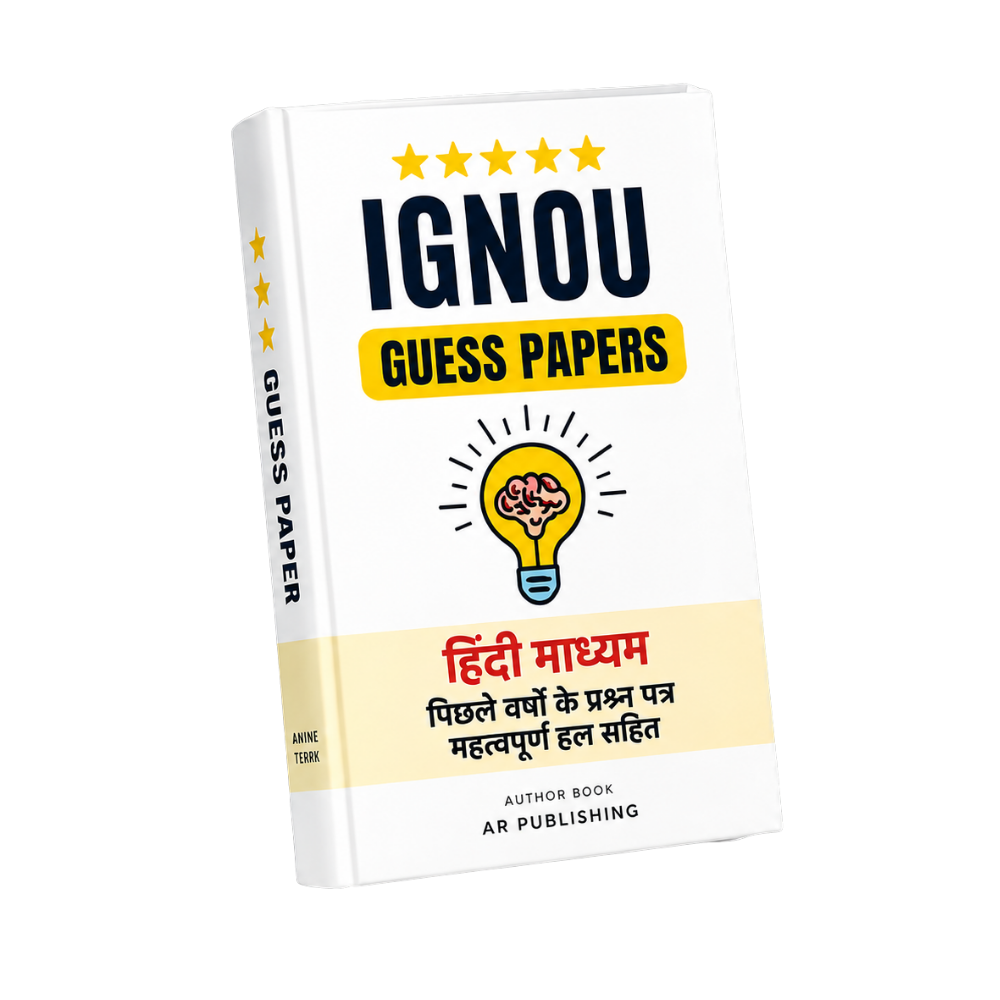
BSW-043 IGNOU Guess Paper 2026-27
Click to view offer details & terms
Get 10% OFF Instant Discount
Apply this coupon code at checkout to claim your academic discount instantly.
- Applicable on all university study materials
- Valid for up to 8 item(s) per order
- Valid till Oct 31, 2026
Frequently Bought Together
Popular course materials frequently ordered together
Syllabus & Overview
Course Scope & Syllabus Overview for BSW-043: Tribals of South and Central India
BSW-043: Tribals of South and Central India is a specialized course under IGNOU’s Certificate in Tribal Studies (CTRBS), designed to explore the cultural, socio-economic, and ecological dynamics of tribal communities across South and Central India. Aligned with the School of Social Work’s CBCS curriculum, this course examines indigenous groups through anthropological, historical, and environmental lenses, emphasizing their traditional livelihoods, ecological knowledge, and interactions with modern societal structures. It equips students with critical insights into tribal governance, land rights, and sustainable development challenges, fostering interdisciplinary analysis grounded in ethnographic and scientific perspectives.Key Syllabus Units & Topics
- Block-1: Tribals of South India: Focuses on the Adivasi communities of states like Tamil Nadu, Kerala, and Karnataka, analyzing their agricultural practices, forest-based economies, and resistance movements against displacement, while integrating ecological studies of biodiversity conservation.
- Block-2: Andaman and Nicobar Tribals: Investigates the indigenous populations of the Andaman and Nicobar Islands, including the Great Andamanese and Nicobarese, through linguistic, genetic, and archaeological frameworks, highlighting their pre-colonial adaptations and contemporary challenges in cultural preservation.
- Block-3: Tribals of Central India: Covers the Gond, Baiga, and Bhil tribes of Madhya Pradesh and Chhattisgarh, exploring their traditional ecological knowledge (TEK) in forest management, medicinal plant usage, and conflicts with industrialization, with case studies on sustainable resource governance.
- Block-4: Tribal Livelihoods and Modern Interventions: Examines government policies (e.g., Forest Rights Act), NGO interventions, and tribal self-governance models, critiquing their effectiveness through socio-economic data and participatory research methodologies.
- Block-5: Comparative Ethnography and Environmental Justice: Compares tribal communities across the regions, synthesizing anthropological theories with environmental science to address issues like climate change impacts, water rights, and the role of indigenous knowledge systems in climate resilience.
Frequently Asked Questions
Q: What is the marking scheme for BSW-043’s Term-End Examination (TEE), and how are internal assessments weighted?
A: The TEE carries 100 marks, with questions distributed across all five blocks (20 marks each). Internal assessments—including assignments and tutorials—account for 30% of the total grade, while the TEE constitutes 70%. Focus on understanding case studies and theoretical frameworks to maximize scores.
Q: Are there recurring themes or questions in past TEE papers for BSW-043 that students should prioritize?
A: Yes, questions on tribal land rights (e.g., Forest Rights Act implications), comparative ethnographic studies (e.g., Gond vs. Baiga livelihoods), and environmental conflicts (e.g., mining vs. tribal livelihoods) frequently repeat. Prioritize these topics alongside data-driven analyses of tribal demographics and policy critiques.
Why buy from us?
-
Verified by top professors and 99th percentile students.
-
Always updated to the latest university curriculum.
-
High-quality, printable PDF formats with clear diagrams.
License & Terms
By purchasing this item, you agree to our standard academic license terms. You may use this product for personal study, but you may not resell or redistribute the files online.