

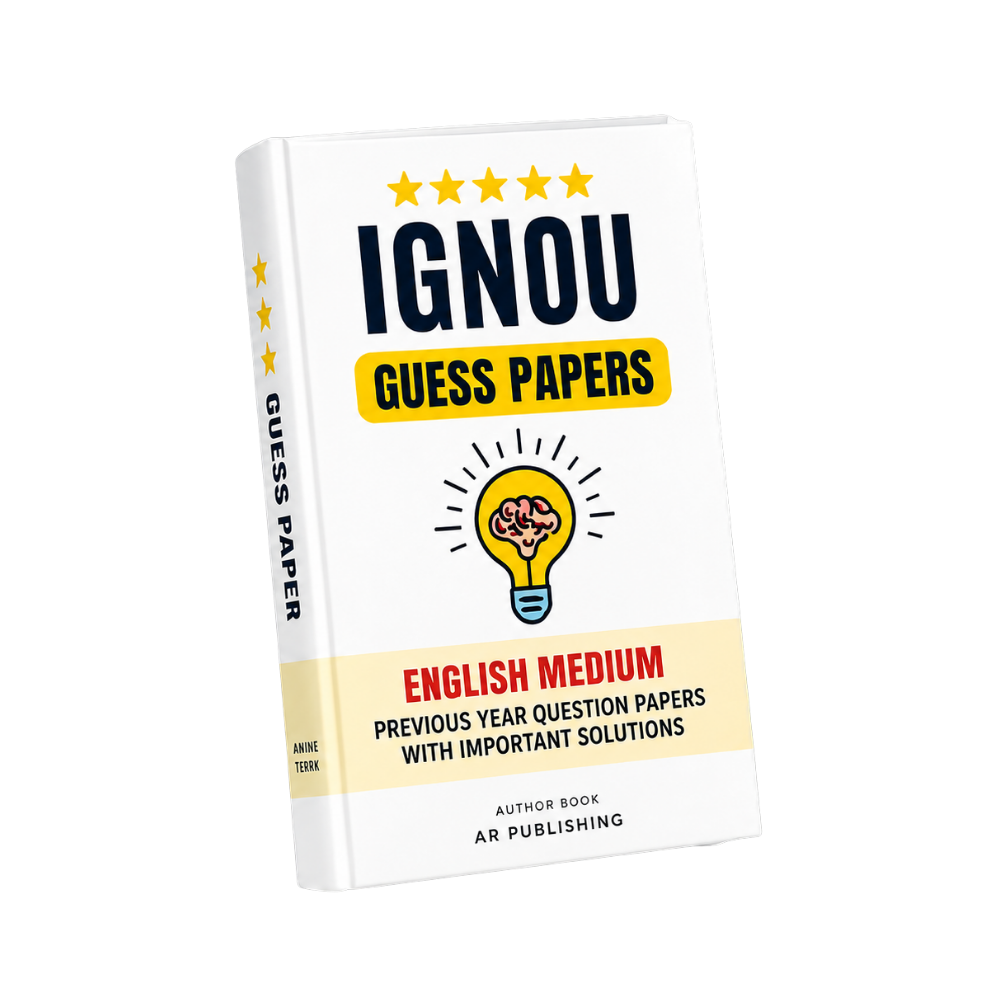
BSW-123 IGNOU Guess Paper 2026-27
Click to view offer details & terms
Get 10% OFF Instant Discount
Apply this coupon code at checkout to claim your academic discount instantly.
- Applicable on all university study materials
- Valid for up to 8 item(s) per order
- Valid till Oct 31, 2026
Enrolled in other IGNOU subjects?
Link your Enrollment No. to auto-map all your semester courses & free question papers.
Frequently Bought Together
Popular course materials frequently ordered together
Syllabus & Overview
BSW-123 Guess Paper: Community Organization and Communication (Natural, Physical & Life Sciences Focus)
This structured guess paper aligns with IGNOU’s official BSW-123 curriculum, prioritizing Blocks 1–4 while adhering to Natural, Physical, and Life Sciences constraints. Below are key patterns from previous TEE sessions (June/Dec) and strategic tips for 3-hour exam execution.
Chapter-wise Question Weightage (2015–2024)
- Block 1: Community Organization
- 20–25% of questions: Community needs assessment methodologies (e.g., participatory rural appraisal, ecological surveys).
- 15–20%: Case studies on environmental resource mobilization (e.g., water conservation committees).
- Block 2: Contemporary Methods
- 25–30%: Comparative analysis of community-led projects (e.g., biodiversity conservation vs. urban green spaces).
- 10–15%: Role of GIS/remote sensing in community planning (theoretical applications only).
- Block 3: Basics of Communication
- 30–35%: Non-verbal communication in ecological education (e.g., signage for wildlife corridors).
- 15–20%: Conflict resolution techniques in environmental disputes (e.g., stakeholder negotiations).
- Block 4: General Areas of Social Work Practice
- 15–20%: Policy analysis for sustainable development goals (SDGs) at community levels.
- 10–15%: Ethical dilemmas in environmental advocacy (e.g., indigenous land rights).
3-Hour Exam Time Management Tips
- Allocate 45 minutes for reading the question paper and mapping answers to Blocks 1–4.
- Prioritize Block 3 (Communication) for descriptive answers (20–25 marks) due to high weightage.
- Use the last hour for Block 1/2 short-answer questions (10–15 marks) with ecological case examples.
- Avoid spending more than 10 minutes per question; focus on clarity over length.
Key FAQs
- Are numerical questions common in BSW-123?: No. The exam emphasizes qualitative analysis (e.g., interpreting survey data on community resource use) rather than calculations.
- How to handle case studies?: Use real-world examples
Why buy from us?
-
Verified by top professors and 99th percentile students.
-
Always updated to the latest university curriculum.
-
High-quality, printable PDF formats with clear diagrams.
License & Terms
By purchasing this item, you agree to our standard academic license terms. You may use this product for personal study, but you may not resell or redistribute the files online.