

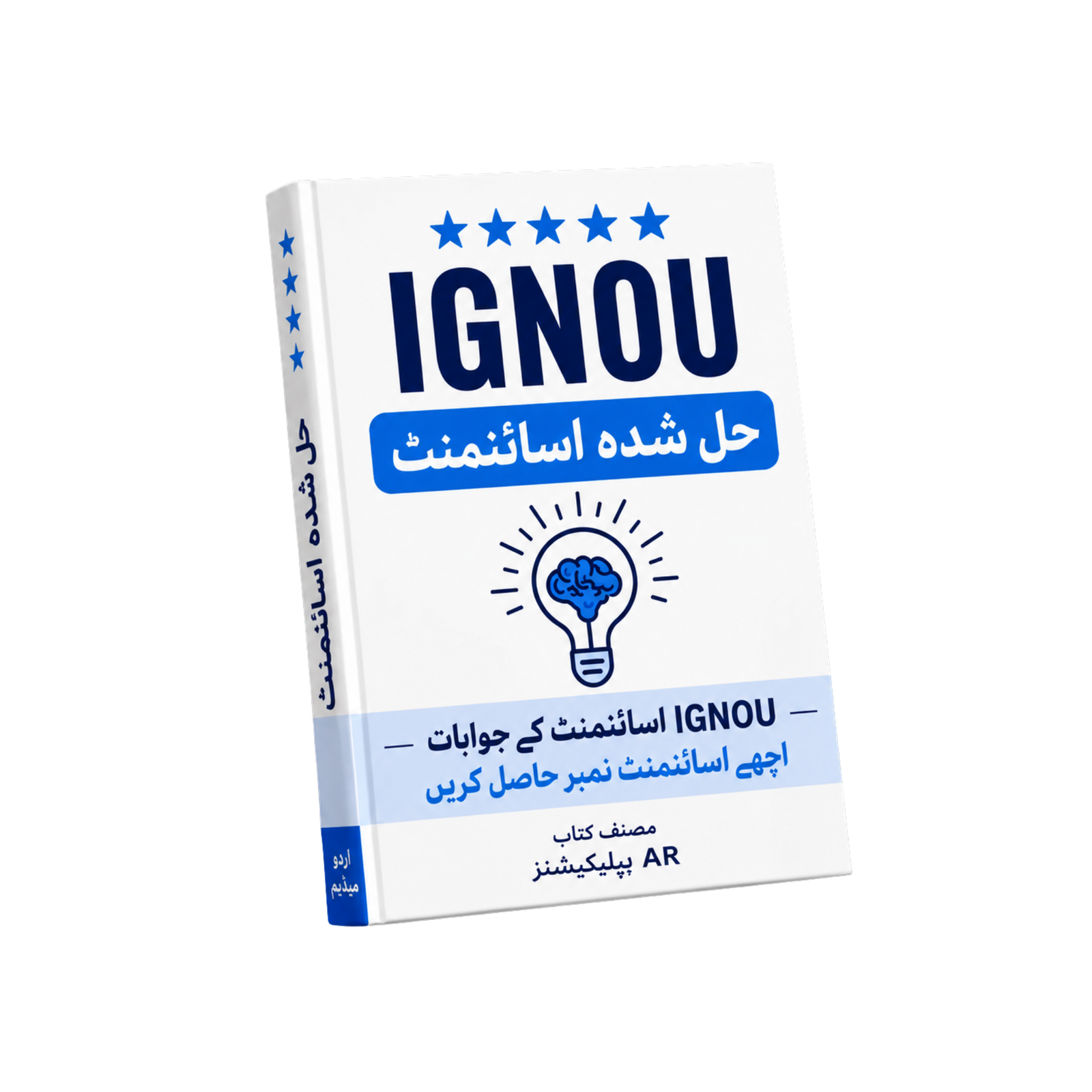
BUDAE-183 IGNOU Solved Assignment 2026-27
Click to view offer details & terms
Get 10% OFF Instant Discount
Apply this coupon code at checkout to claim your academic discount instantly.
- Applicable on all university study materials
- Valid for up to 8 item(s) per order
- Valid till Oct 31, 2026
Frequently Bought Together
Popular course materials frequently ordered together
Syllabus & Overview
BUDAE-183: Urdu Studies Academic Depth and Literary Exploration
BUDAE-183: Urdu Studies (BUDAE-183) under IGNOU’s CBCS curriculum offers a meticulously structured exploration of Urdu’s linguistic and literary heritage. This course bridges classical and modern Urdu traditions, equipping students with analytical tools to dissect poetic forms like ghazal and nazm, while examining the evolution of Urdu prose from its foundational texts to contemporary narratives. The syllabus integrates language proficiency with critical engagement, ensuring students grasp both the aesthetic nuances of Urdu poetry and the socio-cultural contexts of its development. Through thematic units, learners decode the intricacies of Urdu’s poetic metaphors, rhetorical devices, and thematic preoccupations, while also evaluating how prose has adapted to modern societal shifts.Core Syllabus Units & Literary Focus
- Urdu Language and Linguistics: This unit examines Urdu’s grammatical structure, phonetics, and morphological patterns, emphasizing its distinction from Hindi while exploring its Persian and Arabic influences. Students analyze syntactic variations and semantic nuances to refine their linguistic precision.
- Ghazal: Form and Philosophy: A deep dive into the ghazal as a poetic form, dissecting its thematic consistency, radif, and qafiya conventions. The unit scrutinizes iconic ghazals by Mir Taqi Mir, Ghalib, and Faiz Ahmed Faiz to uncover existential and philosophical undertones.
- Nazm: Evolution and Modernity: This segment traces the nazm from its classical roots to its reinvention by 20th-century poets like Josh Malihabadi and Ahmed Faraz. Students evaluate how nazm transcends rigid structures to reflect political and social critiques.
- Classical Urdu Prose: From Khushwant Singh to Modern Narratives: The unit dissects the transition of Urdu prose from traditional risala and masnavi forms to contemporary short stories and essays. Key texts by Khushwant Singh and modern writers like Bapsi Sidhwa are analyzed for stylistic innovation and thematic depth.
- Urdu Literary Criticism and Theory: This unit introduces students to critical frameworks for analyzing Urdu literature, including structuralism, postcolonial theory, and feminist readings. It encourages students to contextualize literary works within broader cultural and historical paradigms.
Frequently Asked Questions
Q: What is the word limit for Section A in the TMA for BUDAE-183 (2026-27), and how does IGNOU evaluate adherence to it?
A: Section A of the TMA for BUDAE-183 strictly requires 500 words per question, while Section B demands 250 words. IGNOU deducts marks for exceeding or falling short of these limits, as strict adherence reflects academic discipline and precision.
Q: Are there specific marking criteria for the analysis of Urdu poetic devices (e.g., istiarah, majaz) in BUDAE-183 exams, and how can students ensure full credit?
A: Marks are awarded for accurate identification of devices (e.g., istiarah in metaphors, majaz in irony) and contextual relevance. Students must cite textual examples from assigned poets and explain their significance within the poem’s thematic framework to secure full credit.
Why buy from us?
-
Verified by top professors and 99th percentile students.
-
Always updated to the latest university curriculum.
-
High-quality, printable PDF formats with clear diagrams.
License & Terms
By purchasing this item, you agree to our standard academic license terms. You may use this product for personal study, but you may not resell or redistribute the files online.