

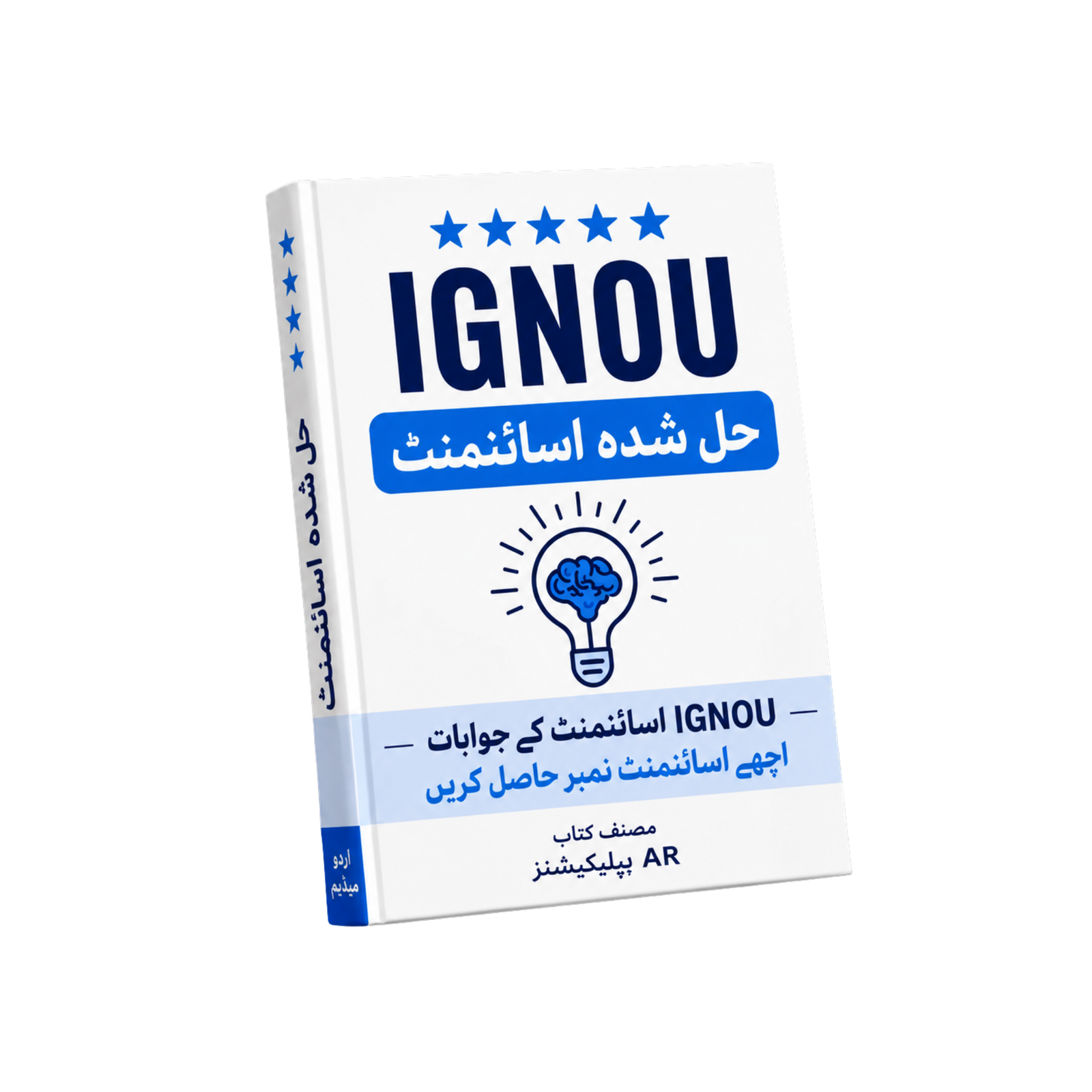
BUDC-113 IGNOU Solved Assignment 2026-27
Click to view offer details & terms
Get 10% OFF Instant Discount
Apply this coupon code at checkout to claim your academic discount instantly.
- Applicable on all university study materials
- Valid for up to 8 item(s) per order
- Valid till Oct 31, 2026
Enrolled in other IGNOU subjects?
Link your Enrollment No. to auto-map all your semester courses & free question papers.
Frequently Bought Together
Popular course materials frequently ordered together

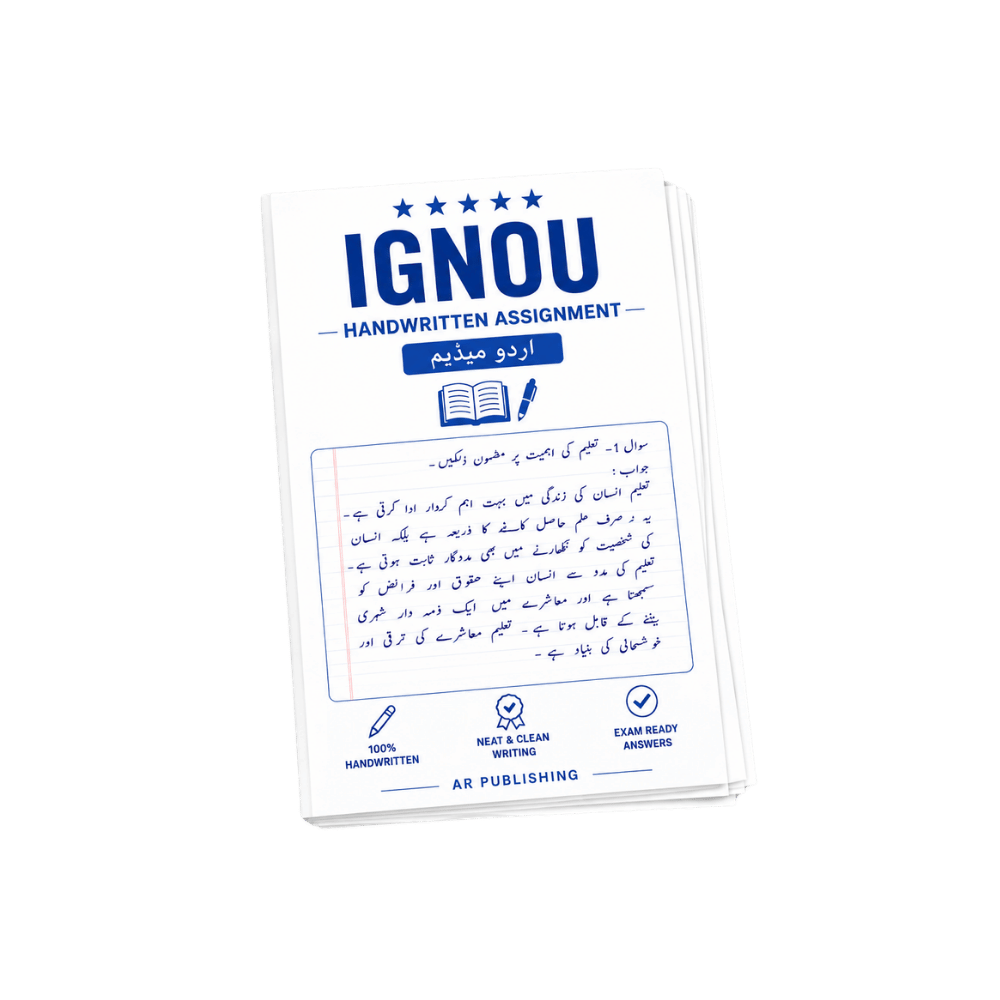
Syllabus & Overview
Exploring the Historical Evolution of Urdu Language and Literature in the IGNOU CBCS Curriculum
BUDC-113: (History of Urdu Language and Literature) is a foundational course under the Bachelor of Arts (Honours) Urdu program, designed to provide students with a critical understanding of Urdu’s linguistic and literary development. This course bridges historical analysis with literary critique, examining the socio-cultural contexts that shaped Urdu’s emergence as a literary language. Through structured thematic units, students explore the interplay of Persian, Arabic, and regional influences while analyzing seminal works, poetic movements, and the evolution of Urdu’s stylistic conventions. The solved assignment for this course serves as an indispensable reference, ensuring students meet IGNOU’s rigorous academic standards with precision and clarity.Key Syllabus Units and Topics Covered
- Unit 1: Origins and Early Development of Urdu: This unit traces the linguistic roots of Urdu, analyzing its formation from Khari Boli and the impact of Delhi Sultanate and Mughal courtly culture on its vocabulary and syntax.
- Unit 3: The Rekhta and Dakhni Phases: Focuses on the transitional period (16th–17th centuries) where Urdu’s poetic traditions diverged into Rekhta (courtly Persianized Urdu) and Dakhni (Deccan-influenced Urdu), examining key poets like Amir Khusro and Usman.
- Unit 5: The Ghazal Tradition and Classical Masters: Explores the golden age of Urdu ghazal (18th–19th centuries), highlighting the contributions of Mir Taqi Mir, Ghalib, and Iqbal, with emphasis on their thematic and structural innovations.
- Unit 7: Urdu in the Colonial Period and Nationalist Literature: Investigates how Urdu adapted to British colonial rule, analyzing its role in nationalist discourse through poets like Faiz Ahmed Faiz and writers like Saadat Hasan Manto.
- Unit 9: Contemporary Urdu Literature and Global Perspectives: Discusses modern Urdu’s evolution, including its representation in cinema, diaspora literature, and digital media, with case studies from Pakistan, India, and the global Urdu-speaking community.
Frequently Asked Questions
Q: How are the marks distributed in the TMA for BUDC-113, and what weightage does it hold in the final grade?
A: The Tutor-Marked Assignment (TMA) for BUDC-113 carries a total of 30 marks, contributing directly to 30% of the final grade. It is evaluated based on adherence to IGNOU’s guidelines, depth of analysis, and linguistic accuracy.
Q: Are there any specific word limits or formatting requirements for Section A and Section B in the assignment?
A: IGNOU strictly enforces word limits: Section A requires approximately 500 words per question, while Section B demands concise yet detailed responses of around 250 words. The solved assignment strictly adheres to these constraints.
Why buy from us?
-
Verified by top professors and 99th percentile students.
-
Always updated to the latest university curriculum.
-
High-quality, printable PDF formats with clear diagrams.
License & Terms
By purchasing this item, you agree to our standard academic license terms. You may use this product for personal study, but you may not resell or redistribute the files online.