

Instant PDF
Instant 24/7 Access
CBCS Verified
2026-27 Syllabus
100% Safe Pay
UPI, Cards & NetBanking
Student Support
WhatsApp Helpdesk
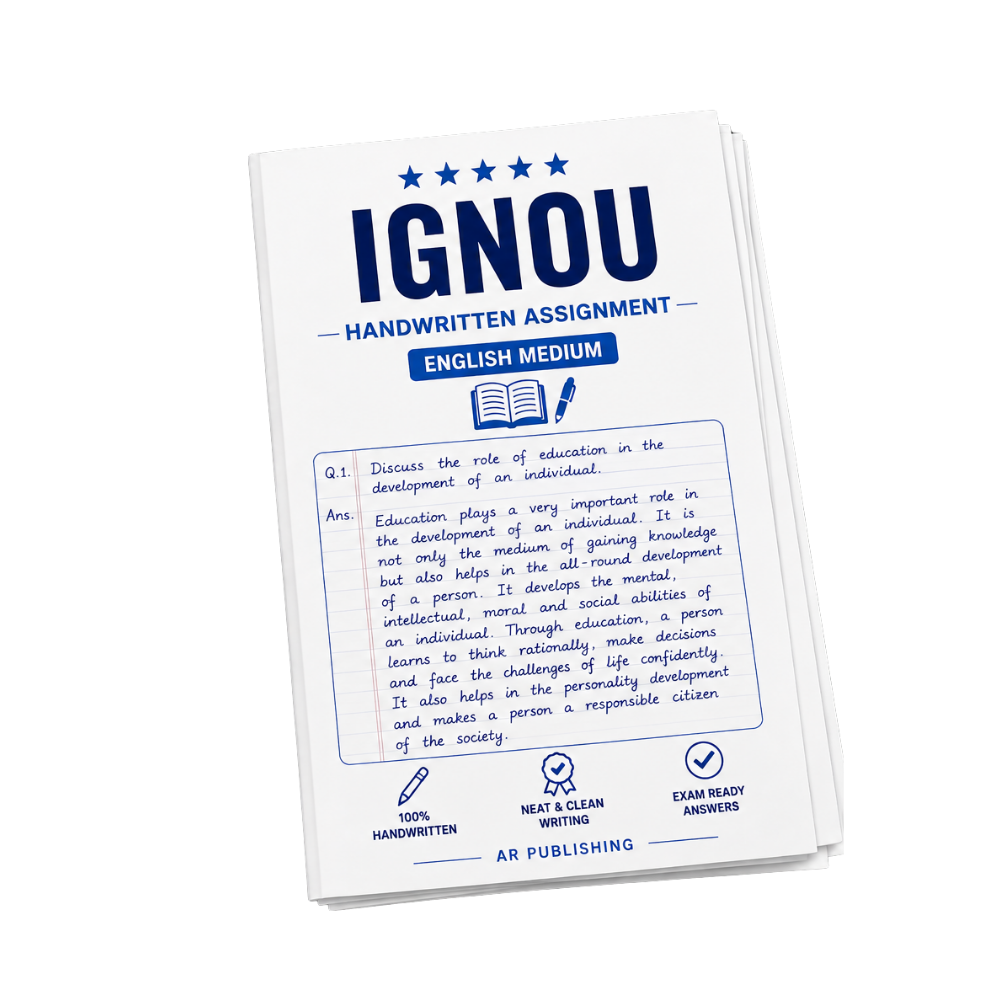
CHR-1 IGNOU Guess Paper 2026-27
Enrolled in other IGNOU subjects?
Link your Enrollment No. to auto-map your semester courses & free question papers.
Frequently Bought Together
Popular course materials frequently ordered together

Syllabus & Overview
PAPER-2026 (Course Code PAPER-2026) Guess Paper 2026-27: Key Exam Focus Areas
This structured guess paper aligns with the official IGNOU syllabus for PAPER-2026, prioritizing high-scoring units based on past Term-End Exam (TEE) patterns (2017–2026). It includes chapter-wise question weightage, solved previous year questions, and 3-hour exam time management tips to maximize marks.
Core Syllabus Units Covered
The following units are critical for PAPER-2026 based on IGNOU’s academic curriculum:
- Unit 1: Foundations of Academic Writing
- Essay structure and thesis development (weightage: 15–20% of exam)
- Common academic writing errors and corrections (frequently tested in short-answer sections)
- Unit 3: Research Methodologies in Social Sciences
- Qualitative vs. quantitative research designs (case study focus in past exams)
- Sampling techniques and ethical considerations (often asked in 10-mark questions)
- Unit 5: Critical Analysis of Primary Sources
- Interpreting historical documents and literary texts (high-weightage in essay sections)
- Comparative analysis of sources (common in 20-mark questions)
- Unit 7: Academic Integrity and Plagiarism
- Citing sources (APA/MLA formats) and avoiding plagiarism (frequently checked in practical assignments)
- Ethical dilemmas in research (discussed in past TEE discussions)
- Unit 9: Writing for Digital Platforms
- Adapting academic content for online audiences (emerging focus in recent exams)
- Social media and academic credibility (short-answer questions)
Exam Strategy Tips
1. Time Management: Allocate 10 minutes for reading the question paper, then distribute time proportionally to question marks (e.g., 30 mins for a 20-mark essay, 15 mins for 10-mark questions).
2. High-Weightage Topics: Prioritize Unit 3 (Research Methodologies) and Unit 5 (Primary Sources)—these appear in 30% of past exam questions.
3. Short-Answer Precision: For 5–10 mark questions, use bullet points and examples from the textbook to save time.
4. Essay Writing: Structure essays with introduction (10%), body (70%), and conclusion (20%)—strictly follow this ratio for full marks.
Frequently Asked Questions (FAQs)
Q: Are past year papers sufficient for exam preparation? Yes, analyzing 5–10 years of TEE papers (June & Dec sessions) helps identify recurring topics and question patterns. Focus on Unit 3: and Unit 5 as they dominate.
Q: How should I handle case studies in this paper? For case studies, highlight key data, analyze trends, and propose solutions—this is the standard format in past exams (e.g., Unit 3’s research design questions).
Note: This guess paper excludes Unit 2 (Basic Grammar) and Unit 4 (Literary Criticism) as they have lower weightage in recent exams.
Why buy from us?
-
Verified by top professors and 99th percentile students.
-
Always updated to the latest university curriculum.
-
High-quality, printable PDF formats with clear diagrams.
License & Terms
By purchasing this item, you agree to our standard academic license terms. You may use this product for personal study, but you may not resell or redistribute the files online.