

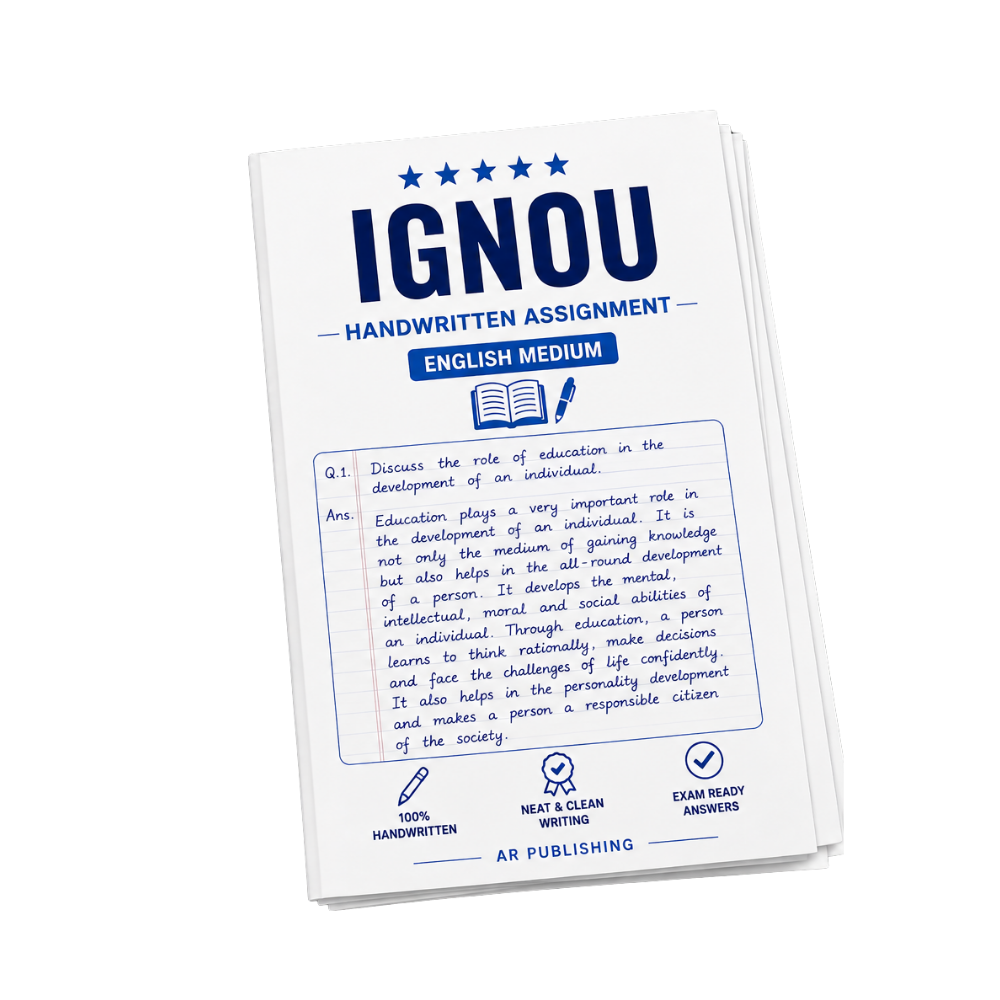
EEC-113 IGNOU Handwritten Assignment 2026-27
Click to view offer details & terms
Get 10% OFF Instant Discount
Apply this coupon code at checkout to claim your academic discount instantly.
- Applicable on all university study materials
- Valid for up to 8 item(s) per order
- Valid till Oct 31, 2026
Frequently Bought Together
Popular course materials frequently ordered together
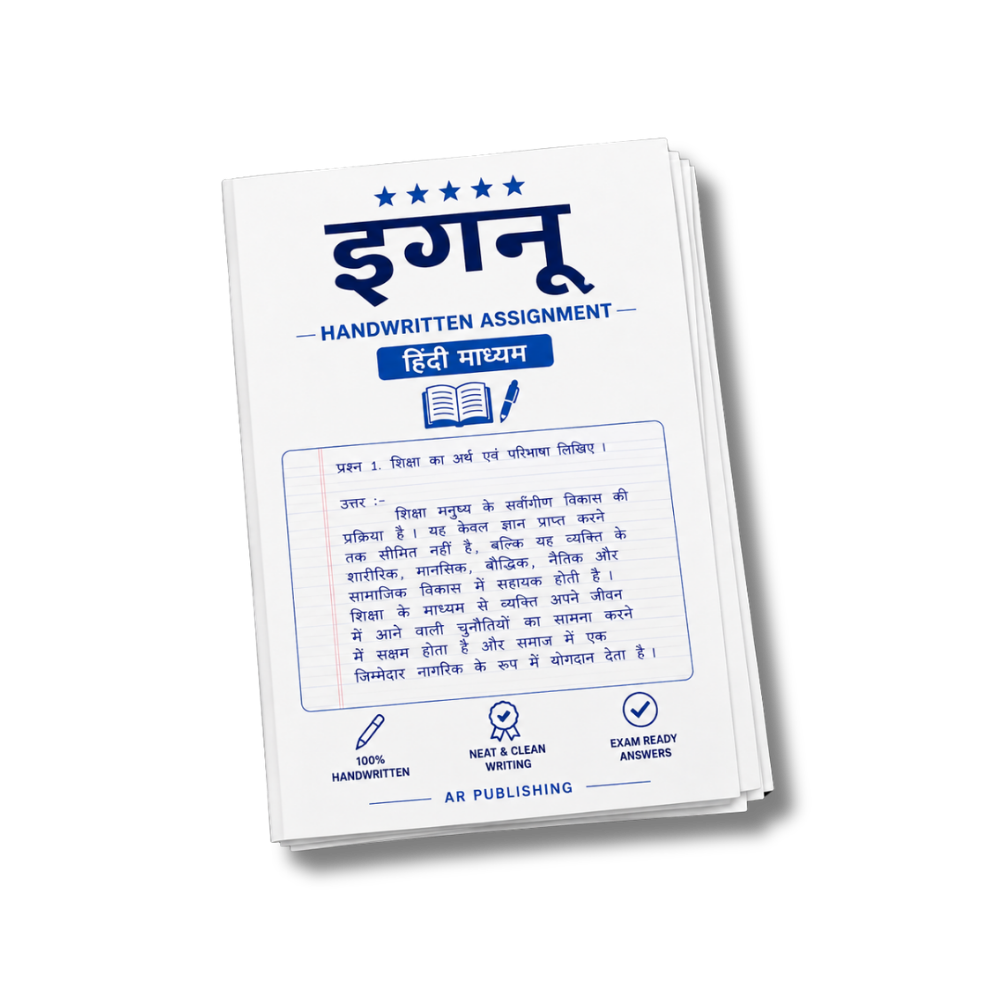
Syllabus & Overview
EEC-113 (Economics) Handwritten Assignment (Physical Hard Copy)
The following content strictly aligns with the official IGNOU curriculum for EEC-113 (Economics), covering core units in Macroeconomics, Microeconomics, and Public Finance. This handwritten assignment is formatted for direct submission to your IGNOU study centre.
Key Syllabus Units Covered
- Unit 1: Introduction to Economics
Defines core economic concepts such as scarcity, choice, and opportunity cost. Explores the distinction between microeconomics and macroeconomics, with emphasis on economic methodology and the role of assumptions in economic analysis.
- Scarcity and economic problems
- Production Possibility Frontier (PPF) analysis
- Economic systems and market mechanisms
- Unit 2: Theory of Consumer Behaviour
Covers utility theory, indifference curves, and consumer equilibrium. Analyzes demand theory, including the law of demand, elasticity of demand, and factors influencing consumer choice.
- Cardinal and ordinal utility approaches
- Budget constraint and consumer optimization
- Applications of demand analysis in real-world scenarios
- Unit 3: Theory of Production and Cost
Discusses production functions, returns to scale, and cost curves. Explores short-run and long-run cost analysis, including economies and diseconomies of scale.
- Law of Variable Proportions
- Total, Average, and Marginal Cost concepts
- Factors affecting production efficiency
- Unit 4: National Income and Related Aggregates
Focuses on measurement of national income using income, expenditure, and product methods. Covers concepts like GDP, NNP, and per capita income, along with their limitations.
- Concepts of GDP, GNP, and NNP
- Income and expenditure approaches
- Limitations of national income accounting
- Unit 5: Public Finance and Fiscal Policy
Explores government budgeting, taxation principles, and fiscal policy tools. Analyzes the role of public expenditure in economic stability and growth.
- Objectives and functions of public finance
- Theories of taxation (Benefit, Ability-to-pay)
- Fiscal policy and its impact on aggregate demand
Assignment Structure and Features
- Handwritten on 80 GSM ruled A4 paper with clear, legible script
- Includes official IGNOU front page and printed question paper for validation
- Adheres to IGNOU assignment guidelines for EEC-113 (English/Hindi)
- Delivered via Indian Speed Post to your registered study centre address
- Covers all major syllabus units with detailed explanations and diagrams (where applicable)
Subject-Specific FAQs
- Q: How does the handwritten assignment differ from a typed one?
The handwritten assignment ensures neat, structured presentation as per IGNOU’s submission requirements, with clear margins and legible script for easy evaluation. It mimics traditional academic submission standards.
- Q: Are diagrams or graphs included in the handwritten assignment?
Yes, relevant diagrams (e.g., PPF curves, indifference maps, cost curves) are hand-drawn with precision to aid understanding and meet syllabus expectations.
Why Choose This Physical Hard Copy?
This assignment is designed exclusively for students requiring a 100% physical, handwritten submission to avoid digital submission risks. It includes all necessary formalities for direct submission to your IGNOU study centre.
Why buy from us?
-
Verified by top professors and 99th percentile students.
-
Always updated to the latest university curriculum.
-
High-quality, printable PDF formats with clear diagrams.
License & Terms
By purchasing this item, you agree to our standard academic license terms. You may use this product for personal study, but you may not resell or redistribute the files online.