

Express Courier
7-10 Days Delivery
CBCS Verified
2026-27 Syllabus
100% Safe Pay
UPI, Cards & NetBanking
Student Support
WhatsApp Helpdesk
ENV-104 IGNOU Handwritten Assignment 2026-27
Enrolled in other IGNOU subjects?
Link your Enrollment No. to auto-map your semester courses & free question papers.
Frequently Bought Together
Popular course materials frequently ordered together

Syllabus & Overview
ENV-104 Assignment 2026-27: Fundamentals of Plastic Waste Management Physical Handwritten Hard Copy
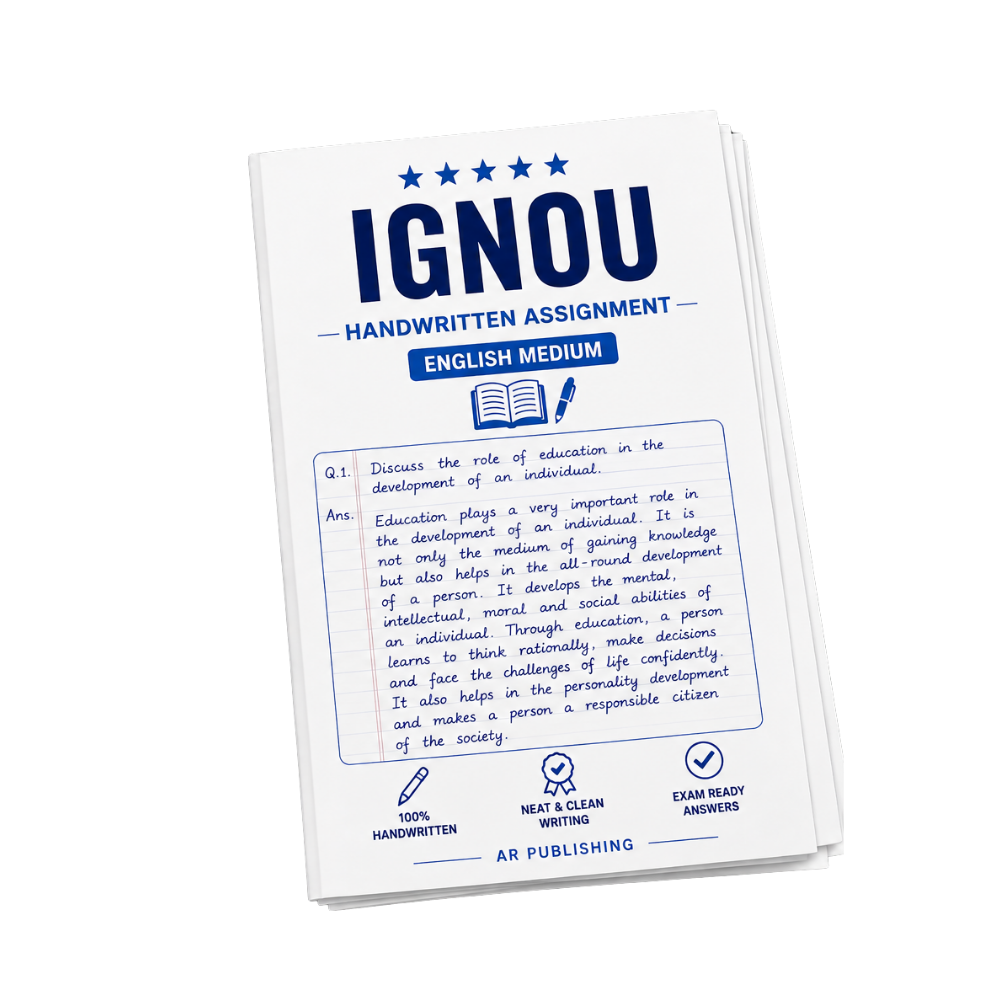
This is a 100% physical handwritten assignment designed strictly as per the official IGNOU curriculum for ENV-104: Fundamentals of Plastic Waste Management, tailored for the BAFPY (School of Inter) program. The content is written by experienced academic scribes on high-quality 80 GSM ruled A4 paper, ensuring clarity and adherence to submission guidelines.
Key Syllabus Coverage (Block-1 & Beyond)
The assignment includes detailed answers for the following official IGNOU syllabus units:
- Block-1: Plastic Waste Management
- Introduction to plastic waste and its environmental impact
- Sources, types, and lifecycle of plastic waste
- Global and national perspectives on plastic pollution
- Role of plastics in sustainable development
- Block-2: Plastic Waste Generation and Characterization
- Methods of plastic waste quantification and analysis
- Plastic waste composition studies (case studies)
- Sampling techniques for plastic waste assessment
- Data interpretation and reporting standards
- Block-3: Plastic Waste Collection and Segregation
- Waste segregation protocols (household and industrial)
- Role of community participation in segregation
- Innovative segregation techniques
- Challenges in plastic waste management systems
- Block-4: Plastic Waste Treatment Technologies
- Primary, secondary, and tertiary treatment methods
- Mechanical, thermal, and chemical recycling processes
- Biodegradation and composting of plastics
- Emerging technologies in plastic waste management
- Block-5: Policy, Legislation, and Extended Producer Responsibility (EPR)
- International and national plastic waste policies
- Role of Extended Producer Responsibility (EPR)
- Implementation challenges and solutions
- Public awareness and behavioral change strategies
Assignment Features
- Neat, legible handwriting on 80 GSM ruled A4 paper
- Includes the official IGNOU front page and printed question paper
- Strictly follows the 2026-27 curriculum for ENV-104
- Delivered via Indian Speed Post to your study centre address
- Ready-to-submit format with no errors or omissions
Subject-Specific FAQs
Q: What are the key differences between mechanical and chemical recycling of plastics?
Mechanical recycling involves shredding and reprocessing plastics into new products, preserving their polymer structure but reducing quality over cycles. Chemical recycling breaks down plastics into raw materials like oils or gases through pyrolysis or solvolysis, enabling higher-grade reuse but requiring advanced infrastructure.
Q: How does the EPR (Extended Producer Responsibility) policy impact plastic waste management in India?
The EPR policy mandates producers to take responsibility for the entire lifecycle of their plastic products, including collection, recycling, and safe disposal. This shifts the burden from municipalities to manufacturers, encouraging innovation in sustainable packaging and waste management systems.
Why buy from us?
-
Verified by top professors and 99th percentile students.
-
Always updated to the latest university curriculum.
-
High-quality, printable PDF formats with clear diagrams.
License & Terms
By purchasing this item, you agree to our standard academic license terms. You may use this product for personal study, but you may not resell or redistribute the files online.