

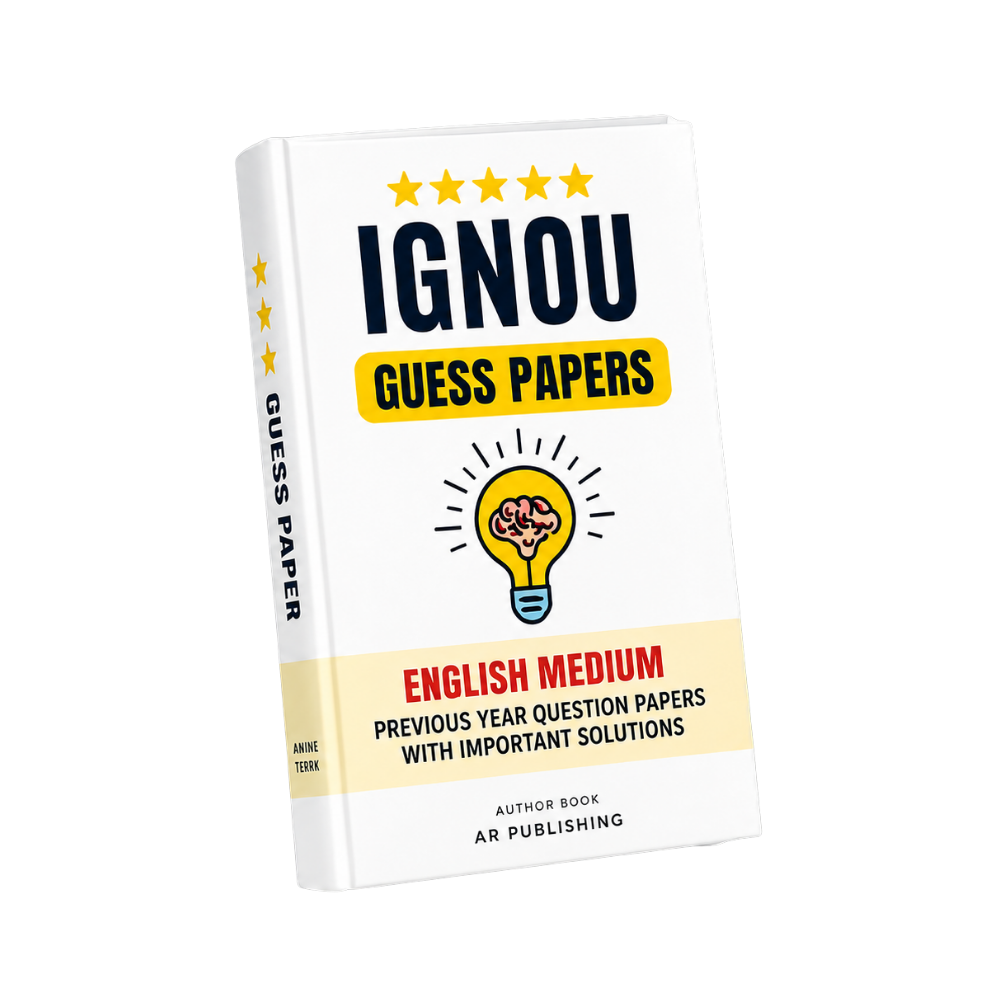
IBO-03 IGNOU Guess Paper 2026-27
Click to view offer details & terms
Get 10% OFF Instant Discount
Apply this coupon code at checkout to claim your academic discount instantly.
- Applicable on all university study materials
- Valid for up to 8 item(s) per order
- Valid till Oct 31, 2026
Enrolled in other IGNOU subjects?
Link your Enrollment No. to auto-map all your semester courses & free question papers.
Frequently Bought Together
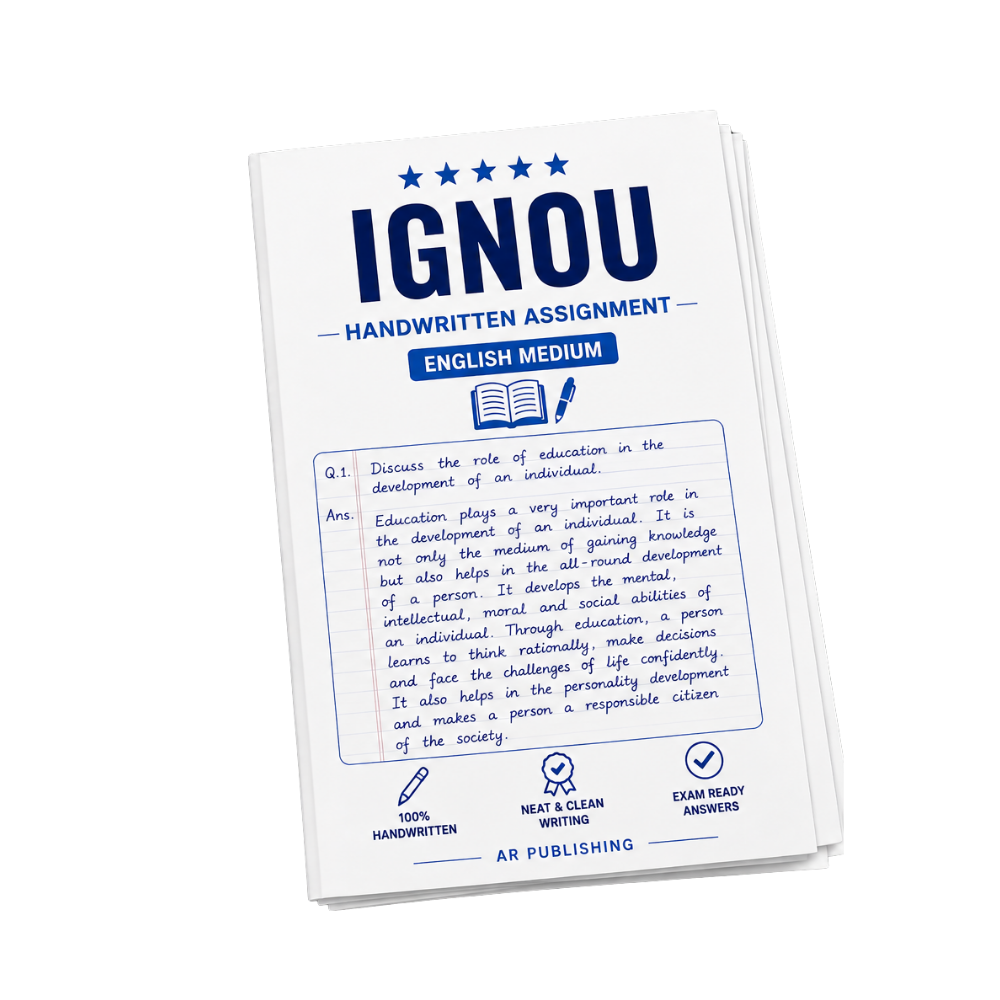
Popular course materials frequently ordered together
Syllabus & Overview
Course Scope & Syllabus Overview for IBO-03:
IBO-03: is a core elective under the Master of Commerce (M.Com) Hindi program, designed to equip students with a rigorous understanding of India’s foreign trade mechanisms, policies, and global market dynamics. This course aligns with the School of Management Studies (SOMS) curriculum, emphasizing both theoretical frameworks and practical applications in international commerce. Students explore macro-level trade agreements, institutional frameworks, and sector-specific trade prospects, ensuring a holistic grasp of India’s role in global trade networks. The syllabus integrates case studies, policy analyses, and statistical insights to prepare students for analytical and strategic decision-making in trade-related roles.Key Syllabus Units & Topics
- Block-1 : Covers foundational concepts of international trade, including trade theories (e.g., comparative advantage, Heckscher-Ohlin model), historical evolution of global trade, and India’s position in the global value chain. Analyzes trade flows, balance of payments, and the role of multilateral institutions like WTO.
- Block-2 : Examines institutional structures governing foreign trade, such as export promotion councils, customs regulations, and trade agreements (e.g., RCEP, US-India trade talks). Discusses policy instruments like duty exemptions, FTAAP, and the impact of trade facilitation reforms.
- Block-3 : Focuses on trade prospects for key Indian exports (e.g., pharmaceuticals, textiles, IT services) and import substitution strategies. Analyzes market access challenges, tariff barriers, and competitive positioning in niche sectors.
- Block-4 -II: Delves into emerging trade opportunities in agri-commodities (e.g., basmati rice, marine products), renewable energy exports, and high-tech goods. Evaluates supply chain resilience, quality standards (e.g., GSP+), and export diversification strategies.
- Block-5 : Assesses trade potential in targeted markets (e.g., ASEAN, African nations, Latin America) through SWOT analyses, FDI inflows, and regional trade blocs. Covers negotiation tactics, cultural trade barriers, and risk mitigation in bilateral trade.
Frequently Asked Questions
Q: What is the marking scheme for IBO-03’s Term-End Examination (TEE), and how are internal assignments weighted?
A: The TEE for IBO-03 carries 100 marks, with sections on short answers (20 marks), descriptive questions (40 marks), and case studies (40 marks). Internal assignments (e.g., study circles, case analyses) contribute 30 marks to the total grade, with a pass mark requirement of 50% aggregate across TEE and assignments.
Q: Which units in IBO-03’s syllabus are most frequently repeated in past TEE papers, and how can students prioritize revision?
A: Blocks 1 ( ) and 2 appear most frequently in repeated questions, covering trade theories, WTO agreements, and institutional policies. Students should allocate 30-40% of revision time to these blocks, supplemented by solving past-year papers to identify recurring question patterns.
Why buy from us?
-
Verified by top professors and 99th percentile students.
-
Always updated to the latest university curriculum.
-
High-quality, printable PDF formats with clear diagrams.
License & Terms
By purchasing this item, you agree to our standard academic license terms. You may use this product for personal study, but you may not resell or redistribute the files online.