

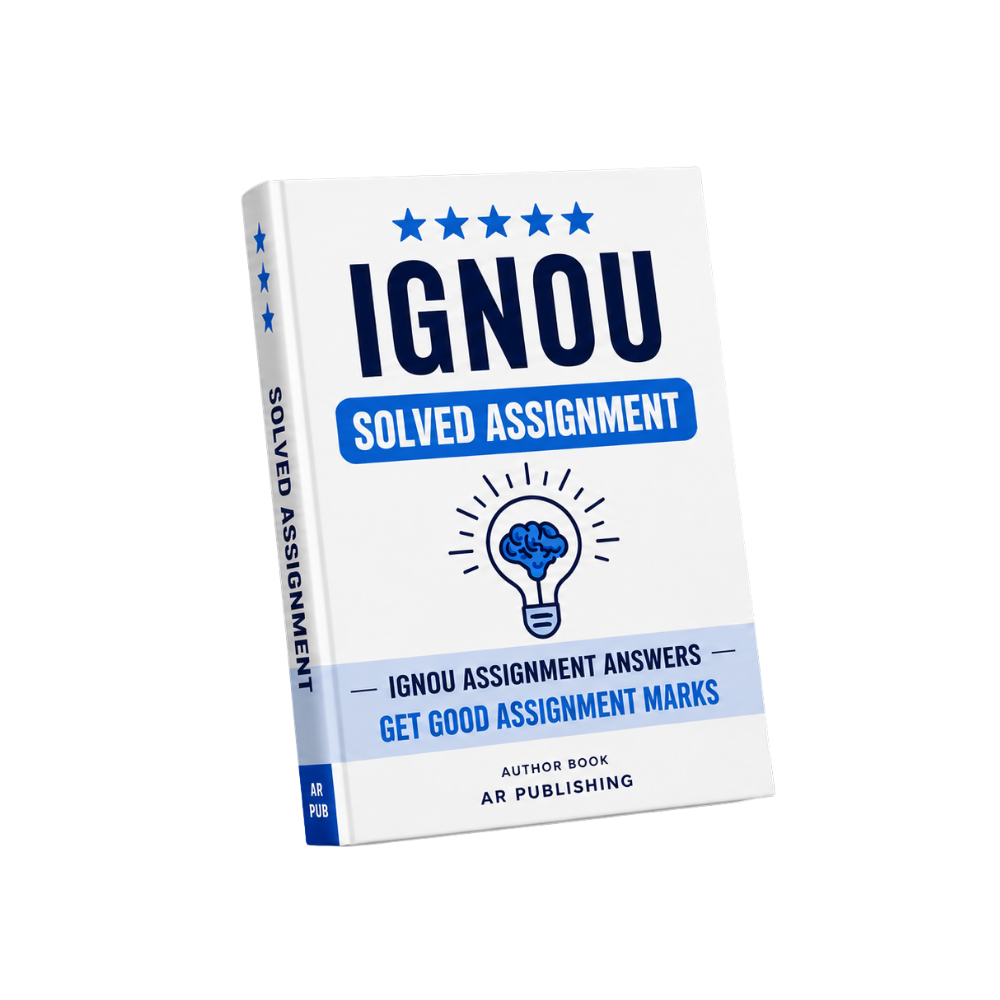
LSE-02 IGNOU Solved Assignment 2026-27
Click to view offer details & terms
Get 10% OFF Instant Discount
Apply this coupon code at checkout to claim your academic discount instantly.
- Applicable on all university study materials
- Valid for up to 8 item(s) per order
- Valid till Oct 31, 2026
Enrolled in other IGNOU subjects?
Link your Enrollment No. to auto-map all your semester courses & free question papers.
Frequently Bought Together
Popular course materials frequently ordered together
Syllabus & Overview
Course Scope & Syllabus Overview for LSE-02: Ecology (IGNOU CBCS Framework)
LSE-02: Ecology, offered under the School of Humanities (SOH) as an elective course, provides a rigorous interdisciplinary exploration of ecological principles within the broader framework of environmental studies. This course bridges biological and literary perspectives, examining how ecological systems function as both natural phenomena and cultural narratives. Students analyze environmental ethics, biodiversity conservation, and human-anthropocentric interactions through a critical lens, aligning with IGNOU’s CBCS curriculum to foster analytical and creative engagement. The study material is meticulously structured to address core academic objectives, including the understanding of ecosystem dynamics, anthropogenic impacts, and sustainable ecological practices—preparing learners for both academic assessments and real-world applications.
Key Syllabus Units & Topics
- Block-1 Environment and Its Components: This unit dissects the fundamental constituents of the environment—biotic and abiotic factors—while exploring their interdependencies. Topics include atmospheric composition, biogeochemical cycles, and the role of ecosystems in maintaining ecological balance, with a focus on theoretical frameworks and case studies.
- Block-2 Ecosystem: Functioning, Types: Students delve into the structure and function of ecosystems, distinguishing between terrestrial, aquatic, and artificial systems. The unit emphasizes energy flow, nutrient cycling, and trophic levels, using ecological models to illustrate ecological resilience and human-induced disruptions.
- Community Ecology: This segment examines the interactions within ecological communities, including competition, predation, and symbiosis. Students analyze species diversity, ecological succession, and the application of ecological theories to conservation strategies, integrating both quantitative and qualitative approaches.
- Humans and Ecology: The final block critiques the anthropogenic impact on ecological systems, addressing pollution, climate change, and sustainable development. It encourages critical reflection on human ecological footprints and policy interventions, aligning with contemporary environmental discourse.
Frequently Asked Questions
Q: How are TMA marks distributed in LSE-02, and what is the minimum passing percentage?
A: The Tutor-Marked Assignment (TMA) in LSE-02 carries 30% weightage of the total marks, with a minimum passing requirement of 40% overall. Each TMA section (A and B) must adhere strictly to the prescribed word limits and academic rigor to ensure full credit.
Q: Are there specific guidelines for referencing ecological theories in the TMA, or should students rely solely on textbook examples?
A: While textbook examples are foundational, students must integrate primary ecological theories (e.g., Gaia Hypothesis, Island Biogeography Theory) and apply them critically to real-world scenarios. Citing peer-reviewed sources or IGNOU study material enhances credibility and aligns with the course’s analytical focus.
Why buy from us?
-
Verified by top professors and 99th percentile students.
-
Always updated to the latest university curriculum.
-
High-quality, printable PDF formats with clear diagrams.
License & Terms
By purchasing this item, you agree to our standard academic license terms. You may use this product for personal study, but you may not resell or redistribute the files online.