

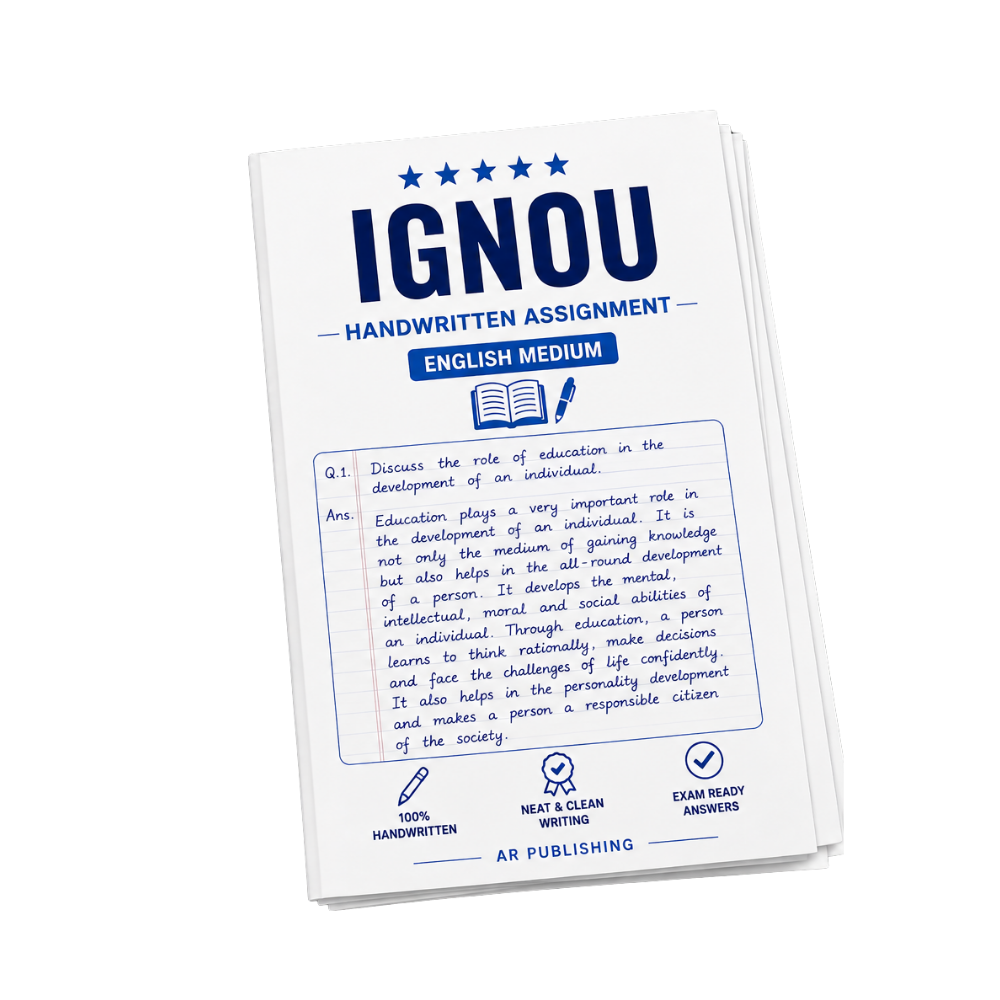
LSE-12 IGNOU Handwritten Assignment 2026-27
Click to view offer details & terms
Get 10% OFF Instant Discount
Apply this coupon code at checkout to claim your academic discount instantly.
- Applicable on all university study materials
- Valid for up to 8 item(s) per order
- Valid till Oct 31, 2026
Enrolled in other IGNOU subjects?
Link your Enrollment No. to auto-map all your semester courses & free question papers.
Frequently Bought Together
Popular course materials frequently ordered together
Syllabus & Overview
Course Scope & Syllabus Overview for LSE-12: Plant Diversity I
LSE-12: Plant Diversity I is a core component of IGNOU’s Bachelor of Science curriculum under the School of Sciences, designed to introduce students to the foundational principles of plant taxonomy, morphology, and evolutionary biology. This course explores the systematic classification of plants, emphasizing the diversity of lower and higher plant groups, their structural adaptations, and ecological roles. Through structured study blocks, students analyze the phylogenetic relationships among algae, fungi, bryophytes, and pteridophytes, developing a rigorous understanding of plant evolutionary trajectories and their significance in global ecosystems. The curriculum integrates theoretical knowledge with practical insights, ensuring students grasp both the taxonomic frameworks and the biological intricacies of non-vascular and early vascular plants. This preparation is critical for meeting the academic objectives of the CBCS framework, fostering analytical skills essential for advanced botanical research and fieldwork.Key Syllabus Units & Topics
- Block-1 (A) Diversity of Plants and Related Organisms: Examines the fundamental characteristics distinguishing plant kingdoms from other organisms, including cellular organization, reproductive strategies, and ecological niches. This unit establishes the taxonomic hierarchy and evolutionary transitions from prokaryotic to eukaryotic plant forms.
- Block-1 (B) Algae: Covers the morphology, physiology, and classification of algal groups (e.g., Chlorophyceae, Phaeophyceae, Rhodophyceae), highlighting their photosynthetic pigments, life cycles, and economic importance. Practical aspects include identifying key algal structures under a microscope.
- Block-2 Fungi: Focuses on the unique features of fungi—such as heterotrophic nutrition via absorption, mycelial growth, and reproductive structures—while distinguishing them from plants. Topics include classification into major phyla (e.g., Zygomycota, Ascomycota) and their roles in decomposition and symbiosis.
- Block-3 Bryophytes: Delves into the anatomy, reproduction, and ecological adaptations of non-vascular plants (e.g., mosses, liverworts), emphasizing their dominance in moist habitats. The unit explores their life cycle stages, including alternation of generations, and their relevance to paleobotany.
- Block-4 Pteridophytes: Analyzes the vascular systems, spore-bearing structures, and reproductive biology of ferns and their allies, bridging the gap between bryophytes and seed plants. Practical focus includes identifying fern sporophytes and gametophytes in field or laboratory settings.
Frequently Asked Questions
Q: What is the marking scheme for the LSE-12 assignment, and how many questions are typically assigned per unit?
A: The LSE-12 assignment carries 30 marks, distributed across all four blocks. Students are usually required to answer one question per unit (Block-1 to Block-4), with each question carrying 7–8 marks, emphasizing both descriptive and analytical responses.
Q: Are there any specific pass marks or weightage for assignments in the LSE-12 final examination?
A: Assignments contribute 30% to the total marks for LSE-12, with a minimum pass mark of 50% required in the assignment component to qualify for the final theory examination. The remaining 70% is derived from the term-end theory paper.
Why buy from us?
-
Verified by top professors and 99th percentile students.
-
Always updated to the latest university curriculum.
-
High-quality, printable PDF formats with clear diagrams.
License & Terms
By purchasing this item, you agree to our standard academic license terms. You may use this product for personal study, but you may not resell or redistribute the files online.