

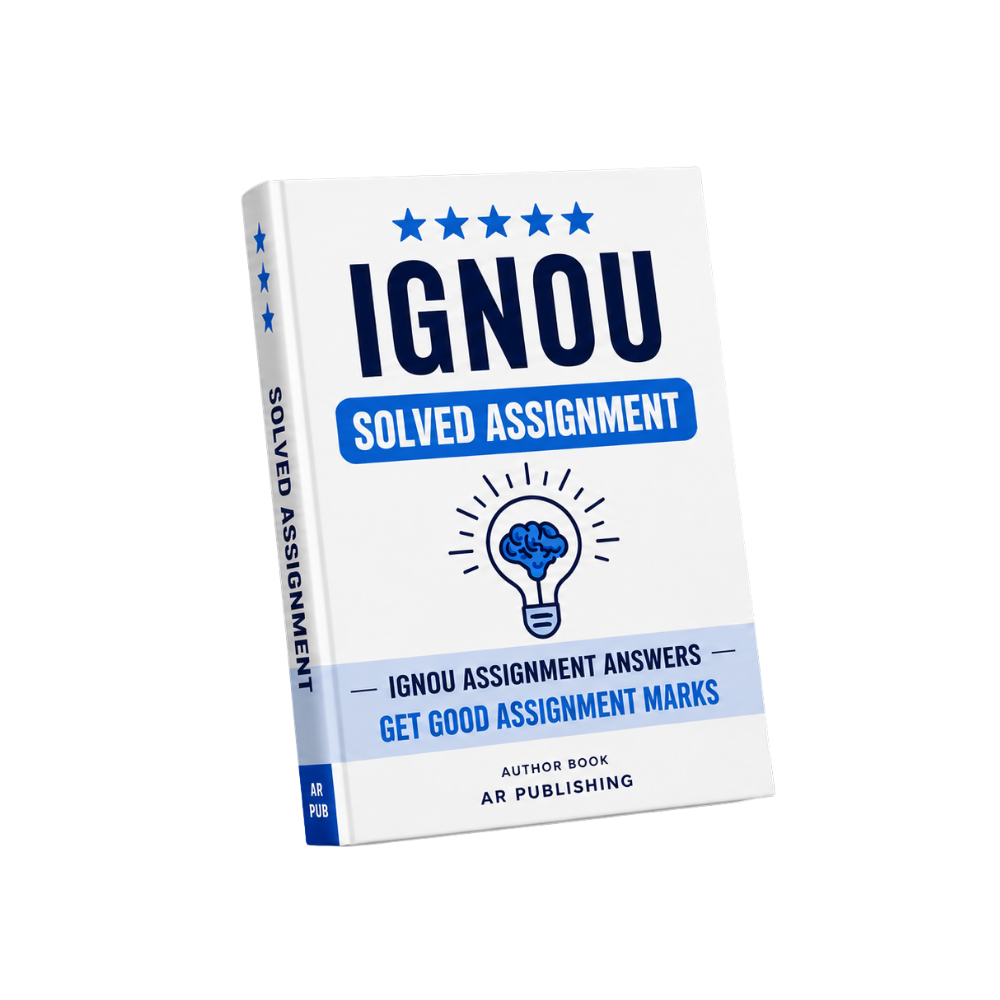
MANI-003 IGNOU Solved Assignment 2026-27
Click to view offer details & terms
Get 10% OFF Instant Discount
Apply this coupon code at checkout to claim your academic discount instantly.
- Applicable on all university study materials
- Valid for up to 8 item(s) per order
- Valid till Oct 31, 2026
Frequently Bought Together
Popular course materials frequently ordered together
Syllabus & Overview
Course Scope & Syllabus Overview for MANI-003: Practicing Anthropology
MANI-003: Practicing Anthropology is a core course within IGNOU’s Master’s in Anthropology (MAAN) program, designed to bridge theoretical knowledge with applied fieldwork. This course equips students with critical frameworks to analyze cultural practices, policy interventions, and community engagement. Through case studies and ethnographic methodologies, learners explore how anthropology translates research into actionable solutions for social challenges. The syllabus emphasizes interdisciplinary approaches, ensuring graduates can contribute meaningfully to public policy, development projects, and grassroots initiatives under the School of Social Sciences (SOSS).
The curriculum integrates practical tools for ethnographic data collection, policy analysis, and knowledge dissemination, aligning with IGNOU’s CBCS structure. Students gain proficiency in documenting diverse cultural arenas while addressing contemporary issues like health disparities, urbanization, and social transformation. This course is pivotal for those aiming to apply anthropological insights in governance, NGOs, or academic research.
Key Syllabus Units & Topics
- Block-2: Practicing Anthropology and Progress: Examines anthropological contributions to development theories, critiquing top-down versus participatory models. Topics include sustainable livelihoods, indigenous knowledge systems, and the role of anthropology in policy formulation.
- Block-3: Practicing Anthropology and Health: Explores health disparities through cultural lenses, covering bio-cultural approaches, medical anthropology, and community health interventions. Case studies highlight ethnographic methods in public health programs.
- Block-5: Advanced Areas in Practicing Anthropology: Focuses on applied ethnography in legal systems, environmental policy, and digital anthropology. Students analyze how anthropological data informs legislation and advocacy strategies.
- Block-6: Diverse Arenas of Practicing Anthropology: Covers urban anthropology, migration studies, and gendered practices. Emphasizes fieldwork techniques for documenting social change in pluralistic societies.
- Block-8: Project Work: Mandatory capstone project requiring students to apply learned methodologies to a real-world scenario, submitting a structured report and presentation for evaluation.
Frequently Asked Questions
Q: What is the marking scheme for MANI-003’s Tutor-Marked Assignments (TMAs), and how are they weighted in the final grade?
A: TMAs for MANI-003 carry 30% of the total marks, with each assignment graded out of 20. The marking scheme prioritizes clarity, critical analysis, and adherence to anthropological frameworks, with 5% deducted for plagiarism or deviations from word limits.
Q: Are there specific guidelines for referencing sources in MANI-003 assignments, and which citation style should be followed?
A: IGNOU mandates the Harvard referencing style for all assignments in MAAN courses. Ensure in-text citations and bibliographies include author names, publication year, and page numbers where applicable, with a minimum of 5 academic references per assignment.
Why buy from us?
-
Verified by top professors and 99th percentile students.
-
Always updated to the latest university curriculum.
-
High-quality, printable PDF formats with clear diagrams.
License & Terms
By purchasing this item, you agree to our standard academic license terms. You may use this product for personal study, but you may not resell or redistribute the files online.