

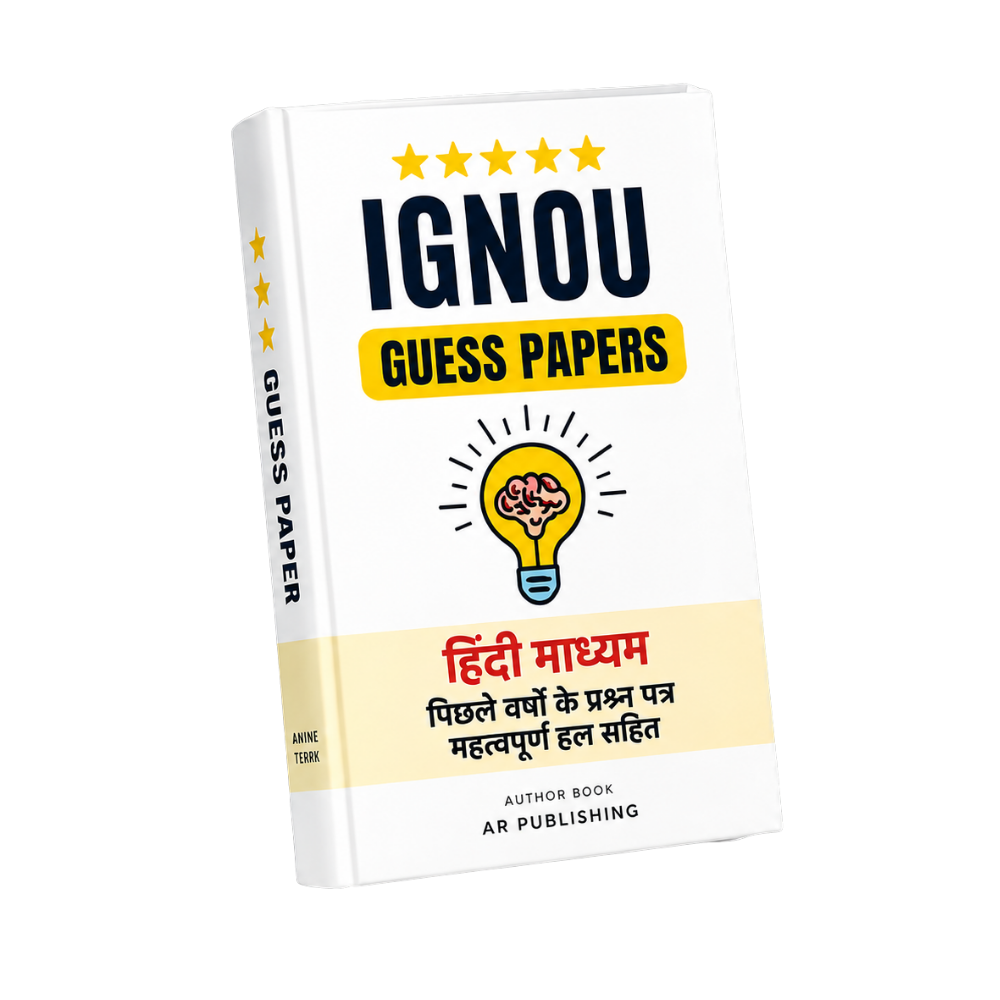
MBG-001 IGNOU Guess Paper 2026-27
Click to view offer details & terms
Get 10% OFF Instant Discount
Apply this coupon code at checkout to claim your academic discount instantly.
- Applicable on all university study materials
- Valid for up to 8 item(s) per order
- Valid till Oct 31, 2026
Enrolled in other IGNOU subjects?
Link your Enrollment No. to auto-map all your semester courses & free question papers.
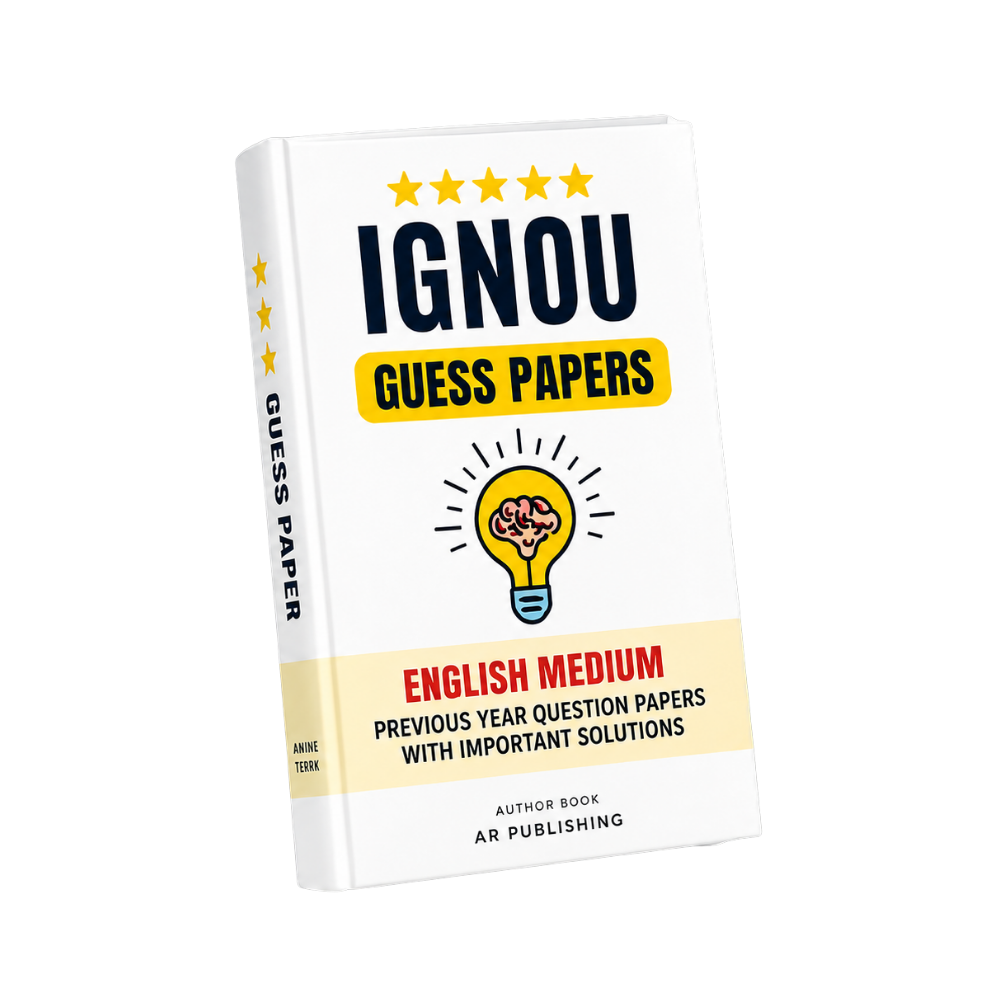
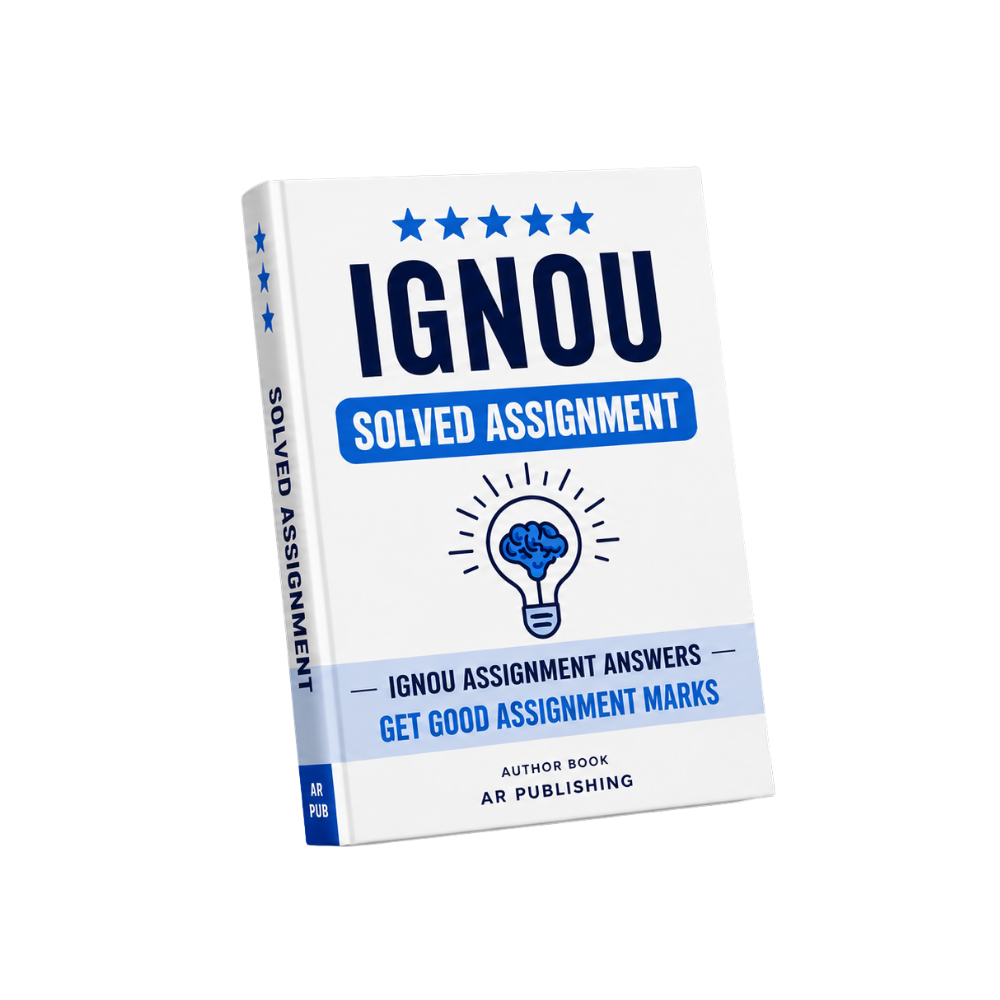
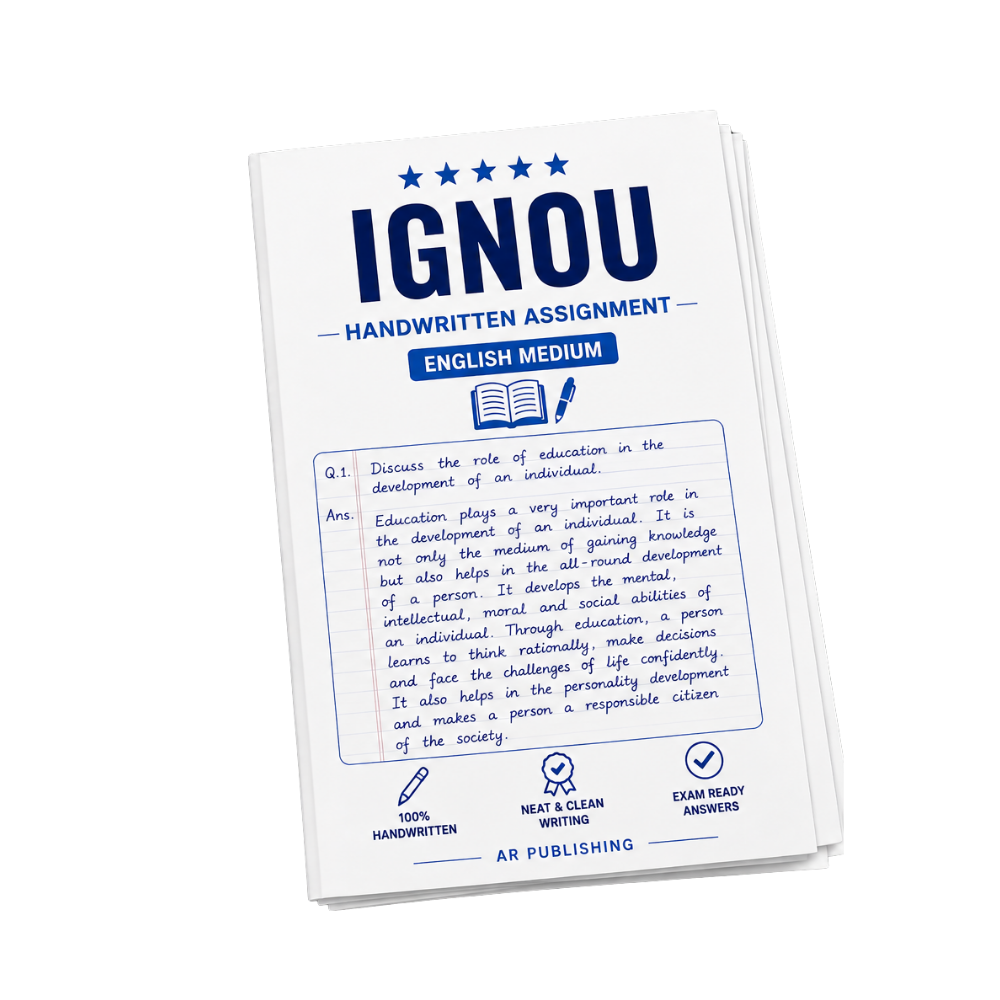
Frequently Bought Together
Popular course materials frequently ordered together
Syllabus & Overview
Course Scope and Syllabus Overview
MBG-001: is a foundational course under the M.A. (MABGS) program, designed to introduce students to the philosophical, literary, and cultural significance of the Bhagavad Gita. Aligned with the IGNOU CBCS curriculum, this course explores the Gita as a timeless text, examining its poetic structure, thematic depth, and interpretive traditions. It fosters critical analysis of key verses, philosophical dilemmas (e.g., karma yoga vs. jnana yoga), and the interplay between devotion (bhakti), duty (dharma), and liberation (moksha). Through thematic units, students engage with scholarly perspectives, textual exegesis, and cross-cultural interpretations, ensuring a holistic understanding of the Gita’s enduring relevance in Indian thought and global spirituality.Key Syllabus Units & Topics
- Unit 1: : This unit contextualizes the Gita within the Mahabharata, analyzing its composition, authorship debates (traditional vs. critical views), and historical settings like the Kurukshetra war. It also explores the text’s oral transmission and early manuscript traditions.
- Unit 2: : Focuses on the Gita’s poetic devices—such as sloka meter, metaphorical imagery (e.g., the "tree of life" analogy), and parallelism—while examining its rhetorical strategies to convey philosophical arguments through dialogue.
- Unit 3: : Dissects core philosophical concepts like karma yoga (action without attachment), bhakti (devotional surrender), and jnana yoga (wisdom), linking them to Vedantic, Yoga, and Puranic traditions. It also critiques modern interpretations of dharma as universal ethics.
- Unit 4: : Addresses existential dilemmas—such as suffering (dukh), desire (kama), and the illusion of the self (maya)—through Arjuna’s crisis and Krishna’s responses. Comparative analyses with Buddhist and Jain thought are included.
- Unit 5: : Traces the Gita’s influence on global spiritual movements (e.g., Swami Vivekananda, modern yoga), political thought (e.g., Gandhi’s satyagraha), and contemporary literature. It evaluates translations and adaptations in English/Hindi contexts.
Frequently Asked Questions
Q: How is the MBG-001 Term-End Examination (TEE) structured, and what is the marking scheme?
A: The TEE for MBG-001 consists of 100 marks, divided into a 50-mark descriptive paper (3 hours) and a 50-mark assignment (submitted before the exam). The descriptive exam includes short-answer (20 marks), long-answer (30 marks), and one essay-type question (20 marks). Questions are drawn from all units, with Unit 3 and Unit 4 carrying slightly higher weightage.
Q: What is the passing criterion for MBG-001, and how should students prioritize revision for the exam?
A: The minimum passing marks for MBG-001 are 50% overall, with no unit-specific cutoff. To optimize revision, focus on high-weightage units (3 and 4) and recurring themes (e.g., karma yoga, bhakti, Arjuna-Krishna dialogues). Prioritize verse analysis (e.g., Chapter 2:1–7, Chapter 18:65–66) and scholarly interpretations (e.g., Swami Vivekananda, A.C. Bhaktivedanta) as these frequently appear in exams.
Why buy from us?
-
Verified by top professors and 99th percentile students.
-
Always updated to the latest university curriculum.
-
High-quality, printable PDF formats with clear diagrams.
License & Terms
By purchasing this item, you agree to our standard academic license terms. You may use this product for personal study, but you may not resell or redistribute the files online.