

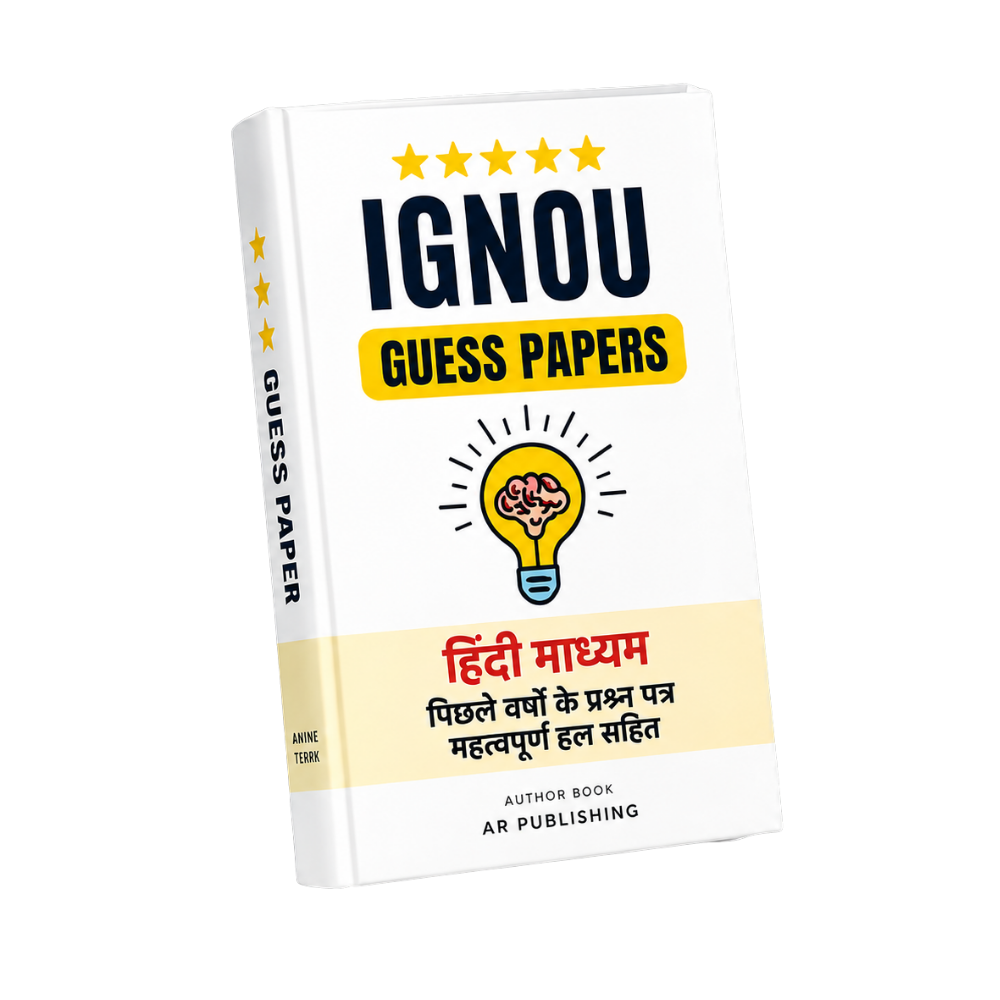
MBG-002 IGNOU Guess Paper 2026-27
Click to view offer details & terms
Get 10% OFF Instant Discount
Apply this coupon code at checkout to claim your academic discount instantly.
- Applicable on all university study materials
- Valid for up to 8 item(s) per order
- Valid till Oct 31, 2026
Enrolled in other IGNOU subjects?
Link your Enrollment No. to auto-map all your semester courses & free question papers.
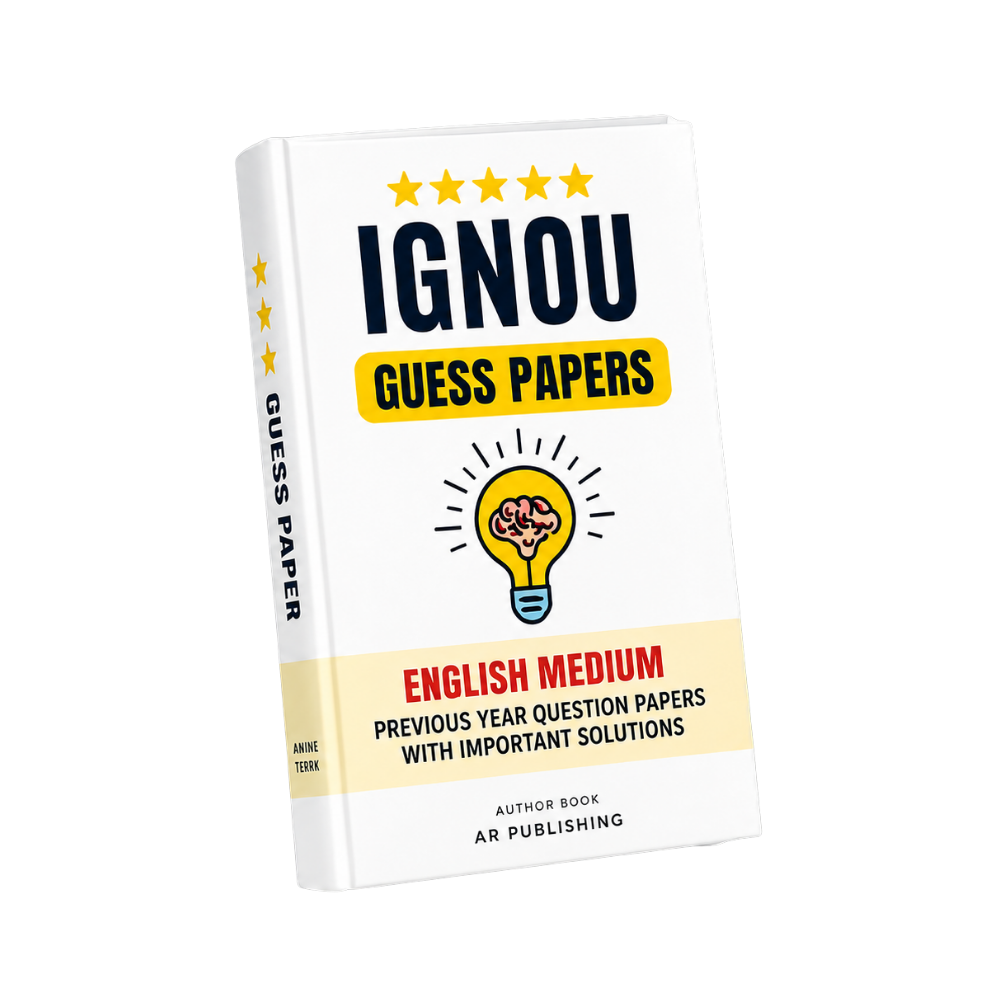
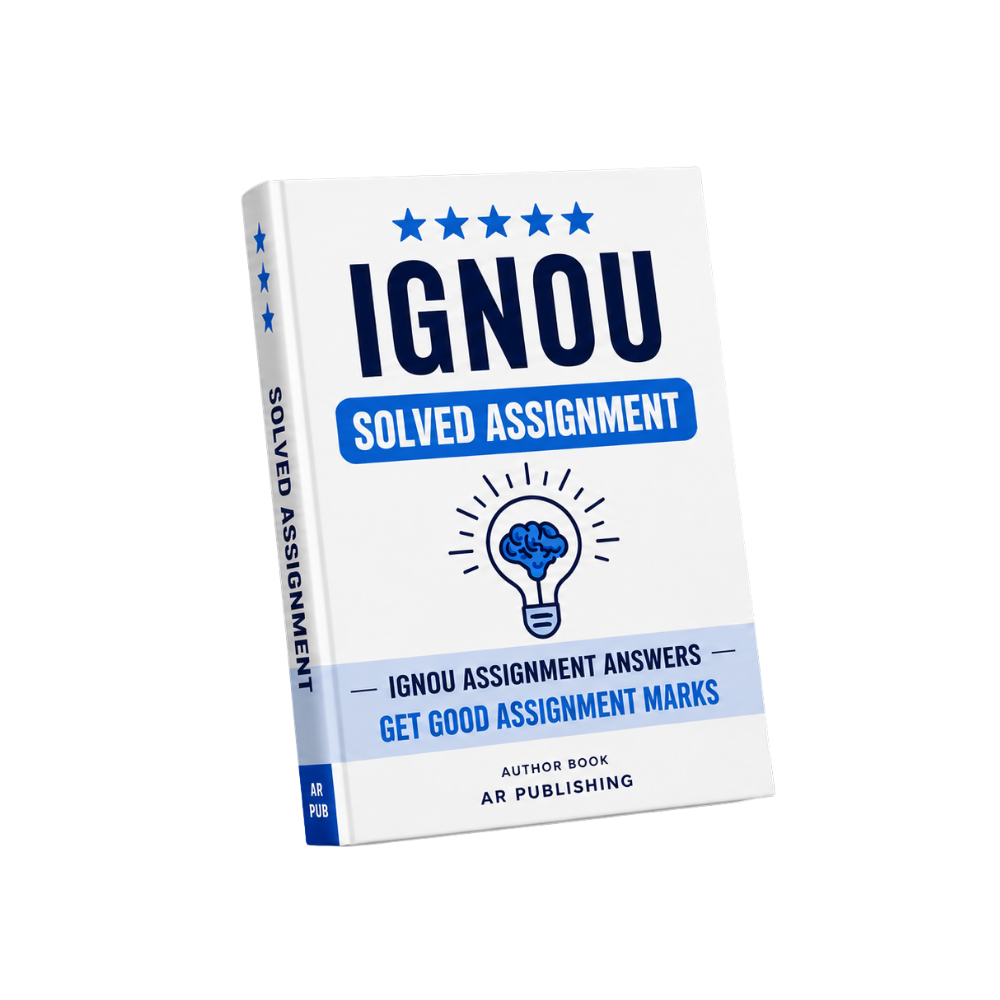
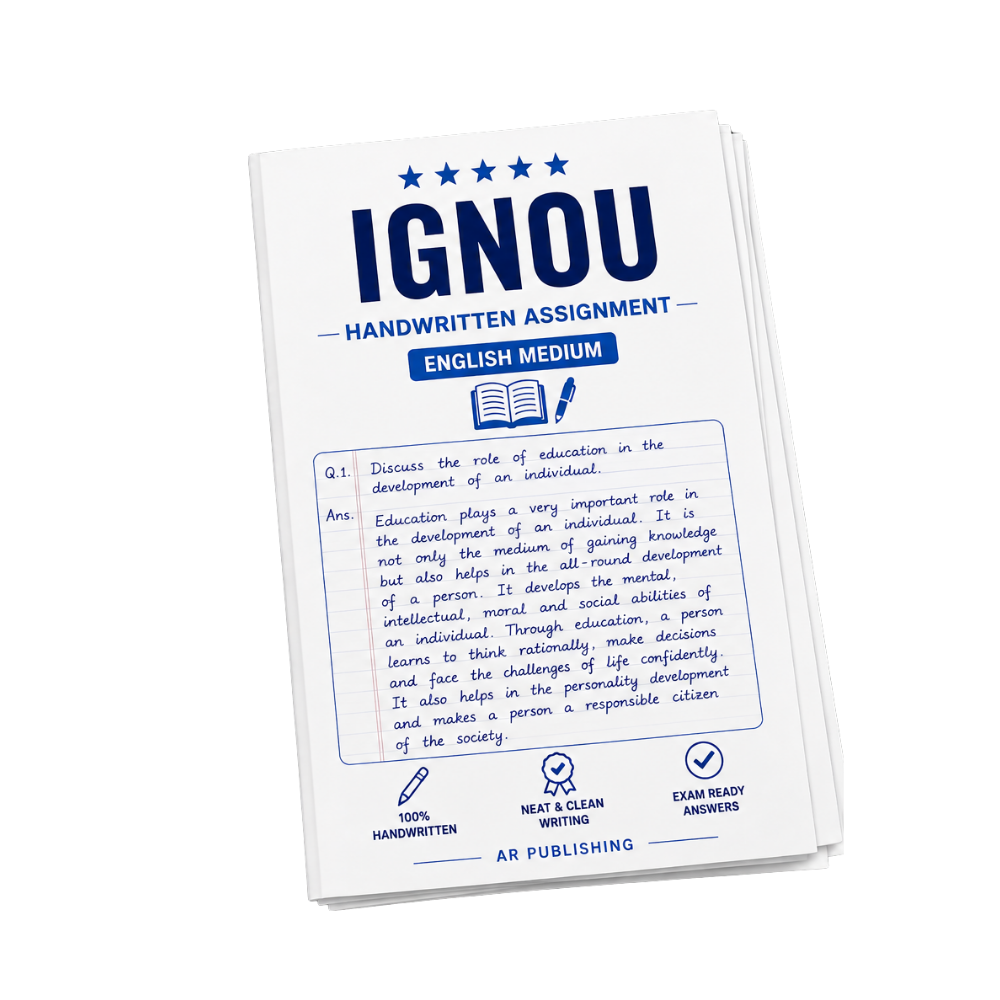
Frequently Bought Together
Popular course materials frequently ordered together
Syllabus & Overview
Course Scope and Syllabus Overview for MBG-002:
MBG-002: is a core course under the Master’s Programme in (MABGS), designed to explore the philosophical and ethical dimensions of duty (dharma), action (karma), and ritual (yajña) as articulated in the Bhagavad Gita. This course examines the interplay between moral obligations, selfless action, and spiritual fulfillment, grounding students in critical textual analysis while aligning with IGNOU’s CBCS framework. The syllabus integrates historical, philosophical, and literary perspectives to dissect how the Gita’s teachings transcend temporal contexts, offering timeless insights into ethical living and cosmic harmony.Key Syllabus Units and Topics
- -1 : This unit dissects the Gita’s classification of actions—nishkama karma (selfless duty) versus sankalpa karma (action bound by desire)—while analyzing Arjuna’s dilemma and Krishna’s counsel on the nature of duty and its liberation from attachment.
- -3 --: Focuses on the metaphysical linkage between karma (action) and yajña (ritual/sacrifice), elucidating how selfless service (seva) and ceremonial practices (yajña) purify the soul and align the individual with divine order (dharma).
- -4 -: Explores the duality of dharma (cosmic order) and adharma (moral transgression), examining case studies from the Gita and Vedic texts to illustrate how ethical frameworks evolve through context and intent.
- -6 : Investigates the Gita’s portrayal of the divine—Krishna as the Supreme Person (Paramatma)—and its implications for devotion (bhakti), knowledge (jnana), and surrender (samarpana), with emphasis on textual exegesis.
- -8 -: Analyzes the philosophy of seva (service) and samarpana (dedication) as pathways to spiritual realization, contrasting individualistic action with collective devotion as depicted in the Gita’s dialogues.
Frequently Asked Questions
Q: How are marks distributed in MBG-002’s Term-End Examination (TEE), and what weightage does each question type carry?
A: The TEE for MBG-002 follows a 100-mark pattern: 50% from objective/short-answer questions (testing factual recall and unit-wise application), 30% from analytical essay-type questions (evaluating critical interpretation of dharma, karma, or yajña), and 20% from case-study-based questions (assessing contextual understanding of Gita’s ethical dilemmas). Past papers reveal 60% weightage on -1, -3, and -6.
Q: Are assignments mandatory for MBG-002, and how do they impact the final grade?
A: Assignments contribute 30 marks to the total evaluation (100 marks), with a passing criterion of 50% in both assignments and TEE. Focus on -2 (-) and -5 for assignment questions, as these units frequently appear with thematic linkages to the TEE syllabus.
Why buy from us?
-
Verified by top professors and 99th percentile students.
-
Always updated to the latest university curriculum.
-
High-quality, printable PDF formats with clear diagrams.
License & Terms
By purchasing this item, you agree to our standard academic license terms. You may use this product for personal study, but you may not resell or redistribute the files online.