

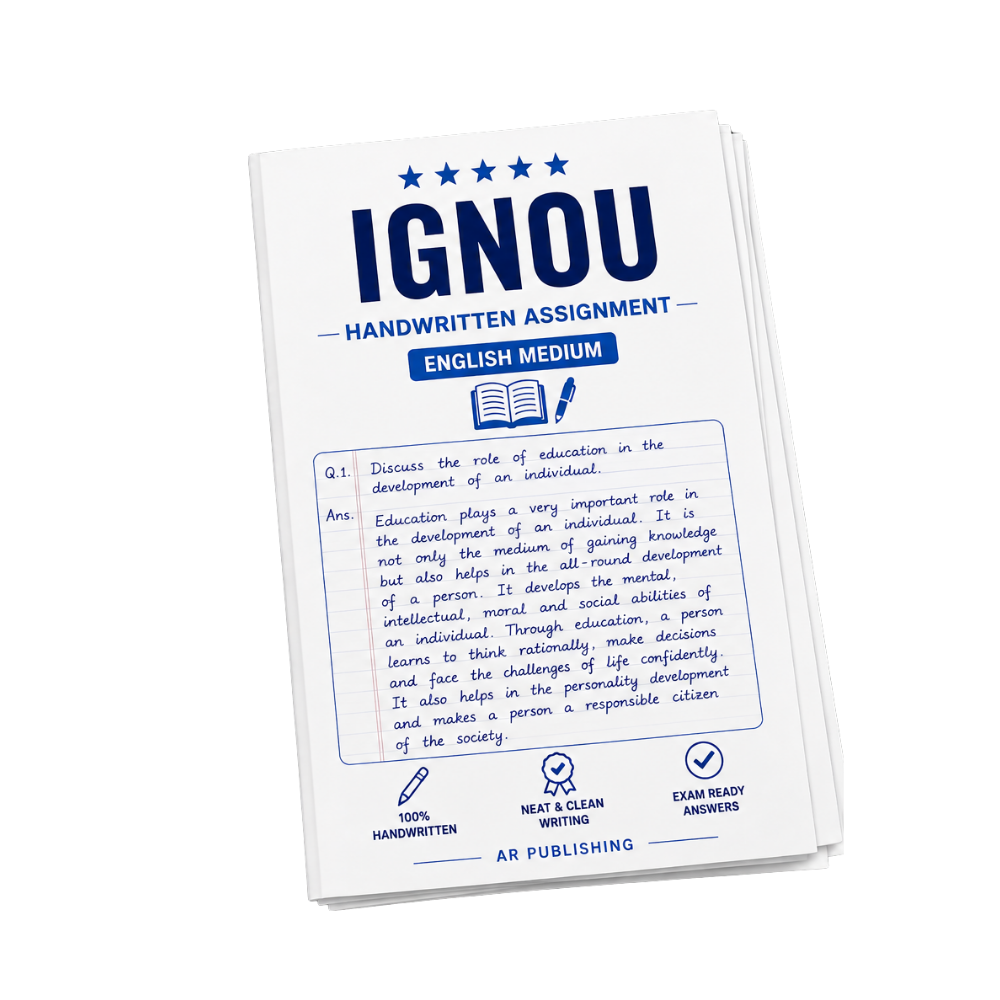
MDV-101 IGNOU Handwritten Assignment 2026-27
Click to view offer details & terms
Get 10% OFF Instant Discount
Apply this coupon code at checkout to claim your academic discount instantly.
- Applicable on all university study materials
- Valid for up to 8 item(s) per order
- Valid till Oct 31, 2026
Enrolled in other IGNOU subjects?
Link your Enrollment No. to auto-map all your semester courses & free question papers.
Frequently Bought Together
Popular course materials frequently ordered together


Syllabus & Overview
Course Scope and Syllabus Overview for MDV-101: Introduction to Development and Development Theories
MDV-101: Introduction to Development and Development Theories is a foundational course within the Master of Arts in Development Studies (MADVS) curriculum, designed to equip students with a critical understanding of the multifaceted dimensions of development. This course explores the historical, theoretical, and conceptual frameworks that underpin development studies, bridging economic, social, and political perspectives. Through rigorous academic analysis, students engage with key debates on growth, equity, and sustainability, preparing them to evaluate contemporary development challenges with an evidence-based approach. The course emphasizes interdisciplinary learning, integrating classical and modern theories to contextualize real-world development scenarios. By examining the evolution of development paradigms—from modernization theories to post-colonial critiques—students gain insights into policy formulation, implementation, and impact assessment. This structured academic foundation ensures a robust preparation for advanced studies in development interventions and policy analysis.Key Syllabus Units and Topics
- Block-1: Development: An Overview: This block introduces the foundational concepts of development, distinguishing between economic growth and human development. It covers historical perspectives, including pre-colonial, colonial, and post-independence phases, while analyzing indicators like GDP, HDI, and poverty metrics.
- Block-2: Classical and Neo-Classical Theories: Students examine the foundational economic theories of development, including Rostow’s stages of growth model and the Harrod-Domar growth model. The block also critiques neo-classical approaches, such as the Solow-Swan model, and their assumptions about capital accumulation and technological progress.
- Block-3: Developmentalist Theories: This unit explores state-led development theories, including the role of the state in planning, industrialization, and infrastructure development. It evaluates the successes and limitations of developmentalist models in countries like India, China, and Brazil.
- Block-4: Heterogeneous Theories: The block delves into alternative perspectives, such as dependency theory, world-systems theory, and feminist approaches to development. It critiques dominant narratives, emphasizing power asymmetries, global inequalities, and grassroots participation in development processes.
Frequently Asked Questions
Q: What is the marking scheme for the MDV-101 assignment, and how many marks are allocated to each question?
A: The MDV-101 assignment carries a total of 30 marks, distributed across the assigned questions based on their weightage in the course syllabus. Typically, each question is marked proportionally, with detailed answers earning higher scores for analytical depth and theoretical grounding.
Q: What are the minimum pass marks required for MDV-101, and how does the assignment contribute to the overall grade?
A: The minimum pass marks for MDV-101 are 40%, with the assignment contributing 30% to the final grade. Students must achieve at least 12 marks out of 30 to pass the assignment component, ensuring a strong foundation before proceeding to term-end examinations.
Why buy from us?
-
Verified by top professors and 99th percentile students.
-
Always updated to the latest university curriculum.
-
High-quality, printable PDF formats with clear diagrams.
License & Terms
By purchasing this item, you agree to our standard academic license terms. You may use this product for personal study, but you may not resell or redistribute the files online.