


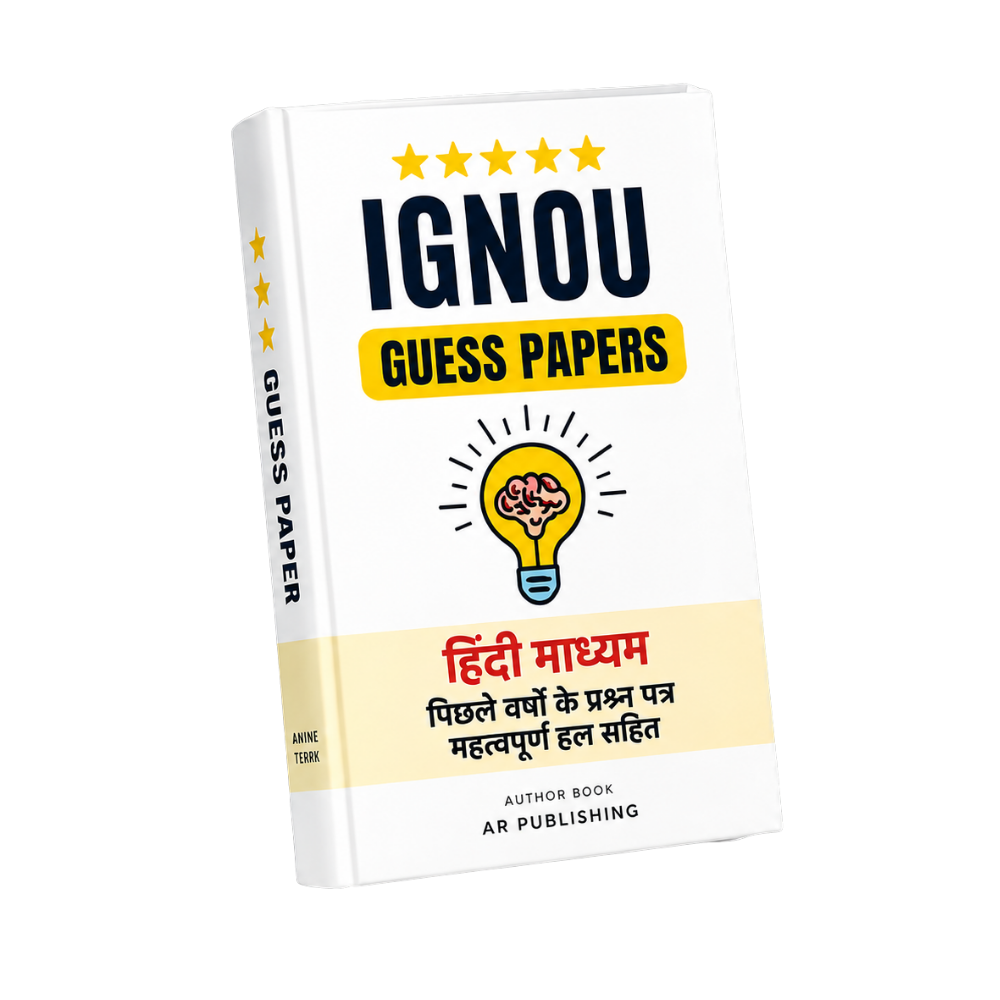
MDV-106 IGNOU Guess Paper 2026-27
Click to view offer details & terms
Get 10% OFF Instant Discount
Apply this coupon code at checkout to claim your academic discount instantly.
- Applicable on all university study materials
- Valid for up to 8 item(s) per order
- Valid till Oct 31, 2026
Frequently Bought Together
Popular course materials frequently ordered together
Syllabus & Overview
Course Scope & Syllabus Overview
MDV-106: Research Methodology in Development Studies is a core component of IGNOU’s Master of Arts in Development Studies (MADVS), designed to equip students with rigorous analytical frameworks for conducting empirical research in development contexts. This course bridges theoretical foundations with practical applications, emphasizing critical evaluation of research paradigms, data-driven decision-making, and ethical considerations in developmental interventions. Aligned with the CBCS curriculum, it prepares students to design, execute, and interpret research projects that address real-world challenges in sectors such as poverty alleviation, governance, and social policy. The syllabus integrates qualitative and quantitative methodologies, ensuring graduates can navigate interdisciplinary research demands while adhering to academic rigor.Key Syllabus Units & Topics
- Block-1: Fundamentals of Social Science Research: Covers the philosophical underpinnings of research, including positivism, interpretivism, and critical theory, alongside the formulation of research problems, objectives, and hypotheses. Students explore the ethical dimensions of research, such as informed consent and confidentiality, while mastering the art of literature review and conceptual framework development.
- Block-2: Development Research: Examines the unique methodological challenges in developmental research, such as participatory action research (PAR) and rapid appraisal techniques. This block dissects case studies from global development initiatives, analyzing how research informs policy and practice in low- and middle-income contexts.
- Block-3: Measurement and Sampling: Focuses on the technical aspects of constructing valid and reliable research instruments, including scales, questionnaires, and indices. Topics include probability and non-probability sampling methods, sampling errors, and strategies for ensuring representativeness in diverse populations.
- Block-4: Data Collection: Delves into primary and secondary data collection methods, such as surveys, interviews, focus group discussions, and archival research. Emphasis is placed on designing data collection tools, managing fieldwork logistics, and mitigating biases in data gathering processes.
- Block-5: Data Analysis: Introduces statistical and qualitative analysis techniques tailored to developmental research, including descriptive and inferential statistics, thematic analysis, and multivariate regression. Students learn to interpret data using software tools like SPSS and NVivo while critically assessing the limitations of quantitative and qualitative approaches.
Frequently Asked Questions
Q: What is the marking scheme for the MDV-106 Term-End Examination (TEE), and how are internal assignments weighted?
A: The TEE for MDV-106 carries 100 marks, with a pass percentage of 40%. Internal assignments (typically 2) contribute 20 marks each, making them critical for cumulative grading. Ensure assignments are submitted within deadlines to avoid penalties.
Q: Are there recurring questions in past TEE papers for MDV-106, and how can I identify high-yield topics?
A: Yes, certain units like Measurement and Sampling (Block-3) and Data Analysis (Block-5) frequently feature in TEE papers. Review solved question papers from the last 5–10 cycles (June/December) to identify repeated questions, focusing on case studies and methodological comparisons.
Why buy from us?
-
Verified by top professors and 99th percentile students.
-
Always updated to the latest university curriculum.
-
High-quality, printable PDF formats with clear diagrams.
License & Terms
By purchasing this item, you agree to our standard academic license terms. You may use this product for personal study, but you may not resell or redistribute the files online.