

Instant PDF
Instant 24/7 Access
CBCS Verified
2026-27 Syllabus
100% Safe Pay
UPI, Cards & NetBanking
Student Support
WhatsApp Helpdesk
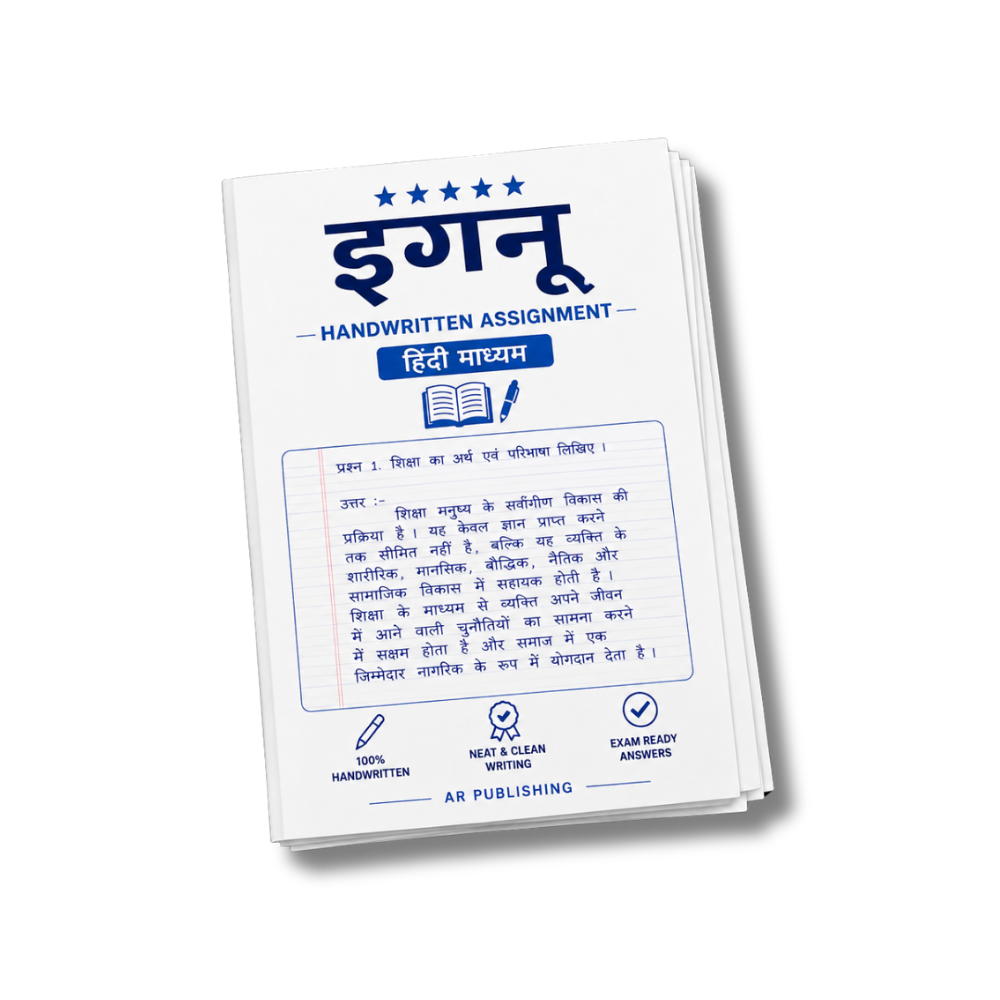
MEC-108 IGNOU Handwritten Assignment 2026-27
Enrolled in other IGNOU subjects?
Link your Enrollment No. to auto-map your semester courses & free question papers.
Frequently Bought Together
Popular course materials frequently ordered together



Syllabus & Overview
Course Scope & Syllabus Overview
MEC-108: Economics of Social Sector and Environment is a core component of IGNOU’s Master of Arts (Economics) curriculum, designed to equip students with analytical frameworks to assess the interplay between economic policies, social welfare, and environmental sustainability. This course bridges theoretical economics with real-world challenges, exploring how resource allocation impacts education, healthcare, environmental governance, and sustainable development. Through case studies, policy evaluations, and empirical analyses, students develop critical perspectives on institutional reforms, equitable growth, and ecological economics—preparing them for roles in public policy, NGO sectors, and development research.Key Syllabus Units & Topics
- Block-1 Society, Environment and Economy: Examines the historical and theoretical foundations of environmental economics, including ecological constraints, externalities, and the role of market failures in resource depletion and pollution. Key concepts include the Tragedy of the Commons, environmental Kuznets curve, and cost-benefit analysis for green policies.
- Block-2 Economics of Education: Analyzes education as a public good, covering investment theories (e.g., Becker’s human capital model), gender disparities in access, and the economics of school choice and private sector participation in education systems.
- Block-3 Economics of Health: Focuses on healthcare financing, demand-side and supply-side inefficiencies, and the economics of disease burden. Topics include the role of insurance, pharmaceutical pricing, and the impact of global health policies on low-income populations.
- Block-4 Economics of Environment: Delves into climate change economics, mitigation vs. adaptation strategies, and the design of carbon markets. Case studies include India’s renewable energy transition and the economics of afforestation programs.
- Block-5 Sustainable Development: Integrates the SDGs with economic growth metrics, evaluating trade-offs between GDP expansion and environmental sustainability. Discusses tools like green accounting and the Dasgupta Review’s redefinition of progress.
Frequently Asked Questions
Q: What is the weightage of assignments in the final marks for MEC-108?
A: Assignments contribute 30% to the total marks, while the term-end exam accounts for 70%. Submission deadlines are strictly enforced; late assignments incur penalties as per IGNOU’s evaluation policy.
Q: Are there any recommended textbooks beyond the study material for Block-4 (Economics of Environment)?
A: While the prescribed study material suffices, students may refer to The Economics of Climate Change (Tol) or Environmental Economics (Pearce & Turner) for advanced theoretical insights, though IGNOU’s core texts align with examination syllabus priorities.
Why buy from us?
-
Verified by top professors and 99th percentile students.
-
Always updated to the latest university curriculum.
-
High-quality, printable PDF formats with clear diagrams.
License & Terms
By purchasing this item, you agree to our standard academic license terms. You may use this product for personal study, but you may not resell or redistribute the files online.