

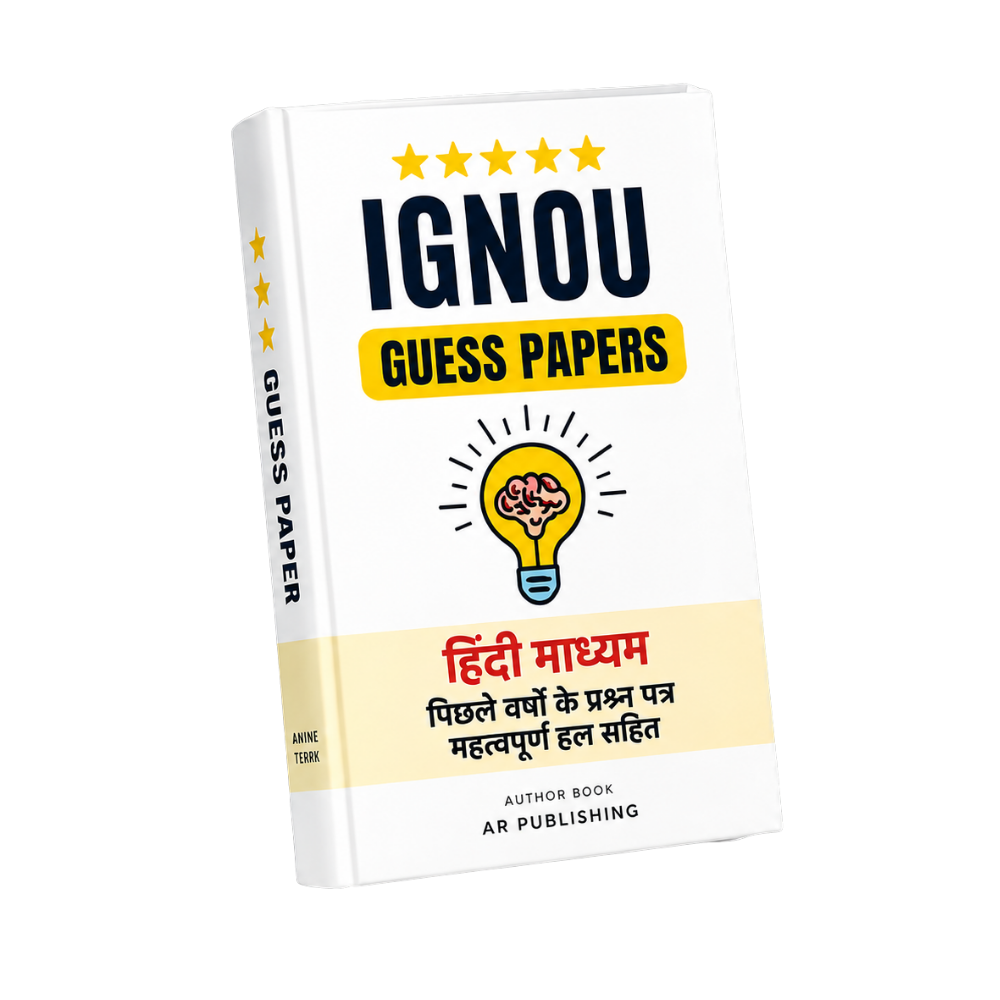
MEDS-074 IGNOU Guess Paper 2026-27
Click to view offer details & terms
Get 10% OFF Instant Discount
Apply this coupon code at checkout to claim your academic discount instantly.
- Applicable on all university study materials
- Valid for up to 8 item(s) per order
- Valid till Oct 31, 2026
Frequently Bought Together
Popular course materials frequently ordered together
Syllabus & Overview
MEDS-074: A Strategic Guide to Mastering IGNOU’s Medical Sociology and Anthropology Examination
MEDS-074 examines the intersection of medical practices, cultural frameworks, and healthcare systems within India’s diverse socio-economic landscape. Designed under IGNOU’s CBCS curriculum, this course explores theoretical models of illness, healthcare delivery disparities, and anthropological perspectives on medical ethics. The study material synthesizes critical analyses of health policies, traditional healing systems, and the impact of globalization on local medical practices. This guide distills core concepts from the syllabus while leveraging historical question trends to optimize exam preparation, ensuring students align their revision with IGNOU’s assessment priorities.Core Syllabus Units and Key Topics
- Unit 1: Foundations of Medical Sociology: Covers sociological theories of health and disease, including Durkheim’s anomie, Parsons’ sick role, and modern critiques of biomedical dominance. Analyzes structural determinants of health inequities in urban-rural contexts.
- Unit 2: Anthropology of Healing Practices: Investigates indigenous medical systems (Ayurveda, Unani, tribal healing), their epistemological frameworks, and interactions with allopathic medicine. Evaluates case studies of syncretic healing traditions.
- Unit 3: Health Policy and Governance: Examines India’s National Health Programs (e.g., Ayushman Bharat), decentralized healthcare models, and the role of NGOs in rural health. Critiques top-down vs. participatory approaches.
- Unit 4: Gender, Culture, and Reproductive Health: Focuses on gendered access to healthcare, maternal mortality disparities, and cultural constructions of fertility. Includes analyses of female infanticide and son preference in South Asia.
- Unit 5: Medical Ethics and Bioethics: Addresses dilemmas in informed consent, genetic testing, and resource allocation. Compares Western bioethical frameworks with Indian ethical pluralism.
Frequently Asked Questions
Q: How are numerical questions distributed in MEDS-074’s TEE, and which units are most likely to feature them?
A: Numerical analysis in MEDS-074 typically appears in Unit 3 (Health Policy) for statistical data on health indicators (e.g., under-five mortality rates) and Unit 4 (Reproductive Health) for demographic calculations. Prior cycles show 10–15% of questions involve interpreting government health reports.
Q: What is the minimum pass percentage for MEDS-074, and how does IGNOU weight assignments vs. the TEE?
A: The pass mark for MEDS-074 is 40% aggregate, with assignments contributing 30% and the TEE 70%. Assignments focus on critical essays (e.g., "Compare Ayurvedic and allopathic explanations of chronic illness") and require direct engagement with case studies from the syllabus.
Why buy from us?
-
Verified by top professors and 99th percentile students.
-
Always updated to the latest university curriculum.
-
High-quality, printable PDF formats with clear diagrams.
License & Terms
By purchasing this item, you agree to our standard academic license terms. You may use this product for personal study, but you may not resell or redistribute the files online.