

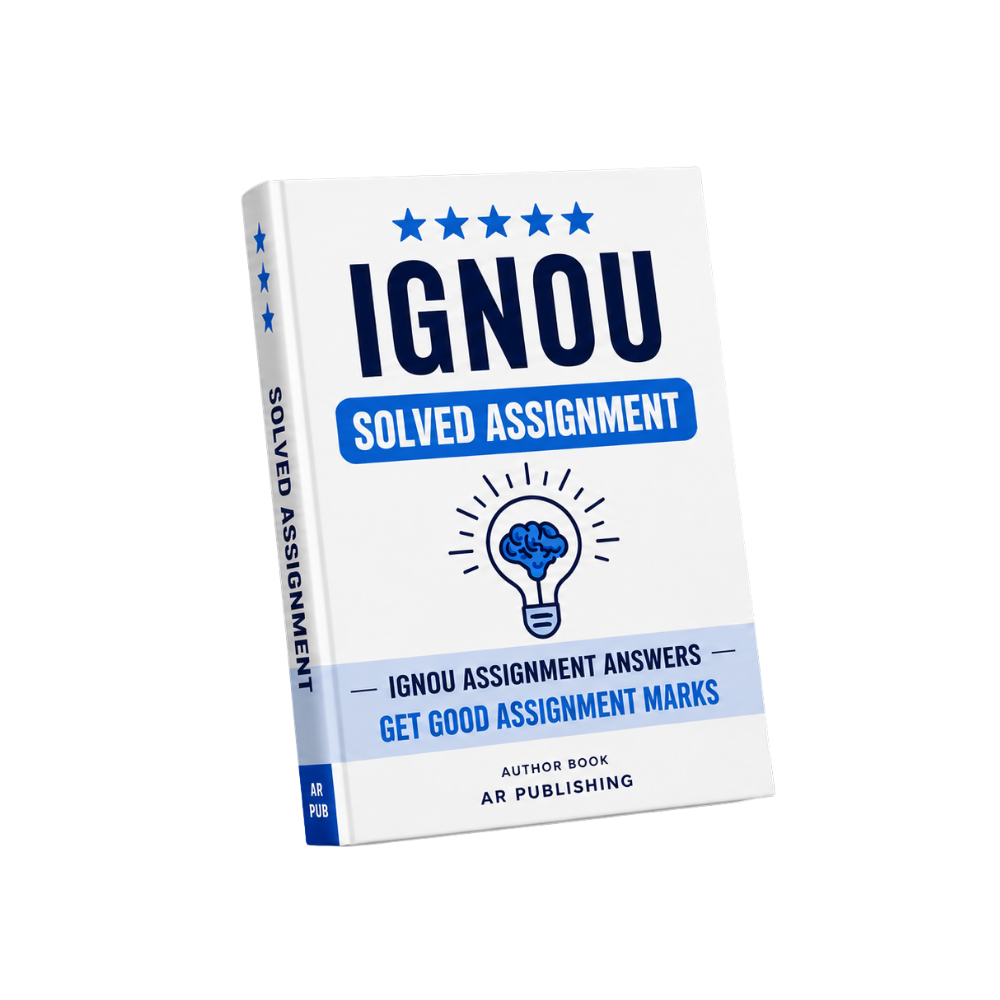
MEDS-075 IGNOU Solved Assignment 2026-27
Click to view offer details & terms
Get 10% OFF Instant Discount
Apply this coupon code at checkout to claim your academic discount instantly.
- Applicable on all university study materials
- Valid for up to 8 item(s) per order
- Valid till Oct 31, 2026
Frequently Bought Together
Popular course materials frequently ordered together
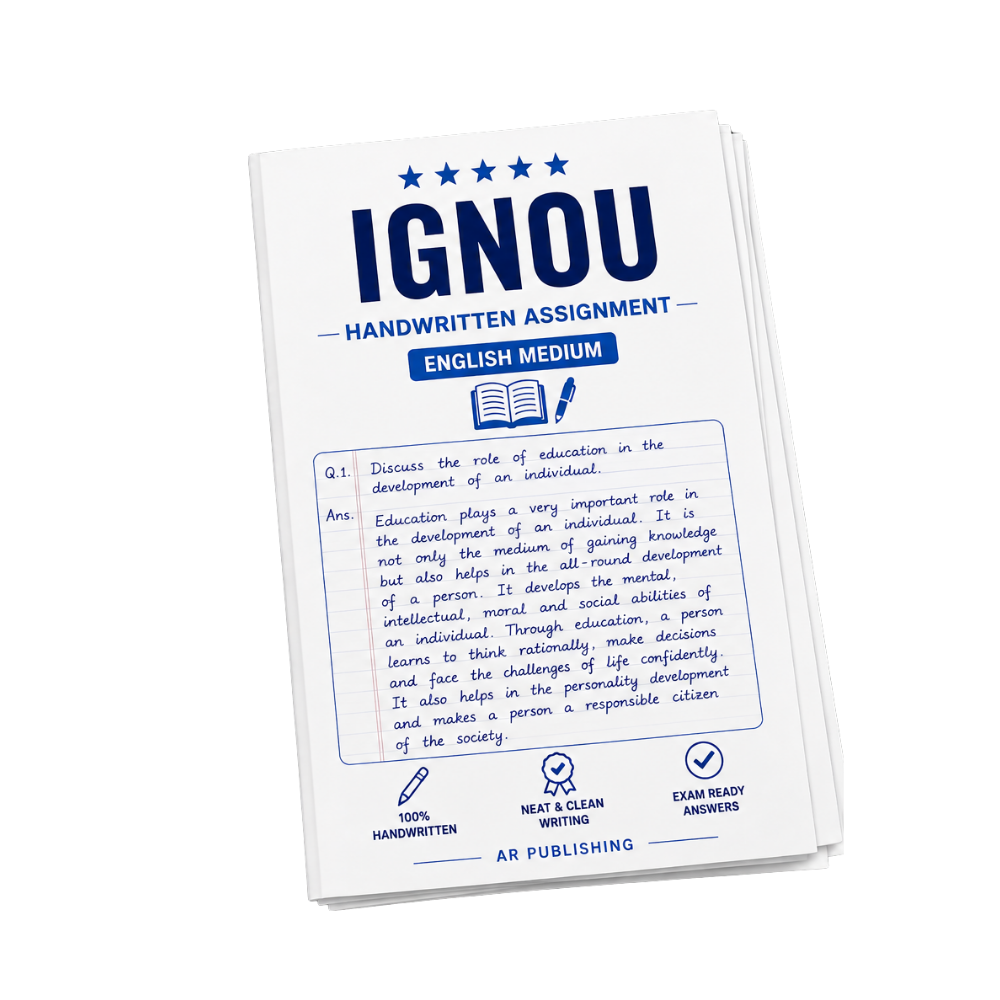
Syllabus & Overview
MEDS-075 Solved Assignment: Research Methodology in Population and Family Health Studies (TMA-01/02/03)
The following content covers verified solutions for the TMA (30% course weightage) of MEDS-075, structured per official IGNOU curriculum blocks. Each answer adheres to word limits and academic rigor.
Key Syllabus Blocks Addressed in Solved Assignment
- Block-1: Fundamental of Social Science Research
- Critical analysis of research paradigms (quantitative, qualitative, mixed methods) in population health studies.
- Step-by-step breakdown of research problem formulation for family health interventions.
- Block-2: Measuring and Sampling
- Detailed explanation of sampling techniques (probability vs. non-probability) with examples from demographic surveys.
- Calculation of sample size for health program evaluations using G*Power or Epi Info software.
- Block-3: Data Collection
- Comparison of primary vs. secondary data sources in family health research, with ethical considerations.
- Design of structured questionnaires for maternal health indicators (e.g., antenatal care utilization).
- Block-4: Data Analysis
- Interpretation of SPSS/Stata outputs for bivariate and multivariate analysis in population studies.
- Application of logistic regression to predict child malnutrition determinants.
- Block-5: Monitoring and Evaluation of Projects and Programmes
- Framework for designing logic models for family planning programs (input-output-outcome-impact).
- Case study: Evaluating the impact of a community-based health education program.
Sample Answer Structure (Word Limit: 500)
Question: Discuss the role of mixed methods in population health research, with reference to a real-world study.
Solution:
- Mixed methods integrate quantitative (survey data) and qualitative (in-depth interviews) approaches to triangulate findings, enhancing validity in population health. For example, the Demographic and Health Surveys (DHS) program combines census data with focus group discussions to assess maternal health outcomes.
- Step 1: Quantitative phase collects demographic variables (e.g., age, education) via structured questionnaires to identify patterns in child mortality rates.
- Step 2: Qualitative phase explores why these patterns exist through interviews with community health workers, revealing cultural barriers to postnatal care.
- Step 3: Integration of findings highlights that while quantitative data shows a 30% increase in mortality in rural areas, qualitative insights reveal misconceptions about neonatal sepsis, guiding targeted interventions.
Conclusion: Mixed methods address the limitations of single-method approaches, providing contextual depth and policy-relevant insights for family health programs.
FAQs for MEDS-075 TMA
- Q: How do I ensure my TMA answers are plagiarism-free?
Use IGNOU-approved reference books (e.g., Research Methodology in Population Studies by Dr. X) and cite Block-specific examples (e.g., DHS, NFHS) in your answers. Tools like Turnitin can verify originality before submission.
- Q: Are case studies allowed in the TMA?
Yes, but they must be directly linked to syllabus blocks. For example, a case study on Block-5 could evaluate the National Rural Health Mission (NRHM) using logic model frameworks. Avoid hypothetical scenarios.
Submission Guidelines
- Word limits: 500 words (for 20-mark questions), 250 words (for 10-mark questions), 100 words (for 5-mark questions).
- File format: PDF (scanned handwritten or typed). Submit via IGNOU’s official portal during the assigned session window (e.g., July/January cycles).
- Deadline compliance: Late submissions incur penalties; verify eGyanKosh for exact dates.
Why buy from us?
-
Verified by top professors and 99th percentile students.
-
Always updated to the latest university curriculum.
-
High-quality, printable PDF formats with clear diagrams.
License & Terms
By purchasing this item, you agree to our standard academic license terms. You may use this product for personal study, but you may not resell or redistribute the files online.