

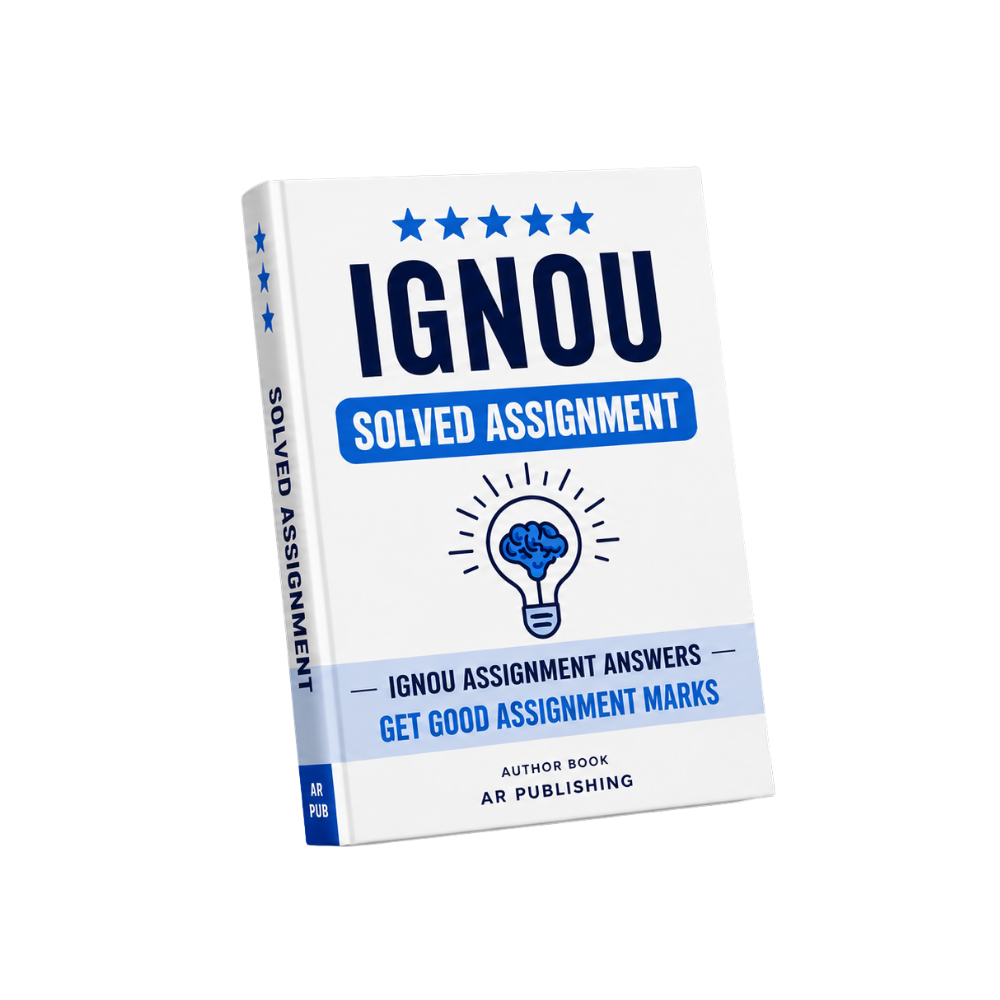
MEG-08 IGNOU Solved Assignment 2026-27
Click to view offer details & terms
Get 10% OFF Instant Discount
Apply this coupon code at checkout to claim your academic discount instantly.
- Applicable on all university study materials
- Valid for up to 8 item(s) per order
- Valid till Oct 31, 2026
Enrolled in other IGNOU subjects?
Link your Enrollment No. to auto-map all your semester courses & free question papers.
Frequently Bought Together
Popular course materials frequently ordered together
Syllabus & Overview
MEG-08: Mastering Tutor-Marked Assignments for IGNOU’s Medieval Indian History
MEG-08 forms a critical component of IGNOU’s Master’s Programme in History, focusing on the socio-political, economic, and cultural dynamics of medieval India (c. 6th–18th century). This course bridges foundational knowledge with advanced analytical frameworks, emphasizing primary source interpretation, regional case studies, and comparative historiography. The solved assignment serves as a precision tool to align student responses with IGNOU’s grading rubrics, ensuring clarity in historical narratives, chronological accuracy, and critical engagement with themes like the Delhi Sultanate’s administrative legacy or the Bhakti-Sufi synthesis.Core Syllabus Units & Analytical Focus Areas
- Unit 1: Medieval India Political and Administrative Structures: Examines the evolution of feudalism under the Rajputs, Chalukyas, and early Muslim dynasties, with emphasis on land revenue systems and the role of amirs in provincial governance.
- Unit 3: Economic Transformations and Trade Networks: Analyzes the impact of maritime trade (e.g., Chola-Southeast Asia connections) and agrarian economies, including the peasantry’s socio-economic status as documented in revenue records.
- Unit 5: Cultural Synthesis and Religious Movements: Evaluates the interplay between Hinduism, Islam, and regional traditions through case studies of the Alvars, Nayanmars, and Sufi orders like the Chishti.
- Unit 7: Regional Kingdoms and Their Historiography: Critically assesses secondary sources on the Vijayanagara Empire and Bahmani Sultanate, highlighting methodological debates in medieval historiography.
- Unit 9: Comparative Perspectives on Medieval States: Contrasts the mandal system of South India with the iqta’ system in North India, emphasizing administrative innovations and their long-term effects.
Frequently Asked Questions
Q: How does IGNOU evaluate numerical questions in MEG-08’s TMA, and what weightage do they carry?
A: Numerical questions (e.g., calculating revenue yields or troop strengths) are scored for accuracy and contextual relevance. They typically account for 10–15% of the assignment’s marks, with strict adherence to the provided data sources required.
Q: Are there specific formatting rules for citing primary sources in MEG-08’s answers that could affect grading?
A: IGNOU mandates in-text citations for all direct quotations or paraphrased content, formatted as Author, Title, Year (e.g., “Al-Biruni, Tahqiq, 1029”). Failure to cite sources reduces clarity and may deduct up to 2 marks per omission.
Why buy from us?
-
Verified by top professors and 99th percentile students.
-
Always updated to the latest university curriculum.
-
High-quality, printable PDF formats with clear diagrams.
License & Terms
By purchasing this item, you agree to our standard academic license terms. You may use this product for personal study, but you may not resell or redistribute the files online.