

MEVE-012 IGNOU Guess Paper 2026-27
Click to view offer details & terms
Get 10% OFF Instant Discount
Apply this coupon code at checkout to claim your academic discount instantly.
- Applicable on all university study materials
- Valid for up to 8 item(s) per order
- Valid till Oct 31, 2026
Enrolled in other IGNOU subjects?
Link your Enrollment No. to auto-map all your semester courses & free question papers.
Frequently Bought Together
Popular course materials frequently ordered together
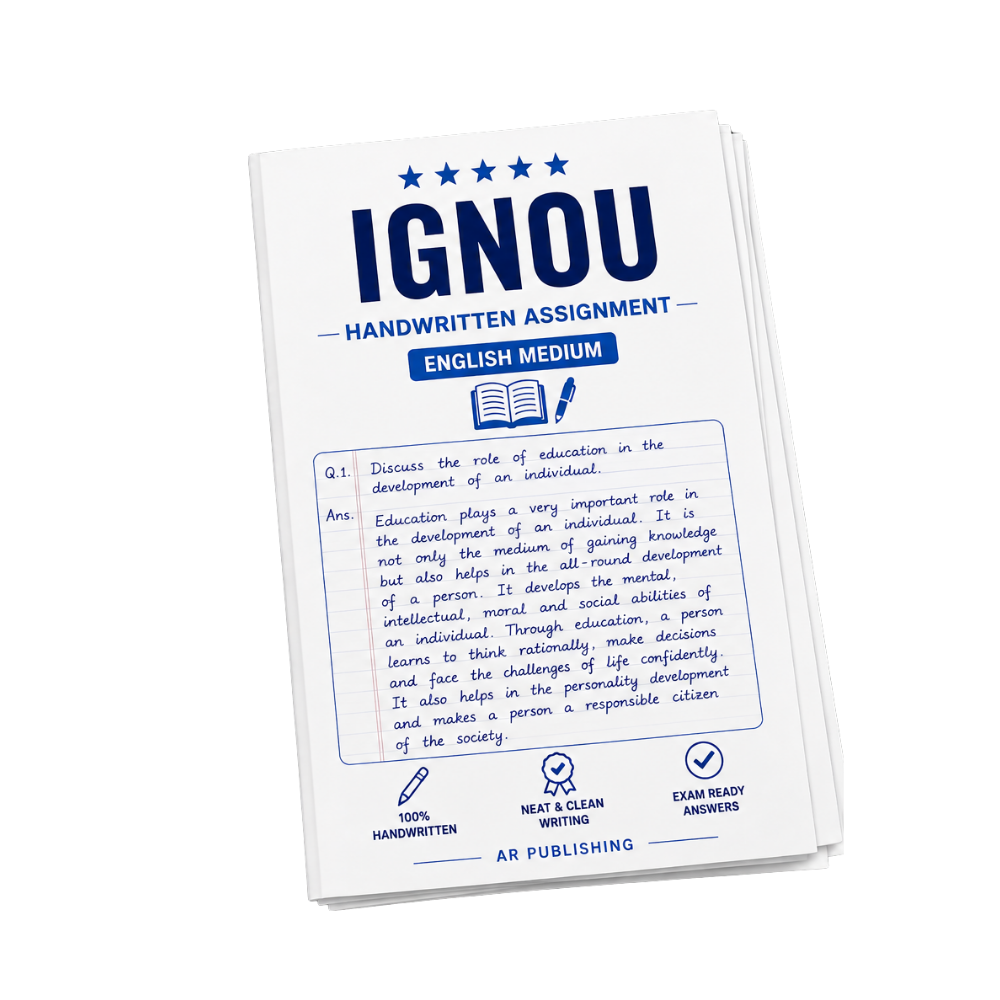
Syllabus & Overview
MEVE-012: Mastering Environmental Education for Sustainable Development A Strategic Exam Preparation Guide
MEVE-012, titled Environmental Education and Sustainable Development, is a core course under IGNOU’s Master of Arts in Environmental Studies (MAES) program, designed to equip students with interdisciplinary frameworks for integrating environmental ethics, policy, and participatory approaches into education systems. This guide aligns with the CBCS curriculum’s emphasis on critical analysis of global sustainability challenges, from climate change mitigation strategies to community-based conservation initiatives. By dissecting past examination trends—including June and December TEE cycles—this resource distills high-yield topics, ensuring students prioritize revision of recurring themes like Eco-Centric Education Models and UN Sustainable Development Goals (SDGs) Implementation, while optimizing time for practical case studies.Core Syllabus Units & Exam-Focused Topics
- Unit 1: Foundations of Environmental Education: Covers historical evolution, UNESCO’s Bologna Process alignment, and pedagogical theories (e.g., Constructivism vs. Behaviorism) with emphasis on their applicability in non-formal education settings.
- Unit 3: Environmental Policy and Legislation: Analyzes key Indian and international frameworks (Montreal Protocol, National Green Tribunal Act), including their enforcement mechanisms and case studies on enforcement gaps.
- Unit 5: Community Participation and Capacity Building: Examines participatory action research (PAR) methodologies, with a focus on IGNOU’s Distance Education for Rural Development initiatives and their measurable impact.
- Unit 7: Environmental Ethics and Values: Explores Deep Ecology vs. Shallow Ecology debates, alongside ethical dilemmas in biodiversity conservation (e.g., Sacred Groves vs. Industrial Zoning).
- Unit 9: Environmental Education in Curriculum Design: Evaluates Integrated Environmental Education (IEE) models, including their adoption in CBSE and state board syllabi, with statistical data on student engagement outcomes.
Frequently Asked Questions
Q: How are numerical questions distributed in MEVE-012’s TEE, and which units contribute most to them?
A: Numerical questions (typically 10–15 marks) appear in Unit 3 (Policy Analysis) and Unit 5 (Capacity Building), often requiring calculations on carbon footprint reductions or participation metrics. Focus on past TEE data showing 60% of numericals stem from SDG target calculations and cost-benefit analyses of environmental projects.
Q: What is the minimum pass percentage for MEVE-012, and how does assignment submission affect the final grade?
A: The pass mark is 50% of the total marks (100), with assignments contributing 30% and the TEE accounting for 70%. Late submissions incur a 5% deduction per day, and assignments must include peer-reviewed references to avoid deduction under IGNOU’s Academic Integrity Policy (AIP-2020).
Why buy from us?
-
Verified by top professors and 99th percentile students.
-
Always updated to the latest university curriculum.
-
High-quality, printable PDF formats with clear diagrams.
License & Terms
By purchasing this item, you agree to our standard academic license terms. You may use this product for personal study, but you may not resell or redistribute the files online.