

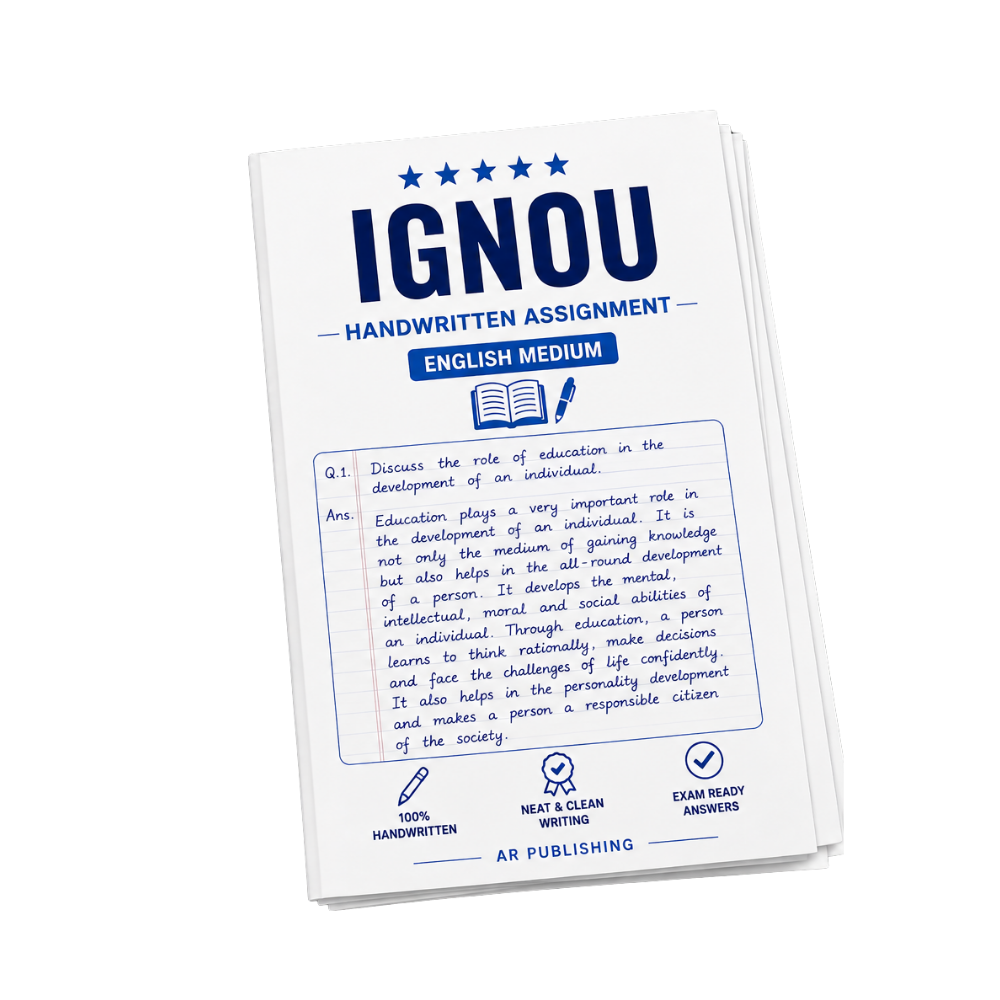
MFC-009 IGNOU Handwritten Assignment 2026-27
Click to view offer details & terms
Get 10% OFF Instant Discount
Apply this coupon code at checkout to claim your academic discount instantly.
- Applicable on all university study materials
- Valid for up to 8 item(s) per order
- Valid till Oct 31, 2026
Enrolled in other IGNOU subjects?
Link your Enrollment No. to auto-map all your semester courses & free question papers.
Frequently Bought Together
Popular course materials frequently ordered together

Syllabus & Overview
Course Scope and Syllabus Overview for MFC-009: Approaches to Folklore
MFC-009: Approaches to Folklore is a core component of the MA in Folklore and Culture Studies (MAFCS) curriculum under IGNOU’s School of Interdisciplinary Studies. This course critically examines the theoretical frameworks that shape folklore studies, equipping students with analytical tools to interpret folklore through diverse academic lenses. From structuralist paradigms to psychological and functionalist perspectives, the syllabus bridges traditional and contemporary methodologies, fostering a nuanced understanding of folklore as a dynamic cultural phenomenon. Students engage with scholarly debates, ethnographic case studies, and semiotic analyses, preparing them to contextualize folklore within broader socio-cultural and historical narratives.Key Syllabus Units and Topics
- Block-1 Structural & Post-Structural Approaches: Explores the foundational theories of Claude Lévi-Strauss and later post-structural critiques, dissecting how folklore operates as a system of meaningful patterns and how power, ideology, and language shape its interpretation.
- Block-2 Psychological Approaches: Investigates the Freudian and Jungian influences on folklore studies, analyzing how unconscious drives, archetypes, and collective memory manifest in oral traditions, myths, and rituals.
- Block-3 Functional Approaches: Focuses on the anthropological perspectives of Malinowski and Radcliffe-Brown, examining folklore as a functional tool for social cohesion, conflict resolution, and cultural continuity in communities.
- Block-4 Contextualizing the Semiotic Approaches: Delves into the application of semiotic theory (e.g., Barthes, Eco) to decode folklore symbols, signs, and narratives, emphasizing how meaning is constructed through cultural and historical contexts.
- Block-5 Indian Perspectives on Folklore: Critically engages with indigenous theories and fieldwork methodologies in India, highlighting regional folklore traditions, oral histories, and the role of folklore in preserving and resisting dominant cultural narratives.
Frequently Asked Questions
Q: What is the marking scheme for the MFC-009 term-end examination, and how are assignments weighted in the final grade?
A: The MFC-009 examination carries 100 marks, with assignments accounting for 30% of the total evaluation. The term-end exam (70 marks) assesses theoretical understanding through objective and subjective questions, while assignments test analytical and application-based skills.
Q: Are there specific pass marks required for the MFC-009 assignment, and how should students structure their responses to maximize scores?
A: The minimum pass mark for the MFC-009 assignment is 50% of the allocated marks. Students should adhere strictly to the question paper guidelines, provide well-researched answers with academic references, and demonstrate critical engagement with the syllabus units to achieve higher scores.
Why buy from us?
-
Verified by top professors and 99th percentile students.
-
Always updated to the latest university curriculum.
-
High-quality, printable PDF formats with clear diagrams.
License & Terms
By purchasing this item, you agree to our standard academic license terms. You may use this product for personal study, but you may not resell or redistribute the files online.