

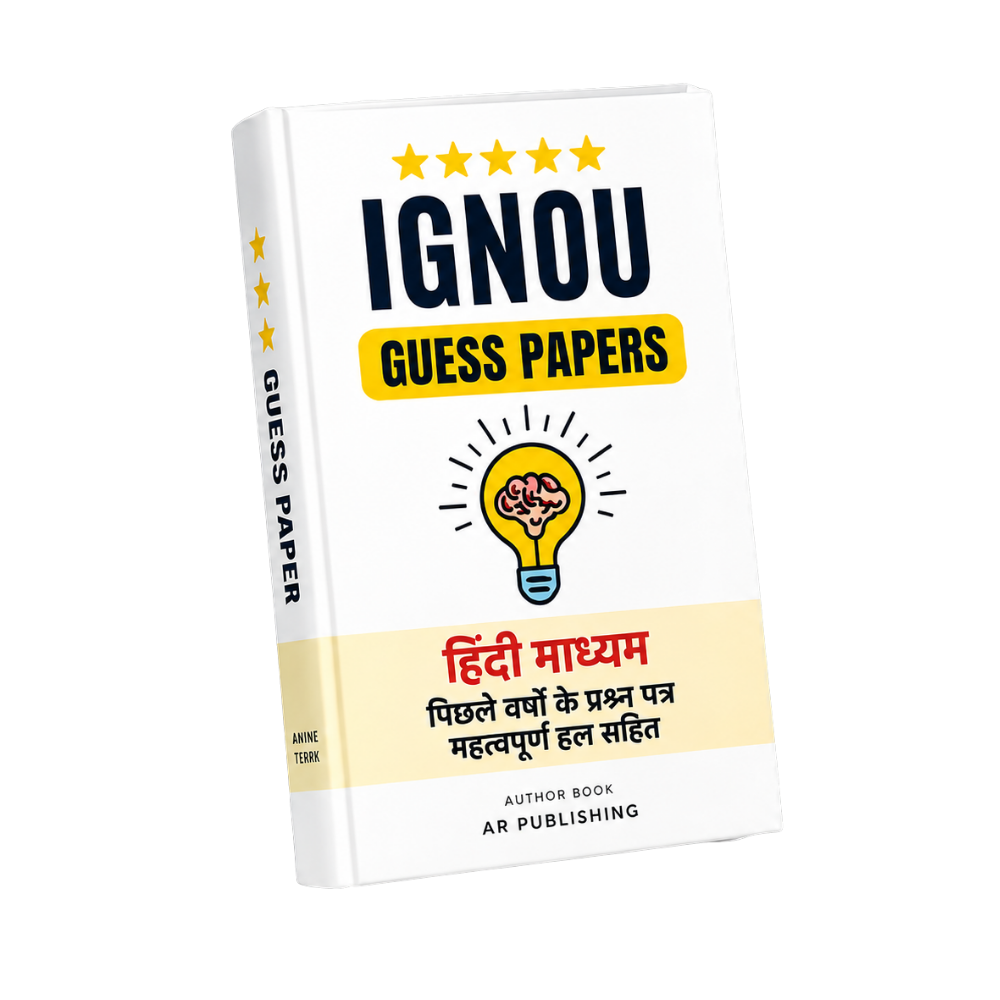
MGS-3 IGNOU Guess Paper 2026-27
Click to view offer details & terms
Get 10% OFF Instant Discount
Apply this coupon code at checkout to claim your academic discount instantly.
- Applicable on all university study materials
- Valid for up to 8 item(s) per order
- Valid till Oct 31, 2026
Enrolled in other IGNOU subjects?
Link your Enrollment No. to auto-map all your semester courses & free question papers.
Frequently Bought Together
Popular course materials frequently ordered together


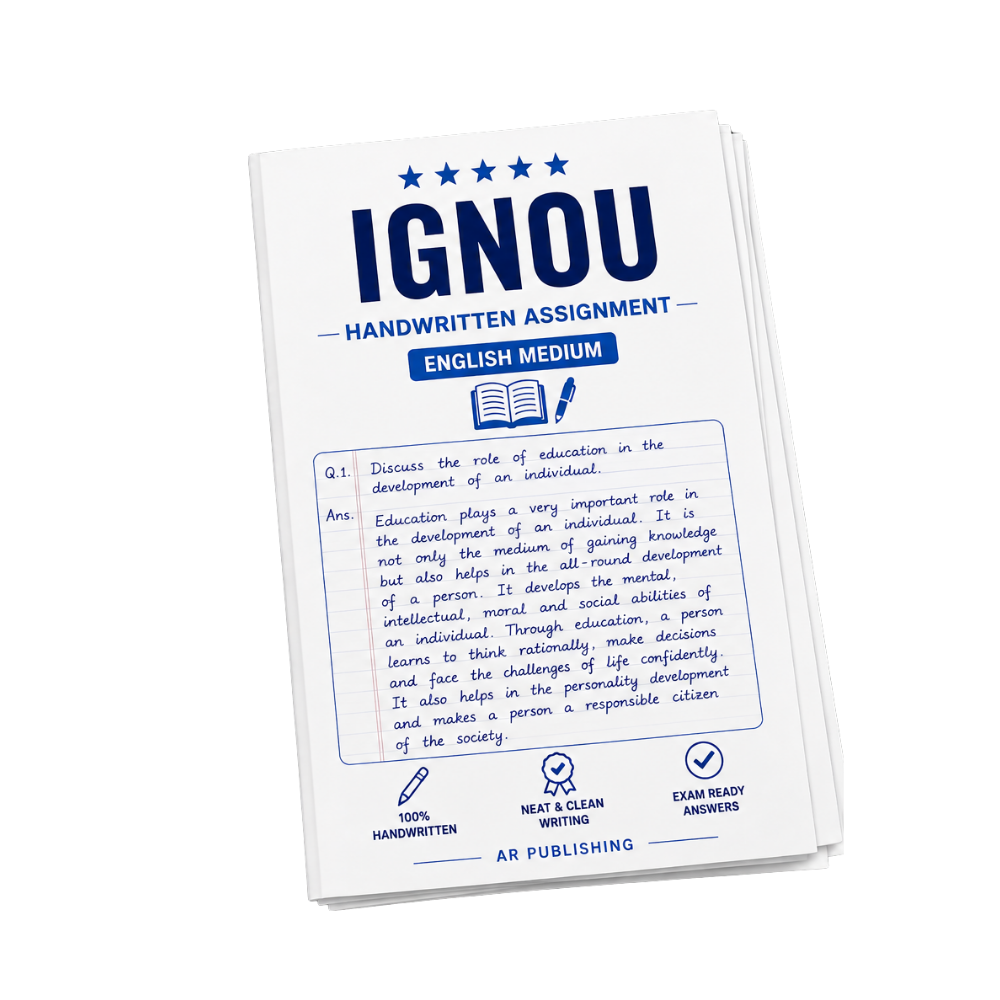
Syllabus & Overview
Mastering MGS-3: A Structured Approach to IGNOU’s Term-End Examination Success
The Master of Arts in Geography (MGS-3) under IGNOU’s CBCS curriculum focuses on advanced spatial analysis, environmental geography, and regional development strategies. This course bridges theoretical frameworks with applied solutions, emphasizing case studies from India’s diverse geographies. The study material prepares students for critical evaluation of urbanization patterns, climate change impacts, and sustainable resource management—key themes reflected in the Term-End Examination (TEE). By analyzing past question trends, students can prioritize high-weightage units and refine their answer strategies to align with IGNOU’s assessment criteria.Core Syllabus Units & Exam Focus Areas
- Unit 1: Advanced Human Geography: Examines migration dynamics, rural-urban linkages, and demographic transitions with a focus on India’s National Sample Survey data. Past papers frequently test students on urban sprawl models and policy interventions.
- Unit 3: Environmental Geography: Covers biogeochemical cycles, ecosystem services, and climate resilience. Emphasis is on linking theoretical concepts (e.g., Gaia hypothesis) to real-world examples like the Ganga Action Plan.
- Unit 5: Regional Planning & Development: Analyzes five-year plans, infrastructure gaps, and regional disparities. Numerical questions often require calculations on GDP growth rates or per capita income disparities.
- Unit 7: Geographic Information Systems (GIS) Applications: Focuses on spatial data interpretation, remote sensing, and GIS software tools. Practical questions may involve interpreting satellite imagery for land-use classification.
- Unit 9: Contemporary Issues in Geography: Discusses geopolitical conflicts, resource wars, and digital mapping technologies. Essay-type questions frequently explore India’s border disputes or the role of GIS in disaster management.
Frequently Asked Questions
Q: What is the minimum passing mark for MGS-3’s Term-End Examination, and how are numerical questions weighted?
A: The passing threshold is 40% overall, with numerical questions (typically 10–15 marks) carrying 20–30% of the total score. Focus on precise calculations for units like Unit 5, where errors in GDP/per capita data can deduct marks.
Q: Are there recurring themes in MGS-3’s past papers that students should prioritize for revision?
A: Yes. Units 1 (urbanization trends), 3 (climate change mitigation), and 7 (GIS applications) appear most frequently. Cross-reference these with the chapter-wise weightage in the study guide to allocate 60% of your revision time accordingly.
Why buy from us?
-
Verified by top professors and 99th percentile students.
-
Always updated to the latest university curriculum.
-
High-quality, printable PDF formats with clear diagrams.
License & Terms
By purchasing this item, you agree to our standard academic license terms. You may use this product for personal study, but you may not resell or redistribute the files online.