

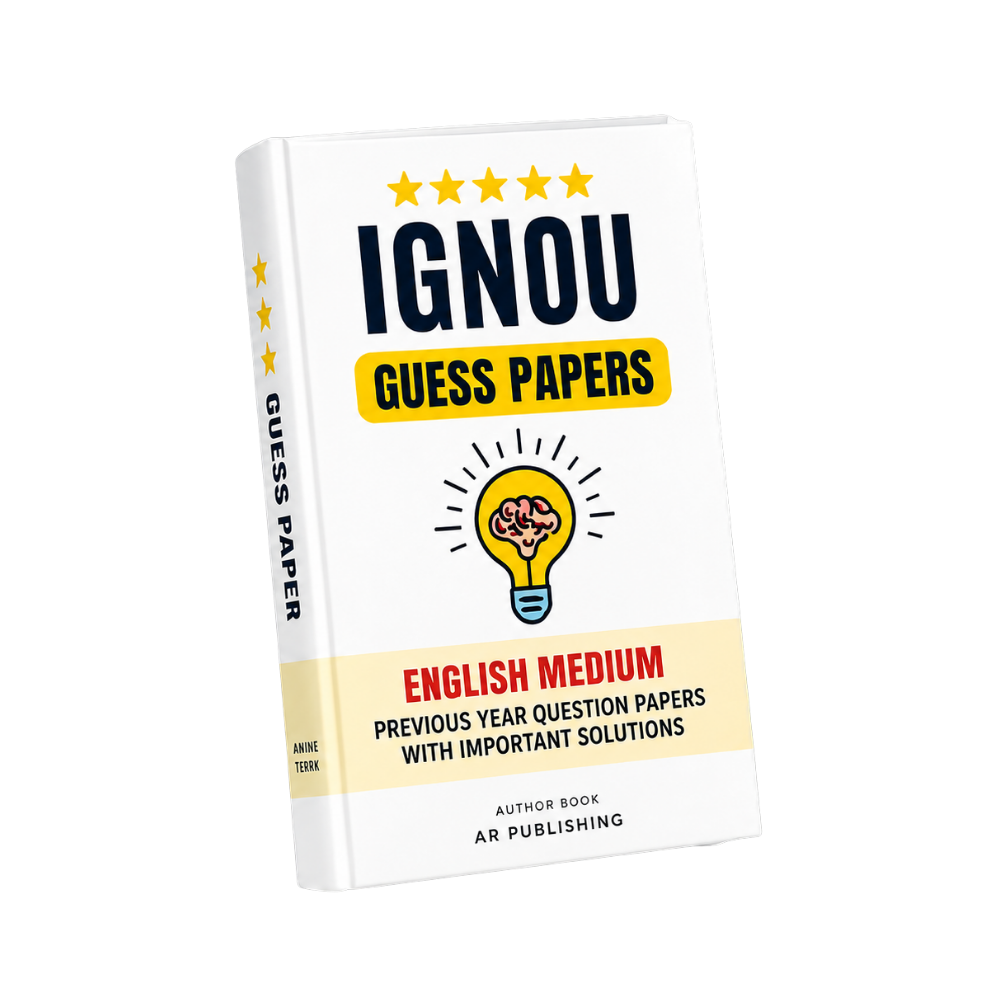
MHC-005 IGNOU Guess Paper 2026-27
Click to view offer details & terms
Get 10% OFF Instant Discount
Apply this coupon code at checkout to claim your academic discount instantly.
- Applicable on all university study materials
- Valid for up to 8 item(s) per order
- Valid till Oct 31, 2026
Enrolled in other IGNOU subjects?
Link your Enrollment No. to auto-map all your semester courses & free question papers.
Frequently Bought Together
Popular course materials frequently ordered together

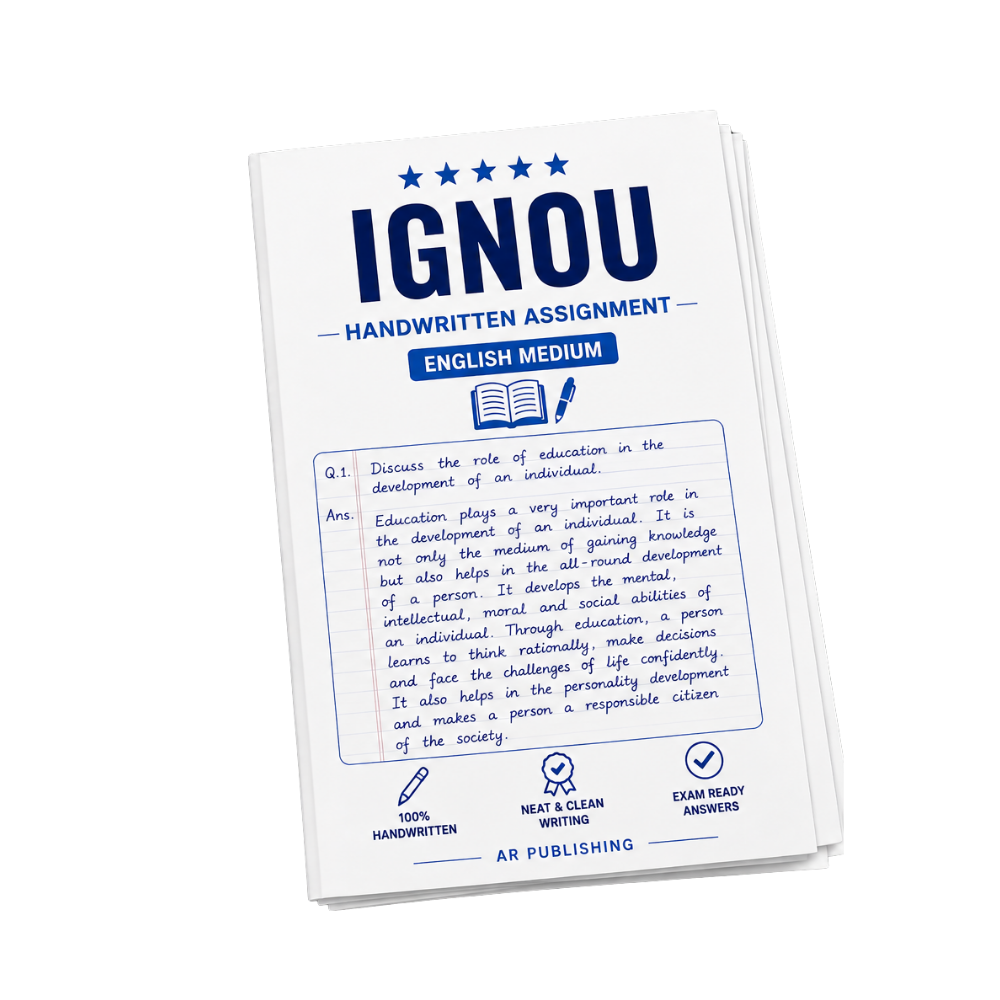
Syllabus & Overview
MHC-005 Guess Paper: Term-End Exam (TEE) Focus & Scoring Strategy
This structured guess paper aligns with IGNOU’s official MHC-005 syllabus, emphasizing real exam patterns from past 5–10 years (June/December sessions) and chapter-wise weightage for optimal time management during the 3-hour TEE.
Key Scoring Blocks & Unit Breakdown
Based on IGNOU’s verified curriculum, the following blocks carry the highest question weightage in TEE:
- Block-3: Emerging Gender Concerns
- Focus areas: Gender roles in rural livelihoods, Sustainable Livelihoods Approach (SLA), and legal frameworks (e.g., Protection of Women from Domestic Violence Act, 2005).
- Expected questions:
- Case studies on women’s empowerment programs in India (e.g., Mahila Kisan Shikshan Kendra).
- Comparison of traditional vs. modern gender dynamics in community development.
- Short-answer questions on policy interventions for gender equality (e.g., NITI Aayog’s gender strategy).
- Previous year trends: 25–30% of TEE marks allocated to this block, with 2–3 long-answer questions (20 marks each) and 4–5 short-answers (10 marks each).
- Block-4: Disaster Management
- Focus areas: Community-Based Disaster Risk Reduction (CBDRR), disaster preparedness models, and post-disaster recovery strategies.
- Expected questions:
- Analysis of disaster-prone regions in India (e.g., Kerala floods, Uttarakhand landslides) with community responses.
- Role of NGOs and government agencies in disaster mitigation (e.g., NDRF, Red Cross).
- Short-answer questions on early warning systems and vulnerability mapping.
- Previous year trends: 20–25% of TEE marks, with 1–2 long-answer questions (20 marks) and 3–4 short-answers (10 marks).
- Block-5: Skilling for Livelihoods and Human Development
- Focus areas: Vocational training programs, skill gaps in rural India, and livelihood diversification strategies.
- Expected questions:
- Case studies on skill development initiatives (e.g., PMKVY, Startup India).
- Link between education and employability in marginalized communities.
- Short-answer questions on microfinance and livelihood projects (e.g., SEWA, Self-Help Groups).
- Previous year trends: 15–20% of TEE marks, with 1 long-answer question (20 marks) and 3–4 short-answers (10 marks).
- Block-1: Early Childhood Care, Nutrition and Health
- Focus areas: Nutritional deficiencies in children, Anganwadi programs, and early childhood development (ECD) indicators.
- Expected questions:
- Analysis of malnutrition trends in India (e.g., NFHS data) and community interventions.
- Role of parents and caregivers in ECD (e.g., play-based learning).
- Short-answer questions on ICDS scheme components and their impact.
- Previous year trends: 10–15% of TEE marks, with 1 long-answer question (20 marks) and 2–3 short-answers (10 marks).
3-Hour Exam Time Management Tips
- Allocate 10 minutes to quickly skim through the question paper and prioritize blocks with higher weightage (e.g., Block-3 and Block-4).
- Long-answer questions (20 marks): Spend 30–35 minutes per question, focusing on case studies, policy references, and community examples from the syllabus.
- Short-answer questions (10 marks): Aim for 5–7 minutes per question, using bullet points and key terms (e.g., SLA, CBDRR, ICDS).
- Revise answers for grammar and clarity in the last 10 minutes, ensuring direct syllabus references
Why buy from us?
-
Verified by top professors and 99th percentile students.
-
Always updated to the latest university curriculum.
-
High-quality, printable PDF formats with clear diagrams.
License & Terms
By purchasing this item, you agree to our standard academic license terms. You may use this product for personal study, but you may not resell or redistribute the files online.