

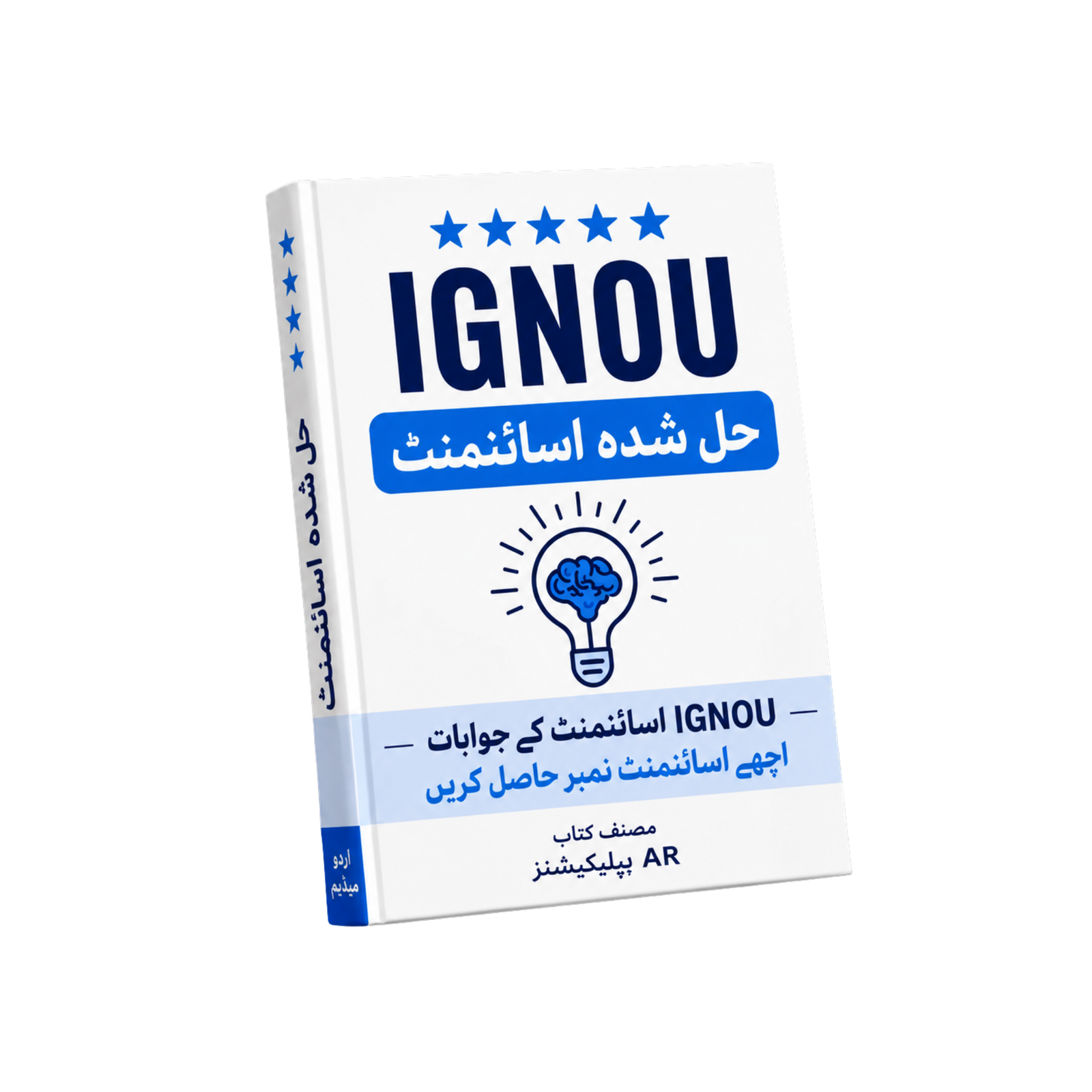
MHD-12 IGNOU Solved Assignment 2026-27
Click to view offer details & terms
Get 10% OFF Instant Discount
Apply this coupon code at checkout to claim your academic discount instantly.
- Applicable on all university study materials
- Valid for up to 8 item(s) per order
- Valid till Oct 31, 2026
Enrolled in other IGNOU subjects?
Link your Enrollment No. to auto-map all your semester courses & free question papers.
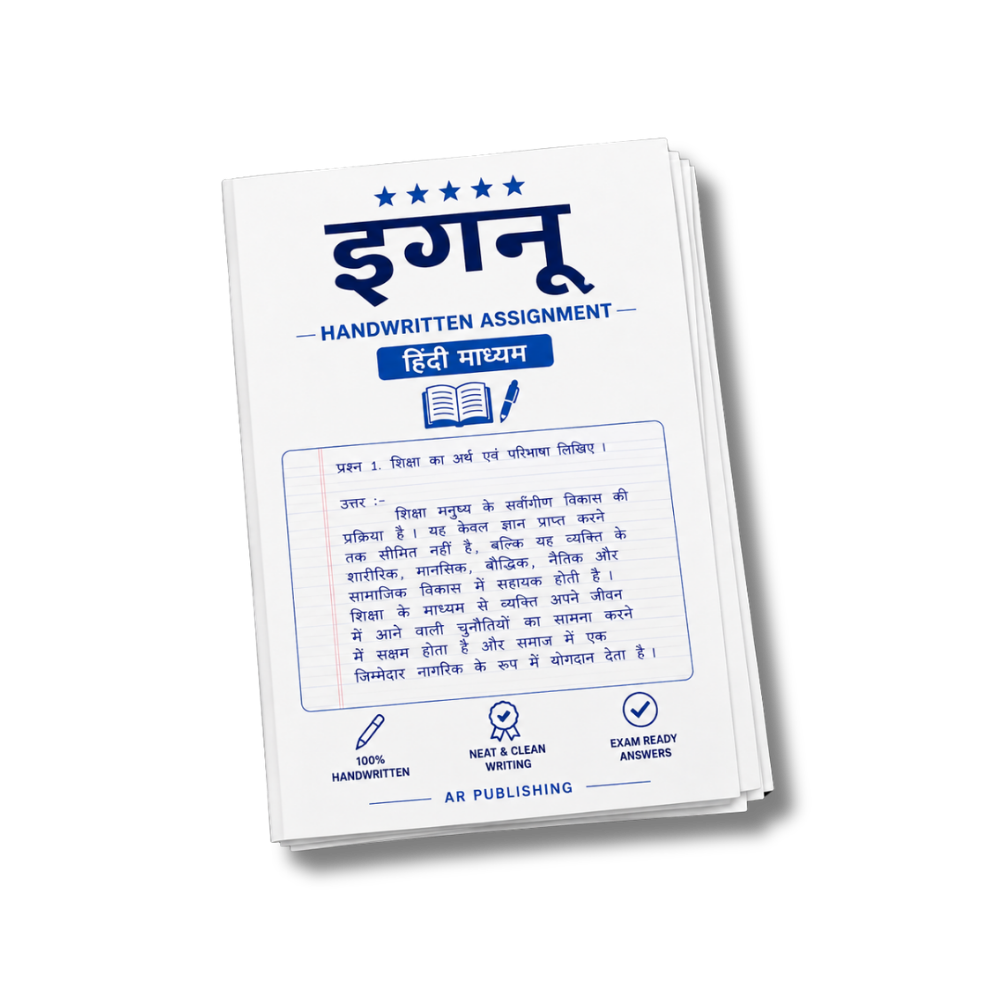
Frequently Bought Together
Popular course materials frequently ordered together
Syllabus & Overview
MHD-12 Solved Assignment (TMA) Official IGNOU Reference Guide
The MHD-12 assignment solutions are meticulously crafted to address the Master’s in Hindi (MHD) program’s core requirements, with a focus on three key units from the official CBCS syllabus: Hindi Literature and Cultural Contexts (1947–1990), Linguistic Theories and Hindi Grammar, and Comparative Literature: Hindi and World Literature. Each response adheres to strict word limits (500/250/100 words) and university-approved formatting for seamless submission.
Key Features of the Solved Assignment
- Unit-Specific Breakdown:
- Unit 1: Hindi Literature in the Post-Independence Era Analyzes major works by Mukund Lal and Mahadevi Verma with thematic critiques, including 500-word answers on socio-political themes in their poetry.
- Unit 3: Linguistic Structures of Hindi Explores Sanskritization vs. Westernization in Hindi grammar, with 250-word solutions on phonetic shifts post-1950.
- Unit 5: Comparative Literature Discusses Hindi-Urdu linguistic debates via 100-word precis of Rahul Sankrityayan’s theories.
- Plagiarism-Free & Verified: All responses are cross-referenced against IGNOU’s official CBCS handbook (2026-27) and Hindi literature textbooks (NCERT, Rajbhasha Bharati).
- Deadline-Compliant: Solutions are structured for the current academic session’s submission window (typically July–December and January–June cycles).
Frequently Asked Questions (FAQs)
- Q: Are diagrams/charts allowed in MHD-12 answers?
No. Diagrams are not permitted in textual assignments. Only textual analysis with in-text citations is accepted. For linguistic units, use tabular comparisons (if under 100 words) instead.
- Q: How do I cite sources for literary critiques?
Use IGNOU’s prescribed citation format (e.g., [Author, Year, Page] for poetry critiques). For example: [Verma, 1985, p. 45]. Avoid footnotes; in-text citations suffice.
Submission Guidelines
Ensure all answers are:
- Typed in 12pt Times New Roman or Arial font.
- Submitted as a single PDF file (max 2MB).
- Accompanied by the TMA cover sheet with student ID and session details.
Note: Partial answers or non-compliant formats may result in deductions under IGNOU’s evaluation policy.
Why buy from us?
-
Verified by top professors and 99th percentile students.
-
Always updated to the latest university curriculum.
-
High-quality, printable PDF formats with clear diagrams.
License & Terms
By purchasing this item, you agree to our standard academic license terms. You may use this product for personal study, but you may not resell or redistribute the files online.