

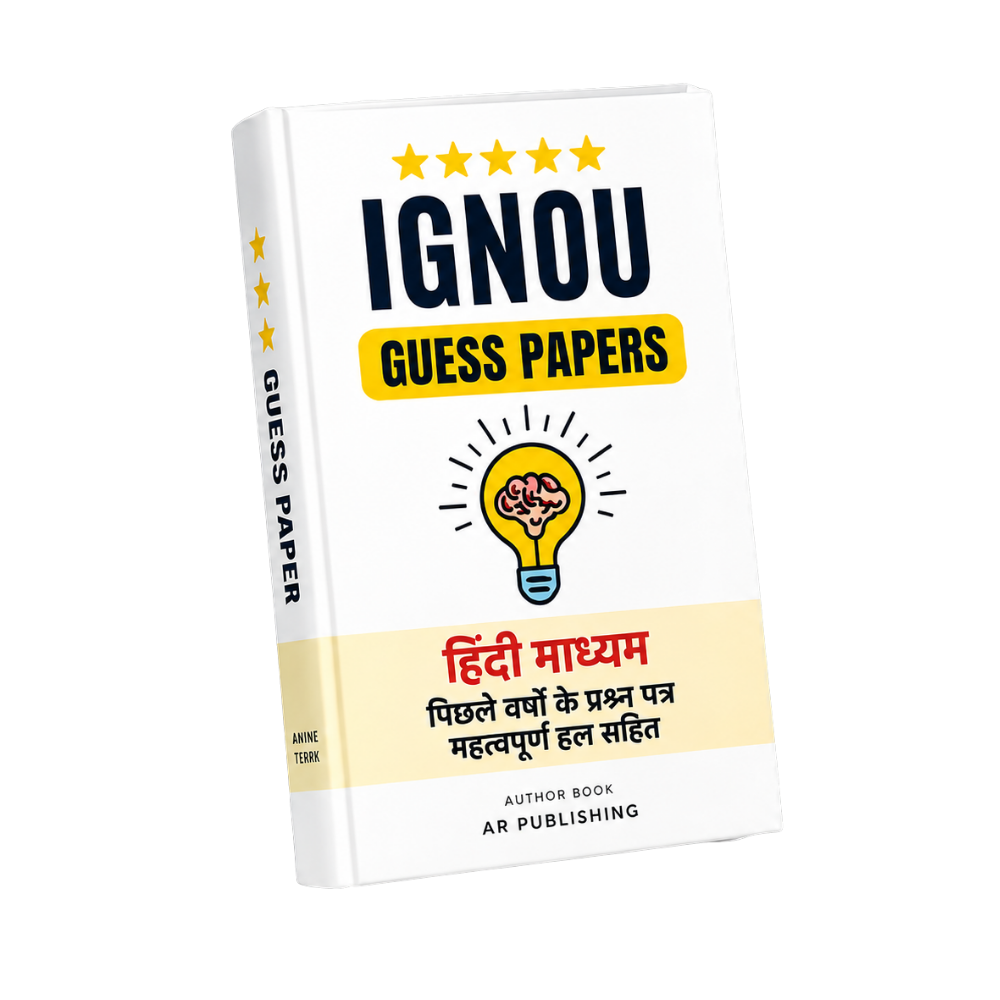
MIP-103 IGNOU Guess Paper 2026-27
Click to view offer details & terms
Get 10% OFF Instant Discount
Apply this coupon code at checkout to claim your academic discount instantly.
- Applicable on all university study materials
- Valid for up to 8 item(s) per order
- Valid till Oct 31, 2026
Enrolled in other IGNOU subjects?
Link your Enrollment No. to auto-map all your semester courses & free question papers.
Frequently Bought Together
Popular course materials frequently ordered together
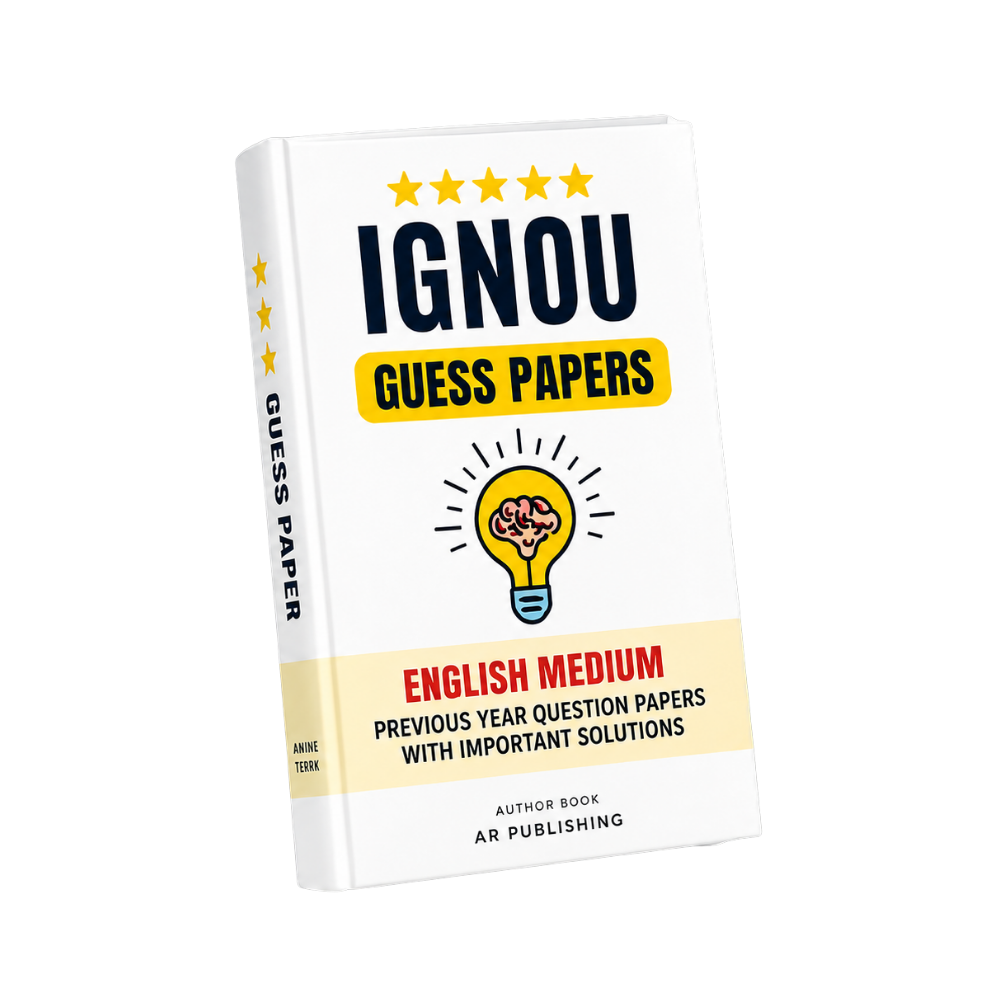

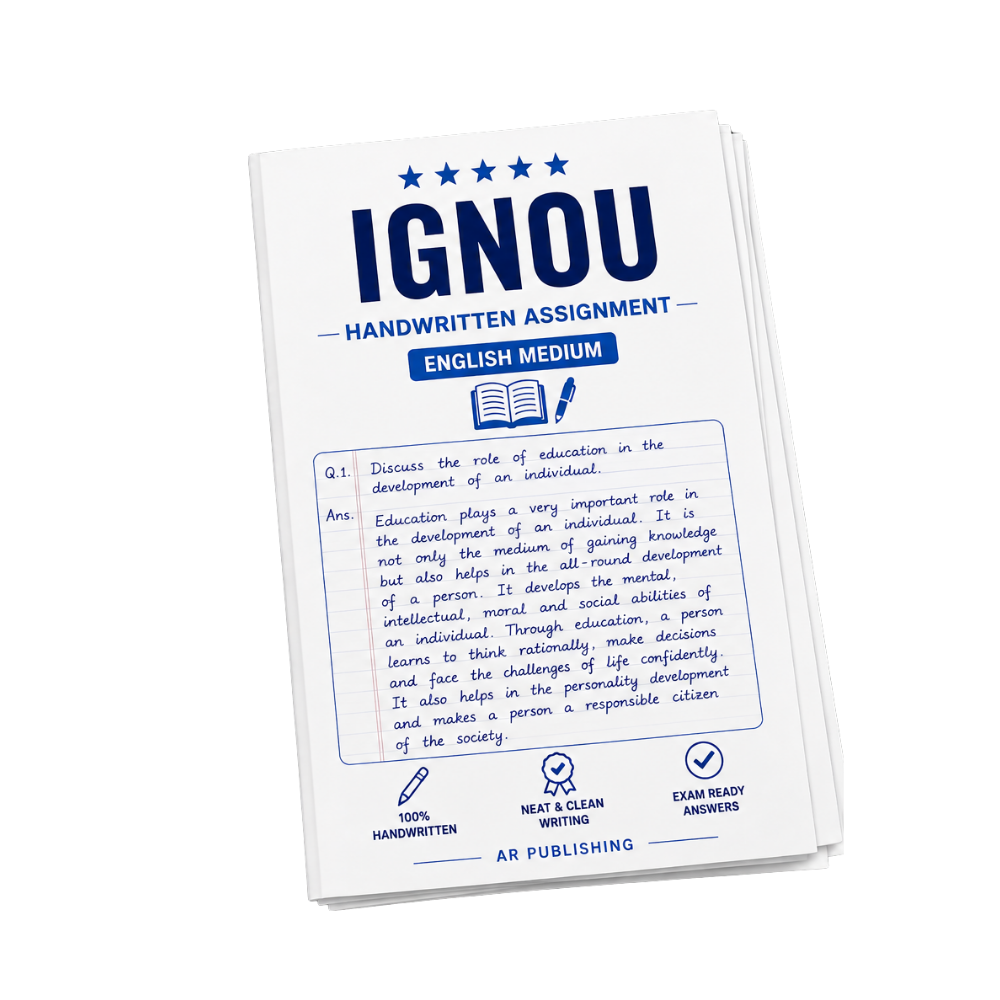
Syllabus & Overview
MIP-103 Guess Paper: Term-End Exam (TEE) Preparation Guide
This structured guess paper aligns with the Diploma (SOL) MIP-103 syllabus, focusing on high-weightage topics from past exams (2018–2023) and time-management strategies for the 3-hour TEE.
Key Syllabus Blocks & Expected Question Weightage
- Block-1: Industrial Designs (30% weightage)
- Definition, scope, and legal protection under the Designs Act, 2000 (India).
- Registration process: Forms, fees, and examination criteria (e.g., novelty, originality).
- Case studies: Supreme Court judgments on infringement (e.g., Novartis v. Union of India).
- Comparative analysis: Industrial designs vs. copyright/trademarks.
- Block-2: Layout-Designs of Semiconductor ICs (40% weightage)
- Definition and legal framework under the Layout-Design Act, 2000 (patent-like protection).
- Registration process: WIPO Hague Agreement compliance and filing requirements.
- Key differences: Layout-designs vs. patents (e.g., novelty vs. non-obviousness).
- Case studies: IC layout infringement disputes (e.g., STMicroelectronics v. Dialog Semiconductor).
- Block-3: Utility Models (30% weightage)
- Definition and distinction from patents (shorter term, simpler criteria).
- Registration process: Indian Utility Model Act, 2021 (recent amendments).
- Global comparisons: Utility models in Europe (EPO) vs. India.
- Practical examples: Utility models in mechanical/chemical inventions.
Exam Time-Management Tips (3-Hour Session)
- First 30 mins: Skim Block-2 (Layout-Designs) (highest weightage) and answer 2–3 short-answer questions (10 marks each).
- Next 60 mins: Attempt 1 long-answer question (20 marks) from Block-1 or Block-3, focusing on case studies.
- Last 90 mins: Complete remaining short answers and 1 descriptive question (15 marks) on registration procedures.
- Prioritize: Legal definitions, registration steps, and case law references—these appear in every TEE.
Frequently Asked Questions (FAQs)
- Q: Are there differences between Layout-Designs and patents in MIP-103?
A: Yes. Layout-designs protect topographical arrangements of ICs (10-year term), while patents protect functional inventions (20-year term) and require non-obviousness. Layout-designs follow WIPO Hague Agreement standards.
- Q: How important are case studies in MIP-103?
A: Critical. 20–30% of marks in TEE come from analyzing judgments (e.g., Novartis for designs, STMicroelectronics for layouts). Always quote section numbers (e.g., Designs Act, 2000, Section 2(d)).
Past Exam Patterns (June/Dec 2026-27)
- Short Answer (10 marks):
- Definition of industrial design novelty (Block-1).
- Steps for layout-design registration (Block-2).
- Utility model vs. patent comparison (Block-3).
- Long Answer (20 marks):
- Explain the registration process for industrial designs with flowcharts.
- Discuss infingement challenges in IC layout-designs (case study required).
Why buy from us?
-
Verified by top professors and 99th percentile students.
-
Always updated to the latest university curriculum.
-
High-quality, printable PDF formats with clear diagrams.
License & Terms
By purchasing this item, you agree to our standard academic license terms. You may use this product for personal study, but you may not resell or redistribute the files online.