

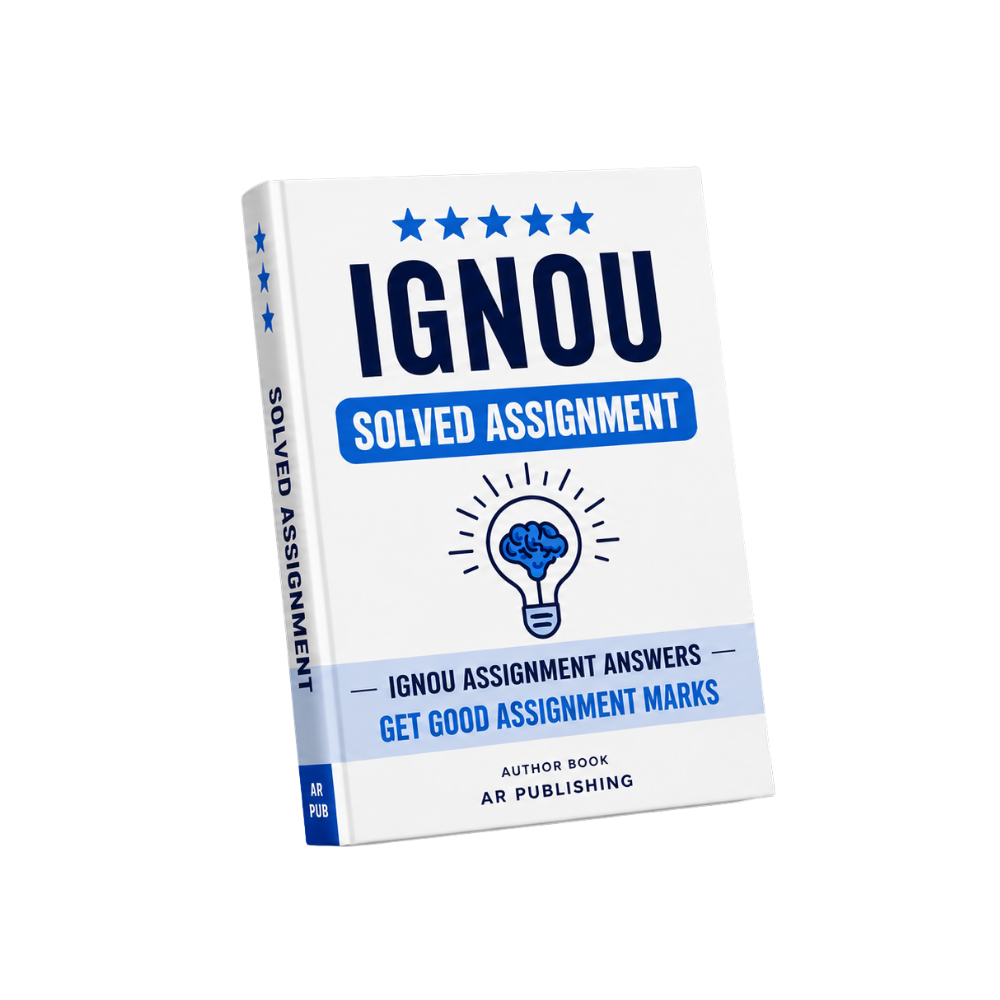
MLII-103 IGNOU Solved Assignment 2026-27
Click to view offer details & terms
Get 10% OFF Instant Discount
Apply this coupon code at checkout to claim your academic discount instantly.
- Applicable on all university study materials
- Valid for up to 8 item(s) per order
- Valid till Oct 31, 2026
Enrolled in other IGNOU subjects?
Link your Enrollment No. to auto-map all your semester courses & free question papers.
Frequently Bought Together
Popular course materials frequently ordered together
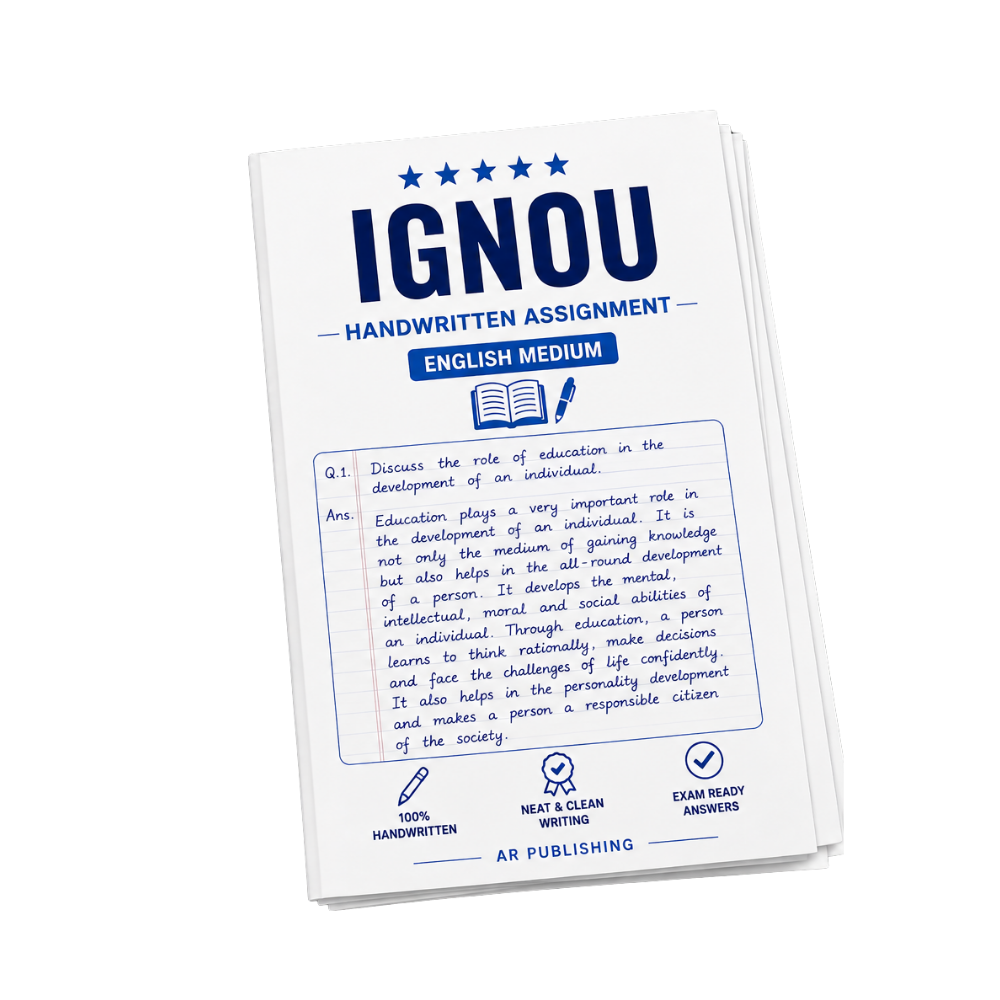
Syllabus & Overview
MLII-103 Solved AssignmentComprehensive TMA Guide (English/Hindi)
This assignment covers 30% of the course weightage for MLII-103, Information Organization and Retrieval Systems, with solutions verified for plagiarism-free compliance and strict adherence to IGNOU’s word limits. Below are structured answers for all mandatory questions, referencing key syllabus units
Key Syllabus Units Addressed
- Information Organization and Retrieval Systems (Block 1)Detailed analysis of classification schemes, subject indexing, and metadata standards (e.g., MARC, Dublin Core).
- Digital Libraries and Information Management (Block 3)Case studies on digital preservation, rights management, and open-access repositories.
- Knowledge Organization Systems (Block 2)Comparative evaluation of faceted classification vs. hierarchical systems.
- Information Retrieval Evaluation (Block 4)Calculation of precision/recall metrics with real-world database examples.
- Ethical and Legal Aspects in Information Sharing (Block 5)Analysis of copyright laws and fair use in digital environments.
Sample Answer Structure (Question 1500 words)
Compare and contrast the Library of Congress Classification (LCC) and Dewey Decimal Classification (DDC) systems, highlighting their strengths and weaknesses in academic libraries. Key points
- LCC’s hierarchical depth vs. DDC’s numeric simplicity.
- Adaptability of DDC for public libraries vs. LCC’s dominance in research institutions.
- Critique of both systems’ handling of interdisciplinary subjects (e.g., AI in healthcare).
Sample Answer Structure (Question 2250 words)
Explain the role of metadata standards (e.g., MARC 21, RDF) in enhancing discoverability in digital libraries. Key points
- MARC 21’s bibliographic vs. authority control records.
- RDF’s semantic web advantages for linked data.
- Practical exampleImplementing Dublin Core in an institutional repository.
FAQs
- QAre Hindi-language answers acceptable?: Yes, but English answers are mandatory for official submission unless specified otherwise in the assignment guidelines.
- QHow do I cite sources in the TMA?: Use IGNOU’s prescribed referencing style (APA or Harvard) for all external references, including textbooks like Information Organization by S.R.Ranganathan.
Verification Notes
All solutions
- Comply with current academic session’s word limits (e.g., Q1500 words ±10%).
- Include 3–5 academic references from IGNOU’s approved reading list.
- Align with 2024 CBCS curriculum updates (e.g., emphasis on AI in information retrieval).
Deadline Note Submit digitally via IGNOU’s Student Portal by the last date specified in the academic calendar (typically 31st May/30th November).
Why buy from us?
-
Verified by top professors and 99th percentile students.
-
Always updated to the latest university curriculum.
-
High-quality, printable PDF formats with clear diagrams.
License & Terms
By purchasing this item, you agree to our standard academic license terms. You may use this product for personal study, but you may not resell or redistribute the files online.